
Filter
10696
Text search:
assessment
Featured
Recommendations
990
New Publications
2691
Language
Document type
No document type
5762
Studies & Reports
1776
Guidelines
1507
Manuals
619
Strategic & Response Plan
396
Fact sheets
206
Training Material
202
Situation Updates
110
Resource Platforms
53
Infographics
26
Brochures
16
Online Courses
15
Dashboards/Maps
4
App
2
Videos
1
Countries / Regions
Global
465
India
424
Kenya
281
Ethiopia
204
South Africa
201
Sierra Leone
199
Myanmar / Burma
198
Uganda
196
Western and Central Europe
186
Nepal
184
Nigeria
183
Liberia
175
Syria
148
Tanzania
141
Malawi
141
Bangladesh
136
Zambia
135
Rwanda
132
Africa
128
Ukraine
125
Latin America and the Carribbean
125
Congo, Democratic Republic of
122
Ghana
120
Namibia
107
Philippines
92
South Sudan
80
Indonesia
77
Mozambique
73
Russia
72
Haiti
71
Brazil
68
Guinea
66
Lesotho
64
Eastern Europe
64
West and Central Africa
60
Senegal
58
Zimbabwe
58
Cambodia
57
Yemen
56
Germany
53
South–East Asia Region
53
East and Southern Africa
52
Asia
49
Middle East and North Africa
45
Burkina Faso
44
Cameroon
37
Afghanistan
37
Benin
37
Pakistan
36
Botswana
34
Eastern Europe and Central Asia
33
Venezuela
33
Colombia
31
Central African Republic
29
Jordan
28
Lebanon
28
Sudan
26
Eswatini/ Swaziland
26
Somalia
24
Madagascar
21
Vietnam
21
Mali
20
USA
19
Thailand
19
Argentina
17
Angola
17
Tajikistan
17
Iraq
16
Peru
16
Western Pacific Region
16
Turkey
14
Côte d’Ivoire / Ivory Coast
13
Chile
13
Paraguay
13
Albania
13
Laos
13
Moldova
13
Ecuador
12
Egypt
11
China
11
Guinea-Bissau
10
Togo
10
Chad
10
Sri Lanka
10
Georgia
10
Saudi Arabia
9
Burundi
9
El Salvador
9
Kazakhstan
9
Libya
8
Palestine
8
Italy
8
Iran
8
United Kingdom
8
Niger
7
North Macedonia
7
Bolivia
7
Greece
7
Southern Africa
7
North America
7
Honduras
6
Guatemala
6
Nicaragua
6
Kyrgyzstan
6
Jamaica
6
Spain
6
Gambia
5
Ireland
5
Papua New Guinea
5
Mexico
5
Bhutan
5
Poland
5
Armenia
5
Timor Leste/ East Timor
5
Romania
5
Uzbekistan
5
Turkmenistan
5
France
5
Portugal
5
Dominican Republic
4
Hungary
4
Croatia
4
Tunisia
4
Mauritania
3
Singapore
3
Fiji
3
Djibouti
3
Canada
3
Qatar
3
Estonia
3
Mauritius
3
Belarus
3
Bosnia and Herzegovina
3
Morocco
2
Malaysia
2
Vanuatu
2
Switzerland
2
Serbia
2
Other region
2
Congo-Brazzaville
2
Bulgaria
2
Lithuania
2
Slovakia
2
Australia
2
Uruguay
2
Japan
2
Belgium
2
Israel
2
Cuba
1
Slovenia
1
North Korea
1
Mongolia
1
Gabon
1
Denmark
1
Maldives
1
Azerbaijan
1
French Guyana
1
Belize
1
Costa Rica
1
Guyana
1
Panama
1
Authors & Publishers
Publication Years
Category
Countries
3889
Clinical Guidelines
761
Key Resources
705
Women & Child Health
537
Public Health
527
Capacity Building
238
Pharmacy & Technologies
109
Annual Report MEDBOX
1
Toolboxes
COVID-19
989
Mental Health
878
HIV
679
TB
463
Planetary Health
446
Disability
381
Ebola & Marburg
348
Conflict
338
Caregiver
331
NTDs
292
AMR
274
NCDs
220
Rapid Response
219
Refugee
191
Natural Hazards
182
Global Health Education
173
Pharmacy
166
2.0 Rapid Response
135
Malaria
122
Health Financing Toolbox
109
Zika
93
Specific Hazards
71
Cholera
66
Polio
59
Social Ethics
34
Typhoon
14
South Sudan
2

This guide provides strategic direction for host countries, event organizers, health authorities, and key stakeholders to effectively plan and conduct Simulation Exercises (SimEx) and After Action Reviews (AARs) for mass gathering events. Packed with practical tools, it empowers users to seamlessly
...

This publication provides guidance for planning country-specific programming to achieve the triple elimination of mother-to-child (or vertical) transmission of HIV, syphilis and hepatitis B virus. It is based on the WHO Triple Elimination Framework, which promotes an integrated, person-centred appro
...

WHO guidelines for clinical management of arboviral diseases: dengue, chikungunya, Zika and yellow fever
recommended
The new WHO guidelines provide clinical management recommendations for four of the most widespread arboviruses affecting humans: dengue, chikungunya, Zika, and yellow fever.
An integrated approach is vital, as these four diseases often present with similar symptoms, especially in the early stages
...

Integrated Outbreak Analytics (IOA) applies a multidisciplinary approach to understanding outbreak dynamics and to inform outbreak response. It aims to drive comprehensive, accountable, and effective public health and clinical strategies by enabling communities, and national and subnational health a
...

Access to safe, effective and quality-assured health products and technologies is crucial for achieving universal health coverage and primary health care goals. The continued growth of the aging population; increasing burden of noncommunicable diseases; growing burden of mental health issues; climat
...

The Compendium of Solid Waste Management in Humanitarian Contexts is a comprehensive, structured and userfriendly manual and planning guide that provides a systematic overview of existing Solid Waste Management (SWM) technologies and approaches appropriate for use in humanitarian contexts.

This guide aims to provide an overview of successful practice from the field for the disaster risk reduction/management practitioner interested in EWS. It presents guiding principles that will build a strong foundation for the design or strengthening of EWS at any level. It is not an operational, bu
...

The Training Toolkit for Community Early Warning Systems is an operational manual that aims to strengthen early warning systems in a developing country context. It accompanies and should put into practice the guiding strategic principles found in the Community Early Warning Systems: Guiding Principl
...
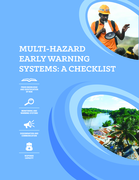
The Multi-Hazard Early Warning System (MHEWS) Checklist is a practical tool consisting of major components and actions that national governments, community organizations and partners within
and across all sectors can refer when developing or evaluating early warning systems
The World Health Organization recently redefined leprosy elimination as a phased process, with the first milestone being the
interruption of transmission, achieved when no new child cases (defined as younger than 15 years) are reported for five consecutive years.
In Pakistan, the well-functioning
...

Despite being a preventable and curable infectious disease, tuberculosis (TB) has continued to elude global controll efforts. In 2023, 8.2 milion people with TB were diagnosed and notified to the WHO, the hightest number ever reported since WHO began tracking.
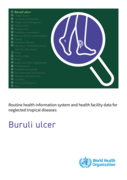
Buruli ulcer (BU) is a skin-related neglected tropical disease (skin NTD) caused by infection with
Mycobacterium ulcerans. BU is the third most common mycobacterial disease after tuberculosis and leprosy
in people who are not immunocompromised. The infection manifests in non-ulcerative forms as no
...
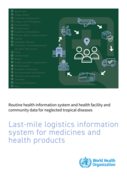
This document on logistics management information systems (LMIS) was developed to address the increasing need for harmonization and standardization of core indicators for managing medicines and health products for neglected tropical diseases (NTDs) at country level (i.e. for last-mile logistics). It
...

Breastfeeding is a cornerstone of healthy infant nutrition, development and survival. It is critical for countries* to improve breastfeeding rates in order to achieve global targets for newborn and child health and survival, as well as economic growth and environmental sustainability
More than a quarter of the global population still cook meals over open fires and/or on simple stoves fuelled by firewood, agricultural waste, dried dung, charcoal, and coal. This practice results in the emission of harmful and dangerously high levels of household air pollution.
Exposure to this h
...
Exposure to air pollution has significant adverse health effects, leading to nearly 1 in every 8 deaths globally. Air pollution affects all age groups, from unborn children to older people, in both high- and low-income nations.
Effective surveillance and monitoring of noncommunicable diseases (NCDs) and their risk factors are essential for informing evidence-based public health policies, addressing health inequities, and ensuring progress toward global and regional targets. By tracking trends in NCDs, their modifiable risk
...
Las enfermedades no transmisibles (ENT), entre las que se incluyen lasenfermedades cardiovasculares (ECV), el cáncer, las enfermedades respiratoriascrónicas (ERC) y la diabetes, son las principales causas de muerte y discapacidaden la Región de las Américas. En el 2021, las ENT ocasionaron 6 mil
...

Noncommunicable diseases (NCDs) (e.g., cardiovascular diseases, cancers, diabetes, and chronic respiratory diseases) and mental health conditions (e.g., Alzheimer’s disease and related dementias, depression, anxiety, autism spectrum disorders) are the world’s leading cause of preventable illness
...
Las enfermedades no transmisibles (ENT) (por ejemplo, las enfermedades cardiovasculares, el cáncer, la diabetes y las enfermedades respiratorias crónicas) y los problemas de salud mental (por ejemplo, la enfermedad de Alzheimer y las demencias relacionadas, la depresión, la ansiedad y los trastor
...
