
Filter
465
Text search:
frauen
Featured
52
91
Language
Document type
162
117
70
39
35
15
9
7
6
3
2
Countries
230
11
7
7
6
6
5
4
3
3
2
2
2
2
2
1
1
1
1
1
1
1
1
1
1
1
1
1
1
1
1
1
1
1
1
1
1
1
1
1
1
1
Authors & Publishers
Publication Years
Category
75
38
6
4
3
2
Toolboxes
270
38
31
16
12
10
10
7
6
3
3
3
2
2
1
1
1
1
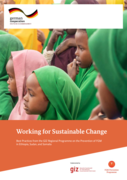
emale genital mutilation (FGM) comprises all procedures that involve the partial or total removal of external genitalia or other injury to the female genital organs for non-medical reasons; the procedure has no health benefits . Moreover, the removal of or damage to healthy genital tissue interferes
...
This resource is a practical, user-friendly tools that aid in the application of gender-transformative approaches for everyday work at the frontlines within the social, health, education, or legal sectors, among others.
Gender-transformative approaches intentionally challenge harmful gender norms
...
This resource is a practical, user-friendly tools that aid in the application of gender-transformative approaches for everyday work at the frontlines within the social, health, education, or legal sectors, among others.
Gender-transformative approaches intentionally challenge harmful gender norms
...

The organisation AMAZE Africa provides engaging educational clips on sexual and health issues for young people, including HIV topics.
Le présent document a été publié pour la première fois en 2006 (Lewis et de Bernis, 2006). Il est vraiment remarquable de le lire aujourd’hui1 et de constater à quel point la situation de la fistule a changé. En 2006, ce travail original et novateur a mis en évidence la fistule obstétrica
...

Female genital mutilation (FGM) is a human rights violation deeply rooted in gender inequality and discrimination. FGM violates various human rights under international human rights law including, among others, the rights to equality, life and health and the rights to be free from discrimination, to
...
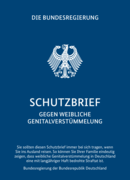
Der Schutzbrief gegen weibliche Genitalverstümmelung informiert über die Strafbarkeit von weiblicher Genitalverstümmelung - auch bei einer Durchführung im Ausland - und über den möglichen Verlust des Aufenthaltstitels.

MEDBOX Issue Brief no.30. In diesem Issue Brief finden Sie wichtige Hintergrundsmaterialien, Dokumente zu Fragen rund um klinische Aspekte, Aufklärungsmaterialien und Materialien zum internationalen Kontext.
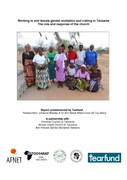
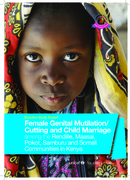
In recognition that Female Genital Mutilation (FGM) is not only a harmful practice but a violation of human rights, Kenya has adopted a robust legal framework. The country has ratified several international legal instruments that have become part of the Kenyan law as provided for in Article 2 of the
...
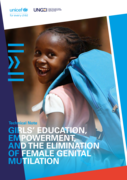
The coronavirus disease 2019 (COVID-19) pandemic has created a global and gendered crisis that is compounding existing inequalities and disproportionately affecting girls and women. Emerging evidence from the COVID-19 crisis in 2020 shows school closures, disruptions in essential services and rising
...
The coronavirus disease 2019 (COVID-19) pandemic has created a global and gendered crisis that is compounding existing inequalities and disproportionately affecting girls and women. Emerging evidence from the COVID-19 crisis in 2020 shows school closures, disruptions in essential services and rising
...
This guide is intended to promote a global health sector response to FGM for the provision of high-quality prevention and care services to women and girls at risk of FGM or living with the consequences of FGM. It also aims to support the systematic development of pre-service and in-service FGM conte
...
Evidence shows that FGM can cause several physical, mental and sexual health complications in girls and women, and in newborns. Health-care providers play an important role in supporting girls and women living with FGM, and improving their health and well-being. They are in a unique position to infl
...
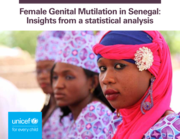
Senegal is home to nearly 2 million girls and women who have experienced FGM. Overall, 25 per cent of girls and women have undergone the practice, varying from over 90 per cent in Kédougou to just under 1 per cent in Diourbel
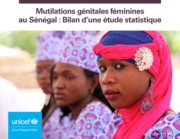
Au Sénégal, près de deux millions de filles et de femmes ont subi des MGF. Au total, 25 % des filles et des femmes ont subi cette pratique, allant de plus de 90 % dans la région de Kédougou à un peu moins de 1 % dans celle de Diourbel
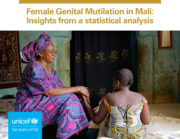
Female Genital Mutilation in Mali: Insights from a statistical analysis Mali is home to nearly 8 million girls and women who have experienced FGM. Overall, 89 per cent of girls and women aged 15 to 49 years have undergone the practice, ranging from 96 per cent in Sikasso region to 1 per cent or less
...
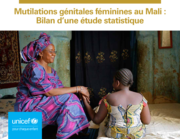
Au Mali, près de huit millions de filles et de femmes ont subi des MGF. À l’échelle nationale, 89 % des filles et des femmes âgées de 15 à 49 ans ont subi cette pratique. À l’échelle infranationale, cette proportion varie de 96 % dans la région de Sikasso à moins de 1 % dans les régio
...
