
Filter
3287
Text search:
supportive
care
Featured
400
973
Language
3203
75
58
50
48
20
19
14
7
7
6
6
6
5
4
4
4
3
3
3
3
3
3
3
2
2
2
2
2
2
2
2
2
2
1
1
1
1
1
1
1
1
1
1
1
1
1
1
1
1
1
1
1
1
1
1
Document type
1891
496
362
219
121
96
69
13
6
6
3
2
1
Countries
191
119
99
99
97
95
86
80
79
74
62
60
60
59
45
43
42
37
36
31
31
28
26
24
24
24
22
21
19
19
17
16
16
16
16
15
13
12
12
11
11
11
10
9
9
9
8
8
8
7
7
6
5
5
4
4
4
4
4
4
4
4
4
3
3
3
3
3
3
3
3
2
2
2
2
2
2
2
2
2
2
2
1
1
1
1
1
1
1
1
1
1
1
1
1
1
1
1
1
1
1
1
1
1
1
1
1
1
1
1
Authors & Publishers
494
141
101
78
72
70
69
69
41
36
28
28
27
27
25
23
19
18
18
15
15
15
13
13
13
13
13
12
11
11
11
11
11
11
11
10
10
10
10
9
9
9
9
9
9
8
8
8
8
8
8
8
8
8
8
7
7
7
7
7
7
7
7
7
7
7
7
7
6
6
6
6
6
6
6
6
6
6
6
6
6
6
6
6
5
5
5
5
5
5
5
5
5
5
5
5
5
5
5
5
5
5
5
5
5
5
5
5
5
5
5
5
5
4
4
4
4
4
4
4
4
4
4
4
4
4
4
4
4
4
4
4
4
4
4
4
4
4
4
4
4
4
4
4
4
4
4
4
4
4
3
3
3
3
3
3
3
3
3
3
3
3
3
3
3
3
3
3
3
3
3
3
3
3
3
3
3
3
3
3
3
3
3
3
3
3
3
3
3
3
3
3
3
3
3
3
3
3
3
3
3
3
3
3
3
3
3
3
3
3
3
3
3
2
2
2
2
2
2
2
2
2
2
2
2
2
2
2
2
2
2
2
2
2
2
2
2
2
2
2
2
2
2
2
2
2
2
2
2
2
2
2
2
2
2
2
2
2
2
2
2
2
2
2
2
2
2
2
2
2
2
2
2
2
2
2
2
2
2
2
2
2
2
2
2
2
2
2
2
2
2
2
2
2
2
2
2
2
2
2
2
2
2
2
2
2
2
2
2
2
2
2
2
2
2
2
2
2
2
2
2
2
2
2
2
2
2
2
2
2
2
2
2
2
2
2
2
2
2
2
2
2
2
2
2
2
2
2
2
2
2
2
2
2
2
2
2
2
2
2
2
2
2
2
2
2
2
2
2
2
2
2
2
2
2
2
2
2
2
2
2
2
2
2
2
2
2
2
2
2
2
2
2
2
2
1
1
1
1
1
1
1
1
1
1
1
1
1
1
1
1
1
1
1
1
1
1
1
1
1
1
1
1
1
1
1
1
1
1
1
1
1
1
1
1
1
1
1
1
1
1
1
1
1
1
1
1
1
1
1
1
1
1
1
1
1
1
1
1
1
1
1
1
1
1
1
1
1
1
1
1
1
1
1
1
1
1
1
1
1
1
1
1
1
1
1
1
1
1
1
1
1
1
1
1
1
1
1
1
1
1
1
1
1
1
1
1
1
1
1
1
1
1
1
1
1
1
1
1
1
1
1
1
1
1
1
1
1
1
1
1
1
1
1
1
1
1
1
1
1
1
1
1
1
1
1
1
1
1
1
1
1
1
1
1
1
1
1
1
1
1
1
1
1
1
1
1
1
1
1
1
1
1
1
1
1
1
1
1
1
1
1
1
1
1
1
1
1
1
1
1
1
1
1
1
1
1
1
1
1
1
1
1
1
1
1
1
1
1
1
1
1
1
1
1
1
1
1
1
1
1
1
1
1
1
1
1
1
1
1
1
1
1
1
1
1
1
1
1
1
1
1
1
1
1
1
1
1
1
1
1
1
1
1
1
1
1
1
1
1
1
1
1
1
1
1
1
1
1
1
1
1
1
1
1
1
1
1
1
1
1
1
1
1
1
1
1
1
1
1
1
1
1
1
1
1
1
1
1
1
1
1
1
1
1
1
1
1
1
1
1
1
1
1
1
1
1
1
1
1
1
1
1
1
1
1
1
1
1
1
1
1
1
1
1
1
1
1
1
1
1
1
1
1
1
1
1
1
1
1
1
1
1
1
1
1
1
1
1
1
1
1
1
1
1
1
1
1
1
1
1
1
1
1
1
1
1
1
1
1
1
1
1
1
1
1
1
1
1
1
1
1
1
1
1
1
1
1
1
1
1
1
1
1
1
1
1
1
1
1
1
1
1
1
1
1
1
1
1
1
1
1
1
1
1
1
1
1
1
1
1
1
1
1
1
1
1
1
1
1
1
1
1
1
1
1
1
1
1
1
1
1
1
1
1
1
1
1
1
1
1
1
1
1
1
1
1
1
1
1
1
1
1
1
1
1
1
1
1
1
1
1
1
1
1
1
1
1
1
1
1
1
1
1
1
1
1
1
1
1
1
1
1
1
1
1
1
1
1
1
1
1
1
1
1
1
1
1
1
1
1
1
1
1
1
1
1
1
1
1
1
1
1
1
1
1
1
1
1
1
1
1
1
1
1
1
1
1
1
1
1
1
1
1
1
1
1
1
1
1
1
1
1
1
1
1
1
1
1
1
1
1
1
1
1
1
1
1
1
1
1
1
1
1
1
1
1
1
1
1
1
1
1
1
1
1
1
1
1
1
1
1
1
1
1
1
1
1
1
1
1
1
1
1
1
1
1
1
1
1
1
1
1
1
1
1
1
1
1
1
1
1
1
1
1
1
1
1
1
1
1
1
1
1
1
1
1
1
1
1
1
1
1
1
1
1
1
1
1
1
1
1
1
1
1
1
1
1
1
1
1
1
1
1
1
1
1
1
1
1
1
1
1
1
1
1
1
1
1
1
1
1
1
1
1
1
1
1
1
1
1
1
1
1
1
1
1
1
1
1
1
1
1
1
1
1
1
1
1
1
1
1
1
1
1
1
1
1
1
1
1
1
1
1
1
1
1
1
1
1
1
1
1
1
1
1
1
1
1
1
1
1
1
1
1
1
1
1
1
1
1
1
1
1
1
1
1
1
1
1
1
1
1
1
1
1
1
1
1
1
1
1
1
1
1
1
1
1
1
1
1
1
1
1
1
1
1
1
1
1
1
1
1
1
1
1
1
1
1
1
1
1
1
1
1
1
1
1
1
1
1
1
1
1
1
1
1
1
1
1
1
1
1
1
1
1
1
1
1
1
1
1
1
1
1
1
1
1
1
1
1
1
1
1
1
1
1
1
1
1
1
1
1
1
1
1
1
1
1
1
1
1
1
1
1
1
1
1
1
1
1
1
1
1
1
1
1
1
1
1
1
1
1
1
1
1
1
1
1
1
1
1
1
1
1
1
1
1
1
1
1
1
1
1
1
1
1
1
1
1
1
1
1
1
1
1
1
1
1
1
1
1
1
1
1
1
1
1
1
1
1
1
1
1
1
1
1
1
1
1
1
1
1
1
1
1
1
1
1
1
1
1
1
1
1
1
1
1
1
1
1
1
1
1
1
1
1
1
1
1
1
1
1
1
1
1
1
1
1
1
1
1
1
1
1
1
1
1
1
1
1
1
1
1
1
1
1
1
1
1
1
1
1
1
1
1
1
1
1
1
1
1
1
1
1
1
1
1
1
1
1
1
1
1
1
1
1
1
1
1
1
1
1
1
1
1
1
1
1
1
1
1
1
1
1
1
1
1
1
1
1
1
1
1
1
1
1
1
1
1
1
1
1
1
1
1
1
1
1
1
1
1
1
1
1
1
1
1
1
1
1
1
1
1
1
1
1
1
1
1
1
1
1
1
1
1
1
1
1
1
1
1
1
1
1
1
1
1
1
1
1
1
1
1
1
1
1
1
1
1
1
1
1
1
1
1
1
1
1
1
1
1
1
1
1
1
1
1
1
1
1
1
1
1
1
1
1
1
1
1
1
1
1
1
1
1
1
1
1
1
1
1
1
1
1
1
1
1
1
1
1
1
1
1
1
1
1
1
1
1
1
1
1
1
1
1
1
1
1
1
1
1
1
1
1
1
1
1
1
1
1
1
1
1
1
1
1
1
1
1
1
1
1
1
1
1
1
1
1
1
1
1
1
1
1
1
1
1
1
1
1
1
1
1
1
1
1
1
1
1
1
1
1
1
1
1
1
1
1
1
1
1
1
1
1
1
1
1
1
1
1
1
1
1
1
1
1
1
1
1
1
1
1
1
1
1
1
1
1
1
1
1
1
1
1
1
1
1
1
1
1
1
1
1
1
1
1
1
1
1
1
1
1
1
1
1
1
1
1
1
1
1
1
1
1
1
1
1
1
1
1
1
1
1
1
1
1
1
1
1
1
1
1
1
1
1
1
1
1
1
1
1
1
1
1
1
1
1
1
1
1
1
1
1
1
1
1
1
1
1
1
1
1
1
1
1
1
1
1
1
1
1
1
1
1
1
1
1
1
1
1
1
1
1
1
1
1
1
1
1
1
1
1
1
1
1
1
1
1
1
1
1
1
1
1
1
1
1
1
1
1
1
1
1
1
1
1
1
1
1
1
1
1
1
1
1
1
1
1
1
1
1
1
1
1
1
1
1
1
1
1
1
1
1
1
1
1
1
1
1
1
1
1
1
1
1
1
1
1
1
1
1
1
1
1
1
1
1
1
1
1
1
1
1
1
1
1
1
1
1
1
1
1
1
1
1
1
1
1
1
1
1
1
1
1
1
1
1
1
1
1
1
1
1
1
1
1
1
1
1
1
1
1
1
1
1
1
1
1
1
1
1
1
1
1
1
1
1
1
1
1
1
1
1
1
1
1
1
1
1
1
1
1
1
1
1
1
1
1
1
1
1
1
1
1
1
1
1
1
1
1
1
1
1
1
1
1
1
1
1
1
1
1
1
1
1
1
1
1
1
1
1
1
1
1
1
1
1
1
1
1
1
1
1
1
1
1
1
1
1
1
1
1
1
1
1
1
1
1
1
1
1
1
1
1
1
1
1
1
1
1
1
1
1
1
1
1
1
1
1
1
1
1
1
1
1
1
1
1
1
1
1
1
1
1
1
1
1
1
1
1
1
1
1
1
1
1
1
1
1
1
1
1
1
1
1
1
1
1
1
1
1
1
1
1
1
1
1
1
1
1
1
1
1
1
1
1
1
1
1
1
1
1
1
1
1
1
1
1
1
1
1
1
1
1
1
1
1
1
1
1
1
1
1
1
1
1
1
1
1
1
1
1
1
1
1
1
1
1
1
1
1
1
1
1
1
1
1
1
1
1
1
1
1
1
1
1
1
1
1
1
1
1
1
1
1
1
1
1
1
1
1
1
1
1
1
1
1
1
1
1
1
1
1
1
1
1
1
1
1
1
1
1
1
1
1
1
1
1
1
1
1
1
1
1
1
1
1
1
1
1
1
1
1
1
1
1
1
1
1
1
1
1
1
1
1
1
1
1
1
1
1
1
1
1
1
1
1
1
1
1
1
1
1
1
1
1
1
1
1
1
1
1
1
1
1
1
1
1
1
1
1
1
1
1
1
1
1
1
1
1
1
1
1
1
1
1
1
1
1
1
1
1
1
1
1
1
1
1
1
1
1
1
1
1
1
1
1
1
1
1
1
1
1
1
1
1
1
1
1
1
1
1
1
1
1
1
1
1
1
1
1
1
1
1
1
1
1
1
1
1
1
1
1
1
1
1
1
1
1
1
1
1
1
1
1
1
1
1
1
1
1
1
1
1
1
1
1
1
1
1
1
1
1
1
1
1
1
1
1
1
1
1
1
1
1
1
1
1
1
1
1
1
1
1
1
1
1
1
1
1
1
1
1
1
1
1
1
1
1
1
1
1
1
1
1
1
1
1
1
1
1
1
1
1
1
1
1
1
1
1
1
1
1
1
1
1
1
1
1
1
1
1
1
1
1
1
1
1
1
1
1
1
1
1
1
1
1
1
1
1
1
1
1
1
1
1
1
1
1
1
1
1
1
1
1
1
1
1
1
1
1
1
1
1
1
1
1
1
1
1
1
1
1
1
1
1
1
1
1
1
1
1
1
1
1
1
1
1
1
1
1
1
1
1
1
1
1
1
1
1
1
Publication Years
879
2078
315
13
2
Category
1318
301
272
193
174
123
21
Toolboxes
374
221
158
147
144
139
131
88
77
55
53
41
40
40
39
39
38
36
25
24
21
18
13
13
12
1
1
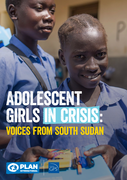
In the last 5 years, the conflict in South Sudan has displaced 4 million people and placed 7 million in need of humanitarian assistance.
This report commissioned by Plan International draws on research conducted with girls and members of their families and communities in multiple sites in South ... Sudan and Uganda.
It explores how adolescent girls within two age brackets (aged 10-14 and 15-19) understand and respond to the unique impact their country’s crisis has upon them.
It seeks to amplify their voices and their perceptions of the crisis and presents their views on how the humanitarian sector might respond. more
This report commissioned by Plan International draws on research conducted with girls and members of their families and communities in multiple sites in South ... Sudan and Uganda.
It explores how adolescent girls within two age brackets (aged 10-14 and 15-19) understand and respond to the unique impact their country’s crisis has upon them.
It seeks to amplify their voices and their perceptions of the crisis and presents their views on how the humanitarian sector might respond. more
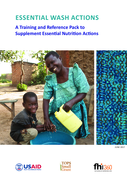
The Essential WASH Actions toolkit expands the connection between WASH and nutrition. This resource offers a comprehensive set of essential WASH actions, references training materials for health workers, nutrition managers and community workers to build capacity, and outlines accompanying behaviors
...
needed to support the Essential Nutrition Actions.
more
This National Food and Nutrition Policy developed in 2013 builds on several achievements that have improved the status of nutrition and household food security in Rwanda during the past six years. The outlines ambitious but necessary strategies needed to solve serious and
persistent problems includ
...
ing the high prevalence of child stunting and high levels of anaemia in children and women. The NFNP also takes into account major differences in the economic development environment and the higher national and international priority placed on improving nutrition and related household food security problems in the second decade of the new millennium compared to 2007 when the country’s first National Nutrition Policy was adopted.
more

Regional Network for Equity in Health in east and southern Africa (EQUINET): Disussion Paper 110
This report compiles evidence from published, grey literature and key informants on the UNMHCP since its introduction in Uganda’s health system, and findings were further validated during a oneda ... y national stakeholder meeting.
Three main factors motivated introduction of the UNMHCP. First, Uganda, along with other lowincome countries, was unable to implement holistically the primary healthcare (PHC) concepts as set out in the Alma Ata Declaration. Second, the macro-economic restructuring carried out in the 1990s, which was an international conditionality for low-income countries to access development financing, influenced the trend towards more stringent prioritisation of health interventions as a means of rationing and targeting use of resources. Third, the government sought to achieve equity with a service package that would be universally available for all people. more
This report compiles evidence from published, grey literature and key informants on the UNMHCP since its introduction in Uganda’s health system, and findings were further validated during a oneda ... y national stakeholder meeting.
Three main factors motivated introduction of the UNMHCP. First, Uganda, along with other lowincome countries, was unable to implement holistically the primary healthcare (PHC) concepts as set out in the Alma Ata Declaration. Second, the macro-economic restructuring carried out in the 1990s, which was an international conditionality for low-income countries to access development financing, influenced the trend towards more stringent prioritisation of health interventions as a means of rationing and targeting use of resources. Third, the government sought to achieve equity with a service package that would be universally available for all people. more
The report aims to help policy-makers and programme managers identify the areas that need attention and to work towards effective implementation and enforcement of policies and legislations. The need for alcohol policy-specific infrastructures to support the alcohol policy process, including designa
...
ted responsible agency, policy and strategy, and law and regulation, is also required at the country level.
The report is presented in three sections. Section 1 gives an insight to the alcohol consumption situation in the WHO South-East Asia Region and cites the alcohol-related problems that the Region is facing. Section 2 illustrates the policy situation in the 10 areas of national action identified in the Global Strategy to Reduce the Harmful Use of Alcohol and gives specific recommendations pertaining to these areas. Section 3 provides overall recommendations. more
The report is presented in three sections. Section 1 gives an insight to the alcohol consumption situation in the WHO South-East Asia Region and cites the alcohol-related problems that the Region is facing. Section 2 illustrates the policy situation in the 10 areas of national action identified in the Global Strategy to Reduce the Harmful Use of Alcohol and gives specific recommendations pertaining to these areas. Section 3 provides overall recommendations. more
An estimated 59 000 people die from rabies each year. That’s one person every nine minutes of every day, 40% of whom are children living in Asia and Africa. As dog bites cause almost all human cases, we can prevent rabies deaths by increasing awareness, vaccinating dogs to prevent the disease at i
...
ts source and administering life-saving treatment after people have been bitten. We have the vaccines, medicines, tools and technologies to prevent people from dying from dog-mediated rabies. For a relatively low cost it is possible to break the disease cycle and save lives
more
Reporting Period 2010-2011

January - December 2017

Pathways to progress: a multi-level approach to strengthening health systems
Samuels, F., Amaya, A.B., Rodríguez Pose, R. and Balabanova, D.
Overseas Development Institute
(2014)
C1
Findings on maternal and child health in Nepal, Mozambique and
Rwanda, and neglected tropical diseases in Cambodia and Sierra Leone | This report synthesises findings from five country case studies from the health dimension of this project, which focus on maternal and child health (MCH) (Mozambique
...
,Nepal, Rwanda) and neglected tropical diseases (NTDs)(Cambodia, Sierra Leone). MCH was selected given its centrality in two of the Millennium Development Goals (MDGs) and its ability to act as a proxy for strengthened health systems. NTDs, while until recently relatively neglected in global policy debates, are now attracting more interest, not least because they are viewed as diseases of the poor whose treatment could positively impact on most of the other MDGs.
more
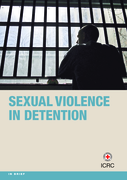
We have long been working to prevent and end sexual violence in armed conflicts and to ensure that the countless victims – men, women, boys and girls – receive the help they need.
In this document, we examine sexual violence specifically in relation to people deprived of their liberty. We c ... onsider why individuals are at risk of sexual violence in detention and how to prevent and reduce that risk. We also set out some potential steps to take when sexual violence occurs. more
In this document, we examine sexual violence specifically in relation to people deprived of their liberty. We c ... onsider why individuals are at risk of sexual violence in detention and how to prevent and reduce that risk. We also set out some potential steps to take when sexual violence occurs. more
Through public-private partnerships, the government of Rwanda can make more efficient use of public resources by targeting and meeting the needs of specific populations and thus help ensure family planning services and products will be available to all Rwandans in the long term. This report aims to
...
inform stakeholders working to strengthen family planning through multisectoral partnerships about Rwanda’s family market.
more
The Capacity Project worked to strengthen HRIS in several low-resource countries to assist decision-makers and human resources managers in identifying and responding to critical gaps in HRH. The findings and recommendations in this report cover the Capacity Project’s implementation of HRIS in Swaz
...
iland, Rwanda and Uganda.
more

The objective of the evaluation is to understand whether the CHW program has achieved its intended objectives, thus contributing to the overarching objectives defined in the HSSP III of improving the health status of the population by “Ensuring universal accessibility of quality health services fo
...
r all Rwandans”.
This evaluation has focused on CHWs, who are selected, trained and deployed by the MoH to deliver a defined set of tasks at community level. CHWs are the central element of the Community Health Policy and of the community health strategy plan (CHSP) of the MoH.
more

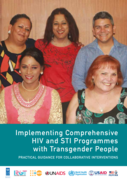
This publication offers practical advice on implementing HIV and STI programmes for transgender people, with a focus on transgender women, aligned with the 2011 Recommendations and the 2014 Key Populations Consolidated Guidelines. It contains examples of good practice from around the world that may
...
support efforts in planning programmes and services, and describes issues that should be considered and how to overcome challenges.
This tool describes how services can be designed and implemented to be acceptable and accessible to transgender women. To accomplish this, respectful and ongoing engagement with them is essential.
This tool gives particular attention to programmes run by transgender people themselves, in contexts where this is possible. more
This tool describes how services can be designed and implemented to be acceptable and accessible to transgender women. To accomplish this, respectful and ongoing engagement with them is essential.
This tool gives particular attention to programmes run by transgender people themselves, in contexts where this is possible. more

Lesotho’s predominantly rural population faces significant health challenges within a setting of inadequate human resources for health. It is essential that nurses and nurse-midwives, who together make up the largest health workforce in the country, be adequately prepared to address Lesotho’s He
...
alth Priorities according to the Poverty Reduction Strategy Paper (PRSP) in the settings where they work. Under the HRAA project, Jhpiego conducted a task analysis study to obtain data on job duties or tasks performed by these cadres, as well as information about how often the tasks are performed, if and where tasks were learned, and the self-perceived level of competence in performing the tasks.
more
The uneven distribution of HIV risks and burdens across populations is a well-substantiated fact, though seldom publicly acknowledged. Gay men and other men who have sex with men, people who inject drugs, sex workers, and transgender women are 24, 24, 13.5, and 49 times more likely to acquire HIV,
...
respectively, than other reproductive aged adults (15 years old and older). Globally, new infections among these key populations account for 45% of all new HIV infections. This figure is likely to be an underestimate, given the intense stigma associated with disclosing and reporting acquisition risks for HIV among gay men, people who use drugs, sex workers, and transgender people. In addition, HIV epidemics in the majority of low- and middle-income countries (90 of 120) have concentrated epidemics among key populations. In countries with more broadly generalized epidemics, risks are still not evenly distributed and key populations still shoulder disease burden that is markedly disproportionate.
more
Punjab Province Report: Nutrition Political Economy, Pakistan
Zaidi, Shehla; Bhutta, Zulfiqar et al.
Institute of Development Studies, Aga Khan University
(2015)
C1
In this report a nutrition governance framework was applied to research and analyse the provincial experience with nutrition policy in Pakistan, looking both at chronic and acute malnutrition. Twenty-one in-depth interviews with key stakeholders were also conducted along with a review of published a
...
nd grey literature. Findings were validated and supplemented by consultative provincial roundtable meetings. Punjab’s nutritional puzzle is that it has high levels of chronic malnutrition and micro-nutrient deficiencies despite a surplus production of food and a low poverty level. Under-nutrition is mainly linked to insufficient attention to preventive health strategies and to a lack of connection between relevant sectors such as Education, Health, Poverty, Safe Water and Sanitation, and Food. Strategic opportunities are recommended which include cross-party political support and ownership for nutrition, with steering by executive leadership; multi-sectoral action and functional integration of various departments and programmes with the creation of a central convening structure for effective cross-sectoral coordination; broadening of nutritional activities beyond salt iodization and vitamin A coverage; central co-ordination of monitoring and evaluation and effective partnerships between the state and non-state sector around data production, awareness, advocacy, and monitoring.
more
