
Filter
1483
Text search:
Глобальный
Featured
55
43
Language
Document type
467
261
151
130
122
79
74
55
44
31
21
18
12
11
7
Countries
1476
25
17
16
13
12
11
9
9
9
8
8
8
7
6
6
6
5
5
5
4
4
4
4
4
4
4
3
3
3
3
2
2
2
2
2
2
2
2
2
2
2
2
2
2
2
1
1
1
1
1
1
1
1
1
1
1
1
1
1
1
1
1
1
1
1
1
1
1
1
1
1
1
1
1
1
1
1
1
1
1
Authors & Publishers
Publication Years
Category
434
215
78
66
63
47
15
Toolboxes
384
207
183
147
108
79
68
53
36
33
23
22
21
19
14
12
10
10
9
8
4
3
1
1

EWARS is a surveillance system developed by the World Health Organization to detect and respond quickly to disease outbreaks in emergency settings where normal health systems are disrupted. It allows health facilities to report priority diseases on a regular basis and generates alerts when unusual p
...

The webpage introduces the “Health Cluster Coordination” channel on World Health Organization’s OpenWHO platform, focusing on training and resources for coordinating health-cluster operations in humanitarian emergencies. It outlines how participants can learn about setting up and managing heal
...
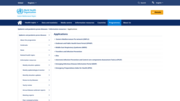
The page lists and describes a number of mobile apps and digital tools provided by WHO/EMRO to support prevention, monitoring and response to epidemic- and pandemic-prone diseases. These include apps focused on diseases such as Middle East Respiratory Syndrome (MERS), Zika virus disease, travel-rel
...
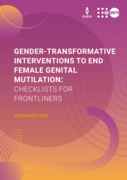
This resource is a practical, user-friendly tools that aid in the application of gender-transformative approaches for everyday work at the frontlines within the social, health, education, or legal sectors, among others.
Gender-transformative approaches intentionally challenge harmful gender norms
...
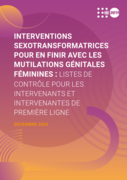
This resource is a practical, user-friendly tools that aid in the application of gender-transformative approaches for everyday work at the frontlines within the social, health, education, or legal sectors, among others.
Gender-transformative approaches intentionally challenge harmful gender norms
...
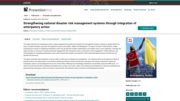
The webpage describes a 2025 report by the International Federation of Red Cross and Red Crescent Societies on how governments can integrate anticipatory action into national disaster risk management systems, using global examples and case studies to show why and how anticipatory approaches should b
...
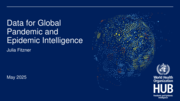
The presentation “Data for Global Pandemic and Epidemic Intelligence” outlines how improved data collection, surveillance, analytics, and digital tools can strengthen global preparedness and response to health emergencies. It explains the concept of epidemic intelligence, highlighting the integr
...
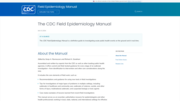
The website presents the CDC Field Epidemiology Manual, a practical resource developed by the Centers for Disease Control and Prevention (CDC). It provides guidance for epidemiologists and public health professionals on how to investigate and respond to disease outbreaks and other public health even
...

The document “Public Health Surveillance for Cholera – Guidance Document (2024)” provides practical recommendations for countries on how to design, implement, and strengthen cholera surveillance systems. Developed by the Global Task Force on Cholera Control (GTFCC), it outlines the minimum req
...
The WHO Global Respiratory Syncytial Virus (RSV) Surveillance page describes a World Health Organization initiative under the Global Influenza Programme to monitor RSV infections worldwide. It explains that WHO uses the existing Global Influenza Surveillance and Response System (GISRS) to collect st
...
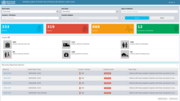
The Surveillance System for Attacks on Health Care (SSA) is a global monitoring platform run by the World Health Organization that systematically collects and displays standardized data on attacks against health care in settings affected by conflict or humanitarian emergencies. It records incidents
...

The WHO publication “Surveillance, case investigation and contact tracing for mpox: interim guidance” provides updated global technical guidance on monitoring and responding to mpox (formerly known as monkeypox). It explains how countries should conduct surveillance to detect new outbreaks, car
...
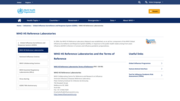
The webpage ”H5 Reference Laboratories” on the WHO Global Influenza Surveillance and Response System (GISRS) site describes a network of specialized laboratories designated by the World Health Organization to support global influenza monitoring — particularly for H5 subtype avian influenza vir
...

The document “Communicable Disease Surveillance and Response Systems: A Guide to Planning” is a World Health Organization (WHO) guide designed to help countries develop and strengthen national surveillance and response systems for communicable diseases . It explains why surveillance is essential
...
The UNDP webpage “Climate Information and Early Warning Systems” explains how climate information and early warning systems help countries and communities better prepare for and respond to climate-related hazards such as extreme weather events, floods, heatwaves and droughts. It describes UNDPâ€
...
The Guardian article reports that Google DeepMind has developed an artificial intelligence model capable of predicting weather more accurately than one of the world’s leading traditional forecasting systems. The AI system, trained on large amounts of historical weather data, can generate faster an
...

Populations affected by emergencies are continually at risk of outbreaks of epidemic-prone diseases and other public health hazards. This operational guidance aims to guide decision-making on when and how to implement and strengthen Early Warning Alert and Response (EWAR) in preparation for and resp
...
This Mobile user guidance is aimed at supporting implementation of EWARS in a box, WHO’s electronic early warning, alert and response system in emergencies. This guidance fulfills a long felt need to have an easy to use resource with step-by-step instructions in establishing EWARS in a box, facili
...
The webpage presents WeatherNext 2, an advanced AI-based weather forecasting model developed by Google DeepMind. It explains how the system uses machine learning to analyze large amounts of atmospheric data and produce fast and accurate weather predictions. The model is designed to improve forecasti
...
The text explains what early warning systems are and why they are important for climate action and disaster risk reduction. It describes how these systems collect and analyze data to detect hazards such as storms, floods, heatwaves, or droughts and provide timely alerts to governments and communitie
...
