
Filter
1487
Text search:
netherlands
Featured
154
288
Language
Document type
706
368
211
83
46
33
18
11
6
2
2
1
Countries
99
94
27
23
22
21
20
19
18
18
16
16
14
14
13
13
13
13
12
12
11
11
9
9
9
8
7
7
7
7
7
6
6
6
6
6
6
5
5
5
5
5
5
4
4
4
4
4
4
4
4
4
3
3
3
3
3
3
3
2
2
2
2
2
2
2
2
2
2
2
2
2
2
2
2
2
2
2
2
2
2
2
1
1
1
1
1
1
1
1
1
1
1
1
1
1
1
1
1
1
1
1
1
1
1
1
1
1
1
1
1
1
1
1
1
1
1
Authors & Publishers
Publication Years
Category
278
122
95
92
57
34
19
Toolboxes
245
118
115
102
63
63
61
50
46
44
44
40
38
35
32
26
24
17
14
11
9
7
6
4
3
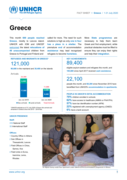
This month 600 people reached Greece, mostly to Lesvos island. UNHCR with IOM and UNICEF welcomed the latest relocations of 49 unaccompanied children from Greece to Portugal and Finland and called for more. The need for such solutions is high as only one in four has a place in a shelter. The prematu
...


Le présent texte permettra aux lecteurs de comprendre certains éléments qui sous-tendent les concepts de la responsabilité sociale et de l’imputabilité des facultés de médecine en regard de leur réponse aux besoins des sociétés qu’elles doivent servir et de prendre connaissance de quel
...
The International Pharmaceutical Federation (FIP) is a global federation of national associations of pharmacists and
pharmaceutical scientists. In order to support these associations in their fight against AMR, FIP has prepared this
briefing document. It is an overview of the different activities
...
Scientists have known for more than half a century that patients could develop resistance to the drugs used to treat them. Alexander Fleming, who is credited with creating the first antibiotic, penicillin, in 1928, cautioned of the impending crisis while accepting his Nobel prize in 1945: “There
...
The global tripartite self-assessment survey of country progress in addressing antimicrobial resistance (AMR) is a component of a broader approach for monitoring and evaluation of the global action plan on AMR. This report analyses the results of the second tripartite self-assessment survey. It has
...
Water, sanitation, hygiene, and waste management for SARS-CoV-2, the virus that causes COVID-19
recommended
Updated Interim guidance 29 July 2020
The provision of safe water, sanitation and waste management and hygienic conditions is essential for preventing and for protecting human health during all infectious disease outbreaks, including of coronavirus disease 2019 (COVID-19). Ensuring evidenced-based
...

MICROBIAL DRUG RESISTANCEVolume 24, Number 5, 2018ªMary Ann Liebert, Inc.DOI: 10.1089/mdr.2017.0383
Antibiotic resistance (ABR) is a worldwide publichealth concern, with serious health, economic, and so-cietal repercussions. Its emergence is attributed to the se-lective pressure exerted by antib
...

Comprehensive Reviews in Food Science and Food Safety, Vol.12 (2013) pp.234-248
In 2006, the Institute of Food Technologists (IFT) published an Expert Report entitled “Antimicrobial Resistance: Implications for the Food System” (IFT 2006). That report summarized current scientific knowledge pe
...

The purpose of this guidance is to assist WHO Member States, and other stakeholders, in the establishment and development of programmes of integrated surveillance of antimicrobial resistance in foodborne bacteria (i.e., bacteria commonly transmitted by food). In this guidance, “integrated surveill
...
Timely detection of novel coronavirus (2019-nCoV) infection cases is crucial to interrupt the spread of this virus. We assessed the required expertise and capacity for molecular detection of 2019-nCoV in specialised laboratories in 30 European Union/European Economic Area (EU/EEA) countries. Thirty-
...

Le présent document de travail a été conçu pour offrir des conseils pratiqueset des suggestions sur la manièred’établir et de maintenir la collaboration multisectorielle nécessaire pour élaborer et mettre en œuvre les plans d’action nationaux (PAN) de lutte contre la RAM. Il s’adresse
...

This working paper was conceived to offer practical tips and suggestions on how to establish and sustain the multisectoral coordination needed to develop and implement National Action Plans on AMR (NAPs). It is intended for anyone with responsibility for addressing AMR at country level. Drawing on b
...

This paper was developed to support AMR coordination committees and others tasked with addressing AMR at country level to do just that. Drawing on the published literature and the operational experience and expertise of different LMICs, the paper points to six key strategies for success and offers a
...
A regional guide for governments in Asia and the Pacific to review, update and develop policies to address antimicrobial resistance and antimicrobial use in animal production

This interim guidance is for LTCF managers and corresponding infection prevention and control (IPC) focal persons in LTCF and updates the guidance published in March 2020. The objective of this document is to provide guidance on IPC in LTCFs in the context of COVID-19 to 1) prevent COVID-19-virus fr
...

The ECDC, the EFSA and the EMA have for the first time jointly explored associations between consumption of antimicrobials in humans and food-producing animals, and antimicrobial resistance in bacteria from humans and food-producing animals, using 2011 and 2012 data currently available from their re
...
Antibiotic resistance has been recognized as a major global health threat and optimizing prescribing is one of the most effective measures to preserve the effectiveness of antibiotics. The quality of prescribing depends mostly on those prescribers belonging to clinical medical specialties
...

Spread of resistance to antimicrobial agents (AMR) does not know national borders and has reached dimensions, which require immediate actions at the national, regional and global levels.
Antibiotic resistance is a natural biological response to improper use of antimicrobial agents (AMA); increasing
...
