
Filter
6588
Text search:
adults
Featured
Recommendations
585
New Publications
1518
Language
Document type
No document type
3745
Studies & Reports
1076
Guidelines
879
Manuals
305
Fact sheets
181
Strategic & Response Plan
152
Training Material
106
Situation Updates
49
Infographics
49
Brochures
24
Resource Platforms
16
Online Courses
3
Videos
2
Dashboards/Maps
1
Countries / Regions
India
277
Global
272
Kenya
164
South Africa
150
Western and Central Europe
131
Ethiopia
122
Latin America and the Carribbean
110
Uganda
109
Nigeria
107
Zambia
102
Malawi
97
Africa
95
Tanzania
93
Sierra Leone
91
Nepal
87
Liberia
77
Bangladesh
74
Namibia
73
Ukraine
73
Myanmar / Burma
73
Syria
71
Rwanda
71
Ghana
65
Lesotho
56
Russia
56
Germany
55
Eastern Europe
55
Zimbabwe
54
Philippines
51
Asia
44
Brazil
43
Indonesia
42
Congo, Democratic Republic of
41
Cambodia
39
Mozambique
36
Haiti
33
South Sudan
32
South–East Asia Region
32
Senegal
31
Venezuela
31
Yemen
27
Botswana
26
East and Southern Africa
23
Eastern Europe and Central Asia
22
Guinea
21
Eswatini/ Swaziland
21
Middle East and North Africa
21
Burkina Faso
20
Paraguay
17
Cameroon
16
Argentina
16
Colombia
16
USA
14
Sudan
14
Vietnam
14
Pakistan
13
Jordan
13
Peru
13
Chile
13
West and Central Africa
13
Somalia
12
Lebanon
12
Benin
12
Tajikistan
12
Albania
11
North America
11
Afghanistan
10
Thailand
10
China
10
Moldova
10
Iraq
9
Spain
9
Turkey
8
Ecuador
8
Western Pacific Region
8
Mali
7
Laos
7
Côte d’Ivoire / Ivory Coast
6
Central African Republic
6
Greece
6
Angola
6
Madagascar
6
Sri Lanka
6
Kyrgyzstan
6
Kazakhstan
6
Georgia
6
United Kingdom
6
Egypt
5
Serbia
5
Timor Leste/ East Timor
5
Iran
5
Jamaica
5
Chad
4
North Macedonia
4
Bolivia
4
Southern Africa
4
Romania
4
Portugal
4
Guinea-Bissau
3
Niger
3
Papua New Guinea
3
Croatia
3
El Salvador
3
Libya
3
Armenia
3
Canada
3
Estonia
3
Turkmenistan
3
Bosnia and Herzegovina
3
Saudi Arabia
2
Gambia
2
Malaysia
2
Hungary
2
Guatemala
2
Mexico
2
Fiji
2
Bhutan
2
Poland
2
Palestine
2
Djibouti
2
Lithuania
2
Uzbekistan
2
Japan
2
Tunisia
2
Azerbaijan
2
Belarus
2
Morocco
1
Ireland
1
Singapore
1
Austria
1
Switzerland
1
Burundi
1
Bahamas
1
Other region
1
Solomon Islands
1
North Korea
1
Italy
1
Congo-Brazzaville
1
Qatar
1
Gabon
1
Uruguay
1
France
1
Mauritius
1
Morocco
1
Israel
1
Oman
1
Authors & Publishers
Publication Years
Category
Countries
2395
Clinical Guidelines
548
Public Health
377
Women & Child Health
285
Key Resources
219
Capacity Building
161
Pharmacy & Technologies
37
Annual Report MEDBOX
1
Toolboxes
Mental Health
732
HIV
706
COVID-19
578
TB
413
Disability
335
NCDs
234
NTDs
210
Refugee
155
Conflict
145
Planetary Health
132
Caregiver
121
Ebola & Marburg
103
AMR
81
Global Health Education
76
Rapid Response
74
Pharmacy
70
Malaria
66
Cholera
49
Natural Hazards
42
Zika
42
Health Financing Toolbox
36
2.0 Rapid Response
27
Polio
24
Social Ethics
24
Specific Hazards
18

WHO guidelines for clinical management of arboviral diseases: dengue, chikungunya, Zika and yellow fever
recommended
The new WHO guidelines provide clinical management recommendations for four of the most widespread arboviruses affecting humans: dengue, chikungunya, Zika, and yellow fever.
An integrated approach is vital, as these four diseases often present with similar symptoms, especially in the early stages
...
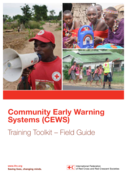
The Training Toolkit for Community Early Warning Systems is an operational manual that aims to strengthen early warning systems in a developing country context. It accompanies and should put into practice the guiding strategic principles found in the Community Early Warning Systems: Guiding Principl
...

Growing emergencies and displacements across the world demand increasingly complex interventions and responses. The World Health Organization (WHO) has developed Malaria control in emergencies: a field manual to provide technical guidance to help partners respond effectively to malaria in emergency
...

Despite being a preventable and curable infectious disease, tuberculosis (TB) has continued to elude global controll efforts. In 2023, 8.2 milion people with TB were diagnosed and notified to the WHO, the hightest number ever reported since WHO began tracking.
Effective surveillance and monitoring of noncommunicable diseases (NCDs) and their risk factors are essential for informing evidence-based public health policies, addressing health inequities, and ensuring progress toward global and regional targets. By tracking trends in NCDs, their modifiable risk
...
Las enfermedades no transmisibles (ENT), entre las que se incluyen lasenfermedades cardiovasculares (ECV), el cáncer, las enfermedades respiratoriascrónicas (ERC) y la diabetes, son las principales causas de muerte y discapacidaden la Región de las Américas. En el 2021, las ENT ocasionaron 6 mil
...

Noncommunicable diseases (NCDs) (e.g., cardiovascular diseases, cancers, diabetes, and chronic respiratory diseases) and mental health conditions (e.g., Alzheimer’s disease and related dementias, depression, anxiety, autism spectrum disorders) are the world’s leading cause of preventable illness
...
Las enfermedades no transmisibles (ENT) (por ejemplo, las enfermedades cardiovasculares, el cáncer, la diabetes y las enfermedades respiratorias crónicas) y los problemas de salud mental (por ejemplo, la enfermedad de Alzheimer y las demencias relacionadas, la depresión, la ansiedad y los trastor
...

Early Adolescent Skills for Emotions (EASE) is an evidence-based group psychological intervention to help 10–15-year-olds affected by internalizing problems (e.g. stress and symptoms of anxiety, depression) in communities exposed to adversity. Published by the World Health Organization (WHO) and U
...

This publication provides an overview of evidence and guidance on the growing challenge of workplace heat stress in the context of climate change. It highlights the health and productivity risks faced by billions of workers, especially in manual labor sectors. The report details the physiological, s
...

The 2022 report reviews the global malaria diagnostics market and technological landscape to support Unitaid’s 2023–2027 strategy for quality malaria case management. The report highlights the stalled progress of malaria control efforts, the gaps in access to diagnostics and the public health im
...

The annual bulletin of the Mekong Malaria Elimination (MME) programme is a yearly report that reviews ongoing efforts to combat multidrug resistance and eliminate malaria in the 6 countries of the Greater Mekong subregion (GMS): Cambodia, China (Yunnan province), Lao People's Democratic Republic, My
...

Malaria remains a significant public health concern in the SADC region, accounting for 20% of childhood deaths, as well as prompting numerous outpatient visits and hospitalisations. Around three-quarters of the population, including 35 million children under the age of five and 8.5 million pregnant
...
The 2024 World Malaria Report shows that the malaria burden remains overwhelmingly concentrated in Africa. The continent accounted for 94% of global cases and 95% of malaria-related deaths in 2023. Although the number of malaria cases increased globally from 204 million in 2000 to 246 million in 202
...

Non-Communicable Diseases (NCDs) have emerged as conditions of great public health concern in Kenya accounting for 39% of deaths annually. The Ministry of Health through the Department of Non-Communicable Diseases has adopted the vision of achieving a nation free from preventable burden of NCDs. Fur
...
To guide the provision of quality palliative care services across the African region, the African Palliative Care Association (APCA) has developed a framework of core palliative care competencies that can be used by service providers, educators and other stakeholders to guide programmes development.
...
The guide helps patients to understand their rights in relation to the care received and provides insights into the common legal and
human rights issues they may encounter, and encourages them to share these with the health care provider for support. This booklet covers key issues that you mig
...

This resulting toolkit is a practical guide intended to assist users to become advocates for palliative care in a practical and effective
way. It is not necessarily a resource to read from cover to cover; rather, it can also be used selectively to each reader’s needs to engage audiences and
...

For education to be competency-based and effective, appropriate training methodologies have to be used to support the learner to have the appropriate knowledge and to translate this knowledge into skills and competencies. Such education and training should lead to a change in attitudes, beliefs a
...

To contribute to the availability of basic knowledge and skills for the provision of palliative care in
the African region, the African Palliative Care Association (APCA) has developed a competencybased core curriculum framework for use in introductory training on palliative care. The curriculum
...
