
Filter
3924
Text search:
global
initiatives
Featured
282
1048
Language
3542
414
93
64
55
39
28
10
5
4
4
3
3
3
3
2
2
2
2
2
2
2
2
2
2
1
1
1
1
1
1
1
1
1
1
1
1
1
1
1
1
1
1
1
1
1
1
1
1
1
Document type
1945
945
367
283
209
65
59
27
11
7
2
2
Countries
269
113
106
86
84
78
74
73
70
66
66
65
62
58
57
57
52
51
51
50
49
46
45
32
32
31
31
30
30
27
27
26
25
24
24
23
22
21
21
20
20
19
18
16
16
15
14
13
13
12
12
11
11
11
10
10
10
9
9
9
9
9
9
8
8
8
7
7
7
6
6
6
5
5
4
4
4
3
3
3
3
3
3
3
3
3
3
3
2
2
2
2
2
2
2
2
2
2
2
2
2
2
2
2
2
2
2
1
1
1
1
1
1
1
1
1
1
1
1
1
1
1
1
1
1
1
1
1
1
1
1
1
1
1
1
1
1
1
1
1
1
1
Authors & Publishers
458
120
118
115
106
78
54
52
36
34
30
24
21
20
19
18
18
18
18
18
17
16
16
16
16
15
14
14
14
13
13
13
12
12
12
12
12
12
12
12
12
11
11
11
11
10
10
10
10
10
10
10
10
10
9
9
9
9
9
9
9
9
9
8
8
8
8
8
8
8
8
7
7
7
7
7
7
7
7
7
7
7
7
6
6
6
6
6
6
6
6
6
6
6
6
6
6
6
6
6
6
5
5
5
5
5
5
5
5
5
5
5
5
5
5
5
5
4
4
4
4
4
4
4
4
4
4
4
4
4
4
4
4
4
4
4
4
4
4
4
4
4
4
4
4
4
4
4
4
4
4
4
4
4
4
4
4
4
4
4
4
4
4
4
4
3
3
3
3
3
3
3
3
3
3
3
3
3
3
3
3
3
3
3
3
3
3
3
3
3
3
3
3
3
3
3
3
3
3
3
3
3
3
3
3
3
3
3
3
3
3
3
3
3
3
3
3
3
3
3
3
3
3
3
3
3
3
3
3
3
3
3
3
3
3
3
3
3
3
3
3
3
3
3
3
3
3
2
2
2
2
2
2
2
2
2
2
2
2
2
2
2
2
2
2
2
2
2
2
2
2
2
2
2
2
2
2
2
2
2
2
2
2
2
2
2
2
2
2
2
2
2
2
2
2
2
2
2
2
2
2
2
2
2
2
2
2
2
2
2
2
2
2
2
2
2
2
2
2
2
2
2
2
2
2
2
2
2
2
2
2
2
2
2
2
2
2
2
2
2
2
2
2
2
2
2
2
2
2
2
2
2
2
2
2
2
2
2
2
2
2
2
2
2
2
2
2
2
2
2
2
2
2
2
2
2
2
2
2
2
2
2
2
2
2
2
2
2
2
2
2
2
2
2
2
2
2
2
2
2
2
2
2
2
2
2
2
2
2
2
2
2
2
2
2
2
2
2
2
2
2
2
2
2
2
2
2
2
2
2
2
2
2
2
2
2
2
2
2
2
2
2
2
2
2
2
2
2
2
2
2
2
2
2
2
2
2
2
2
2
2
2
2
2
2
2
2
2
2
2
2
2
2
2
2
2
1
1
1
1
1
1
1
1
1
1
1
1
1
1
1
1
1
1
1
1
1
1
1
1
1
1
1
1
1
1
1
1
1
1
1
1
1
1
1
1
1
1
1
1
1
1
1
1
1
1
1
1
1
1
1
1
1
1
1
1
1
1
1
1
1
1
1
1
1
1
1
1
1
1
1
1
1
1
1
1
1
1
1
1
1
1
1
1
1
1
1
1
1
1
1
1
1
1
1
1
1
1
1
1
1
1
1
1
1
1
1
1
1
1
1
1
1
1
1
1
1
1
1
1
1
1
1
1
1
1
1
1
1
1
1
1
1
1
1
1
1
1
1
1
1
1
1
1
1
1
1
1
1
1
1
1
1
1
1
1
1
1
1
1
1
1
1
1
1
1
1
1
1
1
1
1
1
1
1
1
1
1
1
1
1
1
1
1
1
1
1
1
1
1
1
1
1
1
1
1
1
1
1
1
1
1
1
1
1
1
1
1
1
1
1
1
1
1
1
1
1
1
1
1
1
1
1
1
1
1
1
1
1
1
1
1
1
1
1
1
1
1
1
1
1
1
1
1
1
1
1
1
1
1
1
1
1
1
1
1
1
1
1
1
1
1
1
1
1
1
1
1
1
1
1
1
1
1
1
1
1
1
1
1
1
1
1
1
1
1
1
1
1
1
1
1
1
1
1
1
1
1
1
1
1
1
1
1
1
1
1
1
1
1
1
1
1
1
1
1
1
1
1
1
1
1
1
1
1
1
1
1
1
1
1
1
1
1
1
1
1
1
1
1
1
1
1
1
1
1
1
1
1
1
1
1
1
1
1
1
1
1
1
1
1
1
1
1
1
1
1
1
1
1
1
1
1
1
1
1
1
1
1
1
1
1
1
1
1
1
1
1
1
1
1
1
1
1
1
1
1
1
1
1
1
1
1
1
1
1
1
1
1
1
1
1
1
1
1
1
1
1
1
1
1
1
1
1
1
1
1
1
1
1
1
1
1
1
1
1
1
1
1
1
1
1
1
1
1
1
1
1
1
1
1
1
1
1
1
1
1
1
1
1
1
1
1
1
1
1
1
1
1
1
1
1
1
1
1
1
1
1
1
1
1
1
1
1
1
1
1
1
1
1
1
1
1
1
1
1
1
1
1
1
1
1
1
1
1
1
1
1
1
1
1
1
1
1
1
1
1
1
1
1
1
1
1
1
1
1
1
1
1
1
1
1
1
1
1
1
1
1
1
1
1
1
1
1
1
1
1
1
1
1
1
1
1
1
1
1
1
1
1
1
1
1
1
1
1
1
1
1
1
1
1
1
1
1
1
1
1
1
1
1
1
1
1
1
1
1
1
1
1
1
1
1
1
1
1
1
1
1
1
1
1
1
1
1
1
1
1
1
1
1
1
1
1
1
1
1
1
1
1
1
1
1
1
1
1
1
1
1
1
1
1
1
1
1
1
1
1
1
1
1
1
1
1
1
1
1
1
1
1
1
1
1
1
1
1
1
1
1
1
1
1
1
1
1
1
1
1
1
1
1
1
1
1
1
1
1
1
1
1
1
1
1
1
1
1
1
1
1
1
1
1
1
1
1
1
1
1
1
1
1
1
1
1
1
1
1
1
1
1
1
1
1
1
1
1
1
1
1
1
1
1
1
1
1
1
1
1
1
1
1
1
1
1
1
1
1
1
1
1
1
1
1
1
1
1
1
1
1
1
1
1
1
1
1
1
1
1
1
1
1
1
1
1
1
1
1
1
1
1
1
1
1
1
1
1
1
1
1
1
1
1
1
1
1
1
1
1
1
1
1
1
1
1
1
1
1
1
1
1
1
1
1
1
1
1
1
1
1
1
1
1
1
1
1
1
1
1
1
1
1
1
1
1
1
1
1
1
1
1
1
1
1
1
1
1
1
1
1
1
1
1
1
1
1
1
1
1
1
1
1
1
1
1
1
1
1
1
1
1
1
1
1
1
1
1
1
1
1
1
1
1
1
1
1
1
1
1
1
1
1
1
1
1
1
1
1
1
1
1
1
1
1
1
1
1
1
1
1
1
1
1
1
1
1
1
1
1
1
1
1
1
1
1
1
1
1
1
1
1
1
1
1
1
1
1
1
1
1
1
1
1
1
1
1
1
1
1
1
1
1
1
1
1
1
1
1
1
1
1
1
1
1
1
1
1
1
1
1
1
1
1
1
1
1
1
1
1
1
1
1
1
1
1
1
1
1
1
1
1
1
1
1
1
1
1
1
1
1
1
1
1
1
1
1
1
1
1
1
1
1
1
1
1
1
1
1
1
1
1
1
1
1
1
1
1
1
1
1
1
1
1
1
1
1
1
1
1
1
1
1
1
1
1
1
1
1
1
1
1
1
1
1
1
1
1
1
1
1
1
1
1
1
1
1
1
1
1
1
1
1
1
1
1
1
1
1
1
1
1
1
1
1
1
1
1
1
1
1
1
1
1
1
1
1
1
1
1
1
1
1
1
1
1
1
1
1
1
1
1
1
1
1
1
1
1
1
1
1
1
1
1
1
1
1
1
1
1
1
1
1
1
1
1
1
1
1
1
1
1
1
1
1
1
1
1
1
1
1
1
1
1
1
1
1
1
1
1
1
1
1
1
1
1
1
1
1
1
1
1
1
1
1
1
1
1
1
1
1
1
1
1
1
1
1
1
1
1
1
1
1
1
1
1
1
1
1
1
1
1
1
1
1
1
1
1
1
1
1
1
1
1
1
1
1
1
1
1
1
1
1
1
1
1
1
1
1
1
1
1
1
1
1
1
1
1
1
1
1
1
1
1
1
1
1
1
1
1
1
1
1
1
1
1
1
1
1
1
1
1
1
1
1
1
1
1
1
1
1
1
1
1
1
1
1
1
1
1
1
1
1
1
1
1
1
1
1
1
1
1
1
1
1
1
1
1
1
1
1
1
1
1
1
1
1
1
1
1
1
1
1
1
1
1
1
1
1
1
1
1
1
1
1
1
1
1
1
1
1
1
1
1
1
1
1
1
1
1
1
1
1
1
1
1
1
1
1
1
1
1
1
1
1
1
1
1
1
1
1
1
1
1
1
1
1
1
1
1
1
1
1
1
1
1
1
1
1
1
1
1
1
1
1
1
1
1
1
1
1
1
1
1
1
1
1
1
1
1
1
1
1
1
1
1
1
1
1
1
1
1
1
1
1
1
1
1
1
1
1
1
1
1
1
1
1
1
1
1
1
1
1
1
1
1
1
1
1
1
1
1
1
1
1
1
1
1
1
1
1
1
1
1
1
1
1
1
1
1
1
1
1
1
1
1
1
1
1
1
1
1
1
1
1
1
1
1
1
1
1
1
1
1
1
1
1
1
1
1
1
1
1
1
1
1
1
1
1
1
1
1
1
1
1
1
1
1
1
1
1
1
1
1
1
1
1
1
1
1
1
1
1
1
1
1
1
1
1
1
1
1
1
1
1
1
1
1
1
1
1
1
1
1
1
1
1
1
1
1
1
1
1
1
1
1
1
1
1
1
1
1
1
1
1
1
1
1
1
1
1
1
1
1
1
1
1
1
1
1
1
1
1
1
1
1
1
1
1
1
1
1
1
1
1
1
1
1
1
1
1
1
1
1
1
1
1
1
1
1
1
1
1
1
1
1
1
1
1
1
1
1
1
1
1
1
1
1
1
1
1
1
1
1
1
1
1
1
1
1
1
1
1
1
1
1
1
1
1
1
1
1
1
1
1
1
1
1
1
1
1
1
1
1
1
1
1
1
1
1
1
1
1
1
1
1
1
1
1
1
1
1
1
1
1
1
1
1
1
1
1
1
1
1
1
1
1
1
1
1
1
1
1
1
1
1
1
1
1
1
1
1
1
1
1
1
1
1
1
1
1
1
1
1
1
1
1
1
1
1
1
1
1
1
1
1
1
1
1
1
1
1
1
1
1
1
1
1
1
1
1
1
1
1
1
1
1
1
1
1
1
1
1
1
1
1
1
1
1
1
1
1
1
1
1
1
1
1
1
1
1
1
1
1
1
1
1
1
1
1
1
1
1
1
1
1
1
1
1
1
1
1
1
1
1
1
1
1
1
1
1
1
1
1
1
1
1
1
1
1
1
1
1
1
1
1
1
1
1
1
1
1
1
1
1
1
1
1
1
1
1
1
1
1
1
1
1
1
1
1
1
1
1
1
1
1
1
1
1
1
1
1
1
1
1
1
1
1
1
1
1
1
1
1
1
1
1
1
1
1
1
1
1
1
1
1
1
1
1
1
1
1
1
1
1
1
1
1
1
1
1
1
1
1
1
1
1
1
1
1
1
1
1
1
1
1
1
1
1
1
1
1
1
1
1
1
1
1
1
1
1
1
1
1
1
1
1
1
1
1
1
1
1
1
1
1
1
1
1
1
1
1
1
1
1
1
1
1
1
1
1
1
1
1
1
1
1
1
1
1
1
1
1
1
1
1
1
1
1
1
1
1
1
1
1
1
1
1
1
1
1
1
1
1
1
1
1
1
1
1
1
1
1
1
1
1
1
1
1
1
1
1
1
1
1
1
1
1
1
1
1
1
1
1
1
1
1
1
1
1
1
1
1
1
1
1
1
1
1
1
1
1
1
1
1
1
1
1
1
1
1
1
1
1
1
1
1
1
1
1
1
1
1
1
1
1
1
1
1
1
1
1
1
1
1
1
1
1
1
1
1
1
1
1
1
1
1
1
1
1
1
1
1
1
1
1
1
1
1
1
1
1
1
1
1
1
1
1
1
1
1
1
1
1
1
1
1
1
1
1
1
1
1
1
1
1
1
1
1
1
1
1
1
1
1
1
1
1
1
1
1
1
1
1
1
1
1
1
1
1
1
1
1
1
1
1
1
1
1
1
1
1
1
1
1
1
1
1
1
1
1
1
1
1
1
1
1
1
1
1
1
1
1
1
1
1
1
1
1
1
1
1
1
1
1
1
1
1
1
1
1
1
1
1
1
1
1
1
1
1
1
1
1
1
1
1
1
1
1
1
1
1
1
1
1
1
1
1
1
1
1
1
1
1
1
1
1
1
1
1
1
1
1
1
1
1
1
1
1
1
1
1
1
1
1
1
1
1
1
1
1
1
1
1
1
1
1
1
1
1
1
1
1
1
1
1
1
1
1
1
1
1
1
1
1
1
1
1
1
1
1
1
1
1
1
1
1
1
1
1
1
1
1
1
1
1
1
1
1
1
1
1
1
1
1
1
1
1
1
1
1
1
1
1
1
1
1
1
1
1
1
1
1
1
1
1
1
1
1
1
1
1
1
1
1
1
1
1
1
1
1
1
1
1
1
1
1
1
1
1
1
1
1
1
1
1
1
1
1
1
1
1
1
1
1
1
1
1
1
1
1
1
1
1
1
1
1
1
1
1
1
1
1
1
1
1
1
1
1
1
1
1
1
1
1
1
1
1
1
1
1
1
1
1
1
1
1
1
1
1
1
1
1
1
1
1
1
1
1
1
1
1
1
1
1
1
1
1
1
1
1
1
1
1
1
1
1
1
1
1
1
1
1
1
1
1
1
1
1
1
1
1
1
1
1
1
1
1
1
1
1
1
1
1
1
1
1
1
1
1
1
1
1
1
1
1
1
1
1
1
1
1
1
1
1
1
1
1
1
1
1
1
1
1
1
1
1
1
1
1
1
1
1
1
1
1
1
1
1
1
1
1
1
1
1
1
1
1
1
1
1
1
1
1
1
1
1
1
1
1
1
1
1
1
1
1
1
1
1
1
1
1
1
1
1
1
1
1
1
1
1
1
1
1
1
1
1
1
1
1
1
1
1
1
1
1
1
1
1
1
1
1
1
1
1
1
1
1
1
1
1
1
1
1
1
1
1
1
1
1
1
1
1
1
1
1
1
1
1
1
1
1
1
1
1
1
1
1
1
1
1
1
1
1
1
1
1
1
1
1
1
1
1
1
1
1
1
1
1
1
1
1
1
1
1
1
1
1
1
1
1
1
1
1
1
1
1
1
1
1
1
1
1
1
1
1
1
1
1
1
1
1
1
1
1
1
1
1
1
1
1
1
1
1
1
1
1
1
1
1
1
1
1
1
1
1
1
1
1
1
1
1
1
1
1
1
1
1
1
1
1
1
1
1
1
1
1
1
1
1
1
1
1
1
1
1
1
1
1
1
1
Publication Years
1319
2331
267
6
1
Category
1475
330
279
197
147
55
15
1
Toolboxes
276
255
232
232
160
149
138
110
107
105
99
97
85
80
73
69
69
61
44
40
26
24
14
12
11
2
This review of the IFRC support to the Sierra Leone Red Cross Society response to the 2012 cholera outbreak provides ideas and concepts to promote a more coherent and evidence based rationale on how to make more effective use of IFRC global assets t
...
o stop, control, mitigate and respond to cholera epidemics. No fit and healthy person should die from cholera – that should be the indicator of success.
more
Integrating WASH and MHCP interventions will always require imagination and creativity to adapt the approach to specific conditions, opportunities and constraints in each context. The book is designed to stimulate reflection and encourage initiatives
...
to seek opportunities for closer integration of these two sectors. It provides examples and tools for integration, highlights possible obstacles and proposes strategies for overcoming them. It provides ideas, examples and resources that can be used at all stages of the project cycle. It is intended for readers at strategic and operational levels, in ACF country missions and at headquarters.
more
Improvements in water sanitation and hygiene (WASH) and wastewater management in all sectors are critical elements of preventing infections and reducing the spread of antimicrobial resistance (AMR) as identified in the Global Action Plan to combat A
...
MR. Yet, at present, WASH and wastewater management actors and improvement actions are under-represented in AMR multi-stakeholder platforms and national action plans (NAPs). This WHO/FAO/OIE technical brief on WASH and wastewater management to reduce the spread of AMR provides a summary of evidence and rationale for WASH and wastewater actions within AMR NAPs and sector specific policy to combat AMR. Evidence and actions are presented in the domains of; coordination and leadership, households and communities, health care facilities, animal and plant production, manufacturing of antimicrobials, and surveillance and research.
more
The SAARC Member States have more than an estimated 2.0 million TB cases accounting for close to one-third of the total cases of TB in the world. India alone had almost one-fifth of the global disease burden due to TB. India, Pakistan and Bangladesh
...
followed by Afghanistan are the major contributors of disease burden of TB in the SAARC Region. They are countries that have a dubious distinction of being on the list of 22 TB High Disease Countries in the world.
more
The Government of Botswana’s SRH Policy Guidelines and Service Standards document provides the framework for developing a responsive strategy and an implementation plan for SRHR and HIV&AIDS Linkages and Integration. The global call on governments
...
to demonstrate commitments to intensify linkages between sexual and reproductive health and HIV&AIDS at the policy and programme level is therefore an added opportunity for the government to review the current service provision model and optimize current resources to provide more integrated, comprehensive coordinated SRHR and HIV&AIDS services.
more
National Response Efforts to Address Sexual Violence and Exploitation Against Children in Lesotho: A Desktop Study
Weber, Stephanie
Arlington, VA: USAID’s AIDS Support and Technical Assistance Resources, AIDSTAR-One, Task Order 1
(2013)
C2
Scant data exists on the prevalence of violence against children worldwide. However, available information, including the United Nations Secretary-General’s Study on Violence against Children, shows that violence against children is a global probl
...
em. This desktop study aims to glean from published and grey literature the extent of sexual violence and exploitation against children in Lesotho. The goal of this study is to better understand the government of Lesotho's national response efforts to reduce violence against children.
more
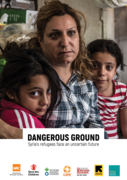
Hundreds of thousands of refugees are at risk of being pushed to return to Syria in 2018, despite ongoing violence, bombing and shelling that are endangering the lives of civilians, leading humanitarian agencies warn in a report released today. The warning comes amid a
...
global anti-refugee backlash, harsher conditions in neighbouring countries hosting Syrians, and Syrian government victories in the conflict that have fuelled misleading rhetoric suggesting Syria is safe for refugees to return.
more
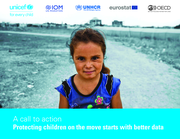
Gaps in data covering refugees, asylum seekers, migrants and internally displaced populations are endangering the lives and wellbeing of millions of children on the move, warned five UN and partner agencies today. In 'A call to action: Protecting children on the move starts with better data', UNICEF
...
, UNHCR, IOM, Eurostat and OECD together show how crucial data are to understanding the patterns of global migration and developing policies to support vulnerable groups like children.
more
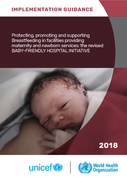
This updated implementation guidance is intended for all those who set policy for, or offer care to, pregnant women, families and infants: governments; national managers of maternal and child health programmes in general, and of breastfeeding- and BFHI-related programmes in particular; and health-f
...
acility managers at different levels (facility directors, medical directors, chiefs of maternity and neonatal wards). The document presents the first revision of the Ten Steps since 1989. The topic of each step is unchanged, but the wording of each one has been updated in line with the evidence-based guidelines and global public health policy.
more
This policy will serve as a cornerstone from which to address the accessibility of Family Planning services and to encourage its integration with services for HIV/AIDS, maternal health, child health, and other development initiatives. This policy is
...
timely, as Rwanda is embarking on the introduction of community-based provision of Family Planning through community health workers. In addition, the expansion of adolescent sexual and reproductive health programs is a pillar of this policy that will help attract and retain the next generation of Family Planning users. These efforts are anticipated to trigger a paradigm change in the way Family Planning services are provided and accessed in order to contribute towards a healthy and productive Rwanda for all.
more
To understand the patterns of Rwanda’s achievements in health development, it is important to explore how Rwanda addresses the Social Determinants of Health (SDH) particularly those related to routine conditions in which people are born, live and work. It is in this particular context that a case
...
study on Rwanda’s Performance in Addressing Social Determinants of Health was conducted by the Rwanda Ministry of Health, with technical and financial support from the World Health Organization (WHO). The overall goal of the exercise was to document Rwanda's recent initiatives that contribute to the advancements of the Rio Political Declaration on Social Determinants of Health.
more
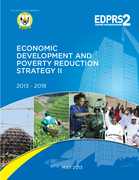
The Second Economic Development and Poverty Reduction Strategy (EDPRS 2) is a launch into the home straight of our Vision 2020. We are faced with new challenges of ensuring greater self-reliance and developing global competitiveness. Conscious of th
...
ese challenges, we forge ahead knowing that by working together, we always overcome. The EDPRS 2 period is the time when our private sector is expected to take the driving seat in economic growth and poverty reduction. Through this strategy we will focus government efforts on transforming the economy, the private sector and alleviating constraints to growth of investment. We will develop the appropriate skills and competencies to allow our people particularly the youth to become more productive and competitive to support our ambitions. We will also strengthen the platform for communities to engage decisively and to continue to develop home grown solutions that have been the bedrock of our success. These are fundamental principles as we work to improve the lives of all Rwandans in the face of an uncertain global economic environment.
more
The Second Economic Development and Poverty Reduction Strategy (EDPRS 2) is a launch into the home strait of our Vision 2020. We are faced with new challenges of ensuring greater self reliance and developing global competitiveness. Conscious of thes
...
e challenges, we forge ahead knowing that working together, we always overcome.
The EDPRS 2 period is the time when our private sector is expected to take the driving seat in economic growth and poverty reduction. Through this strategy we will focus government efforts on transforming the economy, the private sector and alleviating constraints to growth of
investment. We will develop the appropriate skills and competencies to allow our people particularly the youth to become more productive and competitive to support our ambitions. We will also strengthen the platform for communities to engage decisively and to continue to develop home grown solutions that have been the bedrock of our success. These are fundamental principles as we work to improve the lives of all Rwandans in the face of an uncertain global economic environment.
more
The WHO South-East Asia (SEA) Region bears a high burden of tuberculosis (TB) and MDR-TB. In 2015, the Region accounted for nearly 200 000 or 35% of the global estimated new RR/MDR-TB cases eligible for treatment. Extensively drug-resis
...
tant TB (XDRTB) has also been reported from six countries of the SEA Region. MDR-TB could potentially replace drug-susceptible TB, and constitutes a threat to global public health security. The South- East Asia Regional Response Framework for DR-TB 2017–2021 complements the Ending TB in the South-East Asia Region: Regional Strategic Plan 2016–2020” and outlines key strategies for reducing morbidity, mortality and transmission of DR-TB.
more

Addressing Forced Displacement through Development Planning and Co-operation: Guidance for Donor Policy Makers and Practitioners
Mwangi, Annabel; Gamez, Laura et al.
Organisation for Economic Co-operation and Development (OECD)
(2017)
C1
OECD Development Policy Tools
Recognising that donor policies and responses constantly evolve, this guidance recommends that donors operating in situations of forced displacement prioritise three broad areas of work, where they can best contribute to existing capacities at the national, regiona ... l and global levels. more
Recognising that donor policies and responses constantly evolve, this guidance recommends that donors operating in situations of forced displacement prioritise three broad areas of work, where they can best contribute to existing capacities at the national, regiona ... l and global levels. more
Approaches to Conservation of Medicinal Plants and Traditional Knowledge: A Focus on the Chittagong Hill Tracts
Motaleb, Mohammad Abdul
IUCN (International Union for Conservation of Nature), KNCF (Keidanren Nature Conservation Fund)
(2010)
C1
This report documents different approaches to conservation of medicinal plants and traditional knowledge in Bolipara union of Thanchi upazila of Bandarban hill district. This initiative involved the collection of baseline data on medicinal plants and their uses, motivating people towards the uses an
...
d practices, identification and knowledge sharing with the traditional healers, establishment of an electronic database and carrying out specific conservation measures and awareness activities. This document also provides a number of recommendations to ensure sustainability of such initiatives for safeguarding medicinal plants and indigenous knowledge associated with them. We sincerely hope that this account will be useful to the people interested in medicinal plants, especially in developing countries.
Original file: 29 MB more
Original file: 29 MB more
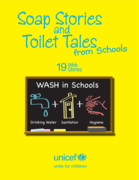
Water, sanitation and hygiene education in schools – WASH in Schools – provides safe drinking water, improves sanitation facilities and promotes lifelong health. WASH in Schools enhances the well-being of children and their families, and paves the way for new generations of healthy children.
f
...
rom Schools offers a snapshot of WASH in Schools experiences across the globe. These stories have been gathered through a retrospective search of UNICEF’s global and country office websites. They represent a myriad of activities undertaken by UNICEF and partners in 2010 and 2011.
more
This resource aims to provide relevant and practical guidance to DRR practitioners (policy and programme colleagues), on how to ensure inclusion - particularly of vulnerable groups - in Community-Based DRR (CBDRR) initiatives in Myanmar. It comprise
...
s an overall Framework for inclusive CBDRR and a number of tools/resources including: 1) a checklist for inclusion in the 7 steps of the CBDRR process, 2) a guideline for documenting inclusion, 3) a template for assessing inclusion and 4) a compendium of tools and guidelines relevant to inclusive CBDRR.
The Inclusive Framework and Toolkit for Community-Based DRR in Myanmar is a resource produced by the Myanmar Consortium for Community Resilience (MCCR), a consortium led by ActionAid, with ACF, HelpAge, Oxfam, Plan and UN-Habitat. more
The Inclusive Framework and Toolkit for Community-Based DRR in Myanmar is a resource produced by the Myanmar Consortium for Community Resilience (MCCR), a consortium led by ActionAid, with ACF, HelpAge, Oxfam, Plan and UN-Habitat. more
This publication presents guidance on good practice from the Ayeyarwaddy Delta in Myanmar, outlining the key factors which contributed to the successful implementation and outcome of a range of community-based Disaster Risk Reduction initiatives imp
...
lemented by the Myanmar Consortium for Community Resilience (MCCR).
The content was developed over a period of two months between November-December 2015, involving a desk review of MCCR project documents including impact studies, monitoring reports and newsletters. Field visits were undertaken to the Ayeyarwaddy Delta to document the perspectives of key stakeholders at community level, including a total of 93 adults (men and women) and 57 children (girls and boys) from eight communities targeted under the DIPECHO IX project. more
The content was developed over a period of two months between November-December 2015, involving a desk review of MCCR project documents including impact studies, monitoring reports and newsletters. Field visits were undertaken to the Ayeyarwaddy Delta to document the perspectives of key stakeholders at community level, including a total of 93 adults (men and women) and 57 children (girls and boys) from eight communities targeted under the DIPECHO IX project. more
The scope of the Guidance is primarily the education in rural settings in Myanmar, but it covers some of the issues which have pan Myanmar implication and relevance. Considering the importance, complexity and vastness of the subject, similar type of initia
...
tives on urban school and education system and other issues needs to be taken up in future.
The Guidance has four sections namely Introduction to this Guidance, Rationale for Mainstreaming DRR in the Education Sector, How to Mainstream Disaster Risk Reduction in Reconstruction Process of Education Sector in Myanmar and Creating an Enabling Environment for Safer Education. The Guidance also includes good practices of various agencies involved in Cyclone Nargis education sector recovery as example.
No publication year indicated. more
The Guidance has four sections namely Introduction to this Guidance, Rationale for Mainstreaming DRR in the Education Sector, How to Mainstream Disaster Risk Reduction in Reconstruction Process of Education Sector in Myanmar and Creating an Enabling Environment for Safer Education. The Guidance also includes good practices of various agencies involved in Cyclone Nargis education sector recovery as example.
No publication year indicated. more
