
Filter
89
Text search:
Action
Contre
la
Faim
(ACF)
International
Featured
Recommendations
10
New Publications
48
Language
Document type
No document type
66
Manuals
6
Studies & Reports
6
Guidelines
6
Strategic & Response Plan
3
Situation Updates
2
Countries / Regions
Myanmar / Burma
9
Sierra Leone
5
Nepal
4
Bangladesh
4
Madagascar
4
Central African Republic
3
Global
3
Burkina Faso
2
Liberia
2
Congo, Democratic Republic of
2
Haiti
2
South Sudan
2
Syria
2
Nigeria
1
Niger
1
Iraq
1
Jordan
1
Mozambique
1
Eswatini/ Swaziland
1
Ukraine
1
Yemen
1
Authors & Publishers
Publication Years
Category
Countries
35
Key Resources
32
Women & Child Health
10
Clinical Guidelines
4
Toolboxes
Conflict
9
Mental Health
6
Rapid Response
4
Ebola & Marburg
3
Cholera
3
COVID-19
3
Polio
1
Natural Hazards
1
TB
1
Global Health Education
1
Caregiver
1
Planetary Health
1
2.0 Rapid Response
1

Mémoire pour le Diplôme inter-universitaire Santé mentale dans la communauté»
Según esta investigación, existen muchos y diferentes niveles de comprensión sobre qué significa el género en la práctica de la seguridad, dentro de
...
Genre et Sécurité : Orientations pour l’intégration du genre à la gestion des risques de sécurité propose aux ONG des lignes directrices complémentaires pour intégrer la dimension genre à
...
A discussion paper on the scope of the problem, its drivers, and strategies for moving forward for policy, practice, and research
In many protracted emergencies, the prevalence rates of global acute malnutrition (GAM) regularly exceed the emergency threshold of > 15% of children with acute malnutri
...
This review of the IFRC support to the Sierra Leone Red Cross Society response to the 2012 cholera outbreak provides ideas and concepts to promote a more coherent and evidence based rationale on how to make more effective use of IFRC global assets to stop, control, mitigate and respond to cholera ep
...
Services, Identified needs and recommendations following the April and May 2015 Earthquakes in Nepal
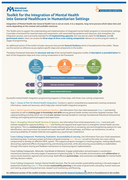
This Toolkit aims to support the understanding and implementation of integrated mental health programs in humanitarian settings. It provides a framework for essential steps and components, with associated key guidance and resources, that strengthen the integration process, and is primarily intended
...
Pour le personnel de santé et les travailleurs de la nutrition dans les situations d’urgence

Specific action sheets offer useful guidance on mental health and psychosocial support and cover the following areas coordination assessment monitoring and evaluation protection and human rights standards human resources community mobilisation and s
...

Mapping actions of nongovernmental organizations and other international development organizations
The emergency Water, Sanitation and Hygiene Promotion (WASH) gap analysis project was funded by The Humanitarian Innovation Fund (HIF), a program managed by Enhancing Learning and Research for Humanitarian Assistance (ELRHA) in partnership with the Active Learning Network for Accountability and Per
...
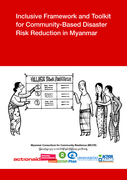
This resource aims to provide relevant and practical guidance to DRR practitioners (policy and programme colleagues), on how to ensure inclusion - particularly of vulnerable groups - in Community-Based DRR (CBDRR) initiatives in Myanmar. It comprises an overall Framework for inclusive CBDRR and a nu
...
This document is written for local and international staff running nutrition programmes in emergencies, and for local, regional and national authorities and donors involved in such programmes.
The note explains why nutrition programmes need to inc
...
Public Health Action PHA 2017; 7(2): 110–115
Today, the World Health Organization (WHO) is advancing the global fight against acute malnutrition in children under 5 with the launch of its new guideline on the prevention and management of wasting and nutritional oedema (acute malnutrition). This milestone is a crucial response to the persistent
...
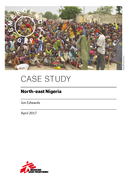
This case study examines the humanitarian response to the conflict-related crisis in the North-East of Nigeria, focusing primarily on the period from 2015 to the end of 2016. The aim is test the central hypotheses of the Emergency Gap project: that the current structure, conceptual underpinning and
...
