
Filter
456
Text search:
Inter-Agency
Standing
Committee
(IASC)
Featured
Recommendations
95
New Publications
121
Language
Document type
No document type
250
Guidelines
65
Manuals
46
Studies & Reports
39
Strategic & Response Plan
21
Training Material
18
Fact sheets
6
Situation Updates
5
Brochures
4
Infographics
1
Online Courses
1
Countries / Regions
Syria
27
Global
20
Ukraine
13
Nepal
12
Latin America and the Carribbean
11
South Sudan
10
Congo, Democratic Republic of
9
Mozambique
9
Myanmar / Burma
8
Yemen
8
Bangladesh
7
Middle East and North Africa
7
Russia
7
Sierra Leone
6
India
6
Haiti
5
Philippines
4
Germany
4
China
4
Western and Central Europe
4
Liberia
3
Ethiopia
3
Uganda
3
Somalia
3
Iraq
3
Jordan
3
Afghanistan
3
Indonesia
3
Sudan
3
Angola
3
East and Southern Africa
3
Africa
3
Venezuela
3
Laos
3
Portugal
3
Guinea
2
Nigeria
2
Senegal
2
Togo
2
Zimbabwe
2
Lebanon
2
Kenya
2
Cambodia
2
Malaysia
2
Brazil
2
Burundi
2
Colombia
2
Chile
2
West and Central Africa
2
Eastern Europe
2
Moldova
2
Spain
2
Belarus
2
Burkina Faso
1
Mali
1
Guinea-Bissau
1
Côte d’Ivoire / Ivory Coast
1
Niger
1
Pakistan
1
Turkey
1
Tanzania
1
Thailand
1
Rwanda
1
Singapore
1
Benin
1
Central African Republic
1
Argentina
1
Peru
1
Hungary
1
Madagascar
1
Mexico
1
Sri Lanka
1
South–East Asia Region
1
Western Pacific Region
1
Eastern Europe and Central Asia
1
Asia
1
Fiji
1
Poland
1
Italy
1
Bulgaria
1
Romania
1
Kyrgyzstan
1
Kazakhstan
1
Vietnam
1
Gabon
1
Japan
1
Denmark
1
France
1
Authors & Publishers
Publication Years
Category
Key Resources
126
Countries
100
Women & Child Health
35
Public Health
19
Clinical Guidelines
13
Capacity Building
10
Pharmacy & Technologies
1
Toolboxes
Mental Health
88
COVID-19
64
Conflict
53
Disability
25
Refugee
24
Natural Hazards
22
Rapid Response
11
HIV
8
Ebola & Marburg
5
2.0 Rapid Response
5
Zika
4
Planetary Health
4
Cholera
3
TB
3
Health Financing Toolbox
3
Typhoon
2
Specific Hazards
2
Global Health Education
2
Malaria
2
Caregiver
1
Pharmacy
1
NTDs
1
Part 2: Part 2 Beyond the evidence: Implications for innovation and practice
Part 2 of the Gap Analysis presents the insights from individuals working in humanitarian response, disability inclusion and older age inclusion. This report begins by looking at how an agenda for the inclusion of people
...
A key purpose of the Recovery Toolkit is to support countries in the reactivation of health services which may have suffered as a result of the emergency. These services include ongoing programmes such as immunization and vaccinations, maternal and child health services, and noncommunicable diseases
...
Disaster Recovery Toolkit
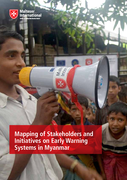
This study aims to analyze national and international stakeholders and their initiatives in Early Warning Systems in Myanmar, to identify priority gaps that need to be addressed by all stakeholders. It is presented as a first step towards supporting GoUM in information-gathering under the Myanmar Ac
...

In Control: A Practical Handbook for Professionals Working in Health Emergencies Internationally RKI
The greatest risk to persons engaging in international medical emergency response is poor preparation.
The In Control handbook hopes to provide a remedy.
At the time of writing, we are living through the Coronavirus (COVID-19) pandemic, a health emergency that disregards physical borders, brin
...

In Control. A Practical Handbook for Professionals Working in Health Emergencies Internationally
recommended
In Control imparts knowledge, provokes reflection and triggers curiosity. The first half of the book provides an overview of the organisations, principles, frameworks and themes that every professional deploying to health emergencies should be aware of. The second half of the book provides practical
...
Assessing Mental Health and Psychosocial Needs and Resources Toolkit For Humanitarian Settings
recommended
Available in different languages: English, French, Arabic, Russian
An Easy-Reference Guidebook for Healthcare Providers In Developed and Developing Countries

The ERF provides WHO staff with essential guidance on how the Organization manages the assessment, grading and response to public health events and emergencies with health consequences, in support of Member States and affected communities. The ERF adopts an all-hazards approach and it is therefore a
...
Lunsar, Port Loko District, Sierra Leone
Emergency response framework, 2nd ed.
recommended
The purpose of this Emergency Response Framework (ERF) is to clarify WHO’s roles and responsibilities in this regard and to provide a common approach for its work in emergencies. Ultimately, the ERF requires WHO to act with urgency and predictability to best serve and be accountable to populations
...

front cover © Hannah Maule-Ffinch/Save the Children


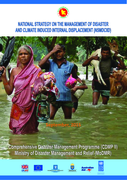
National strategy on the management of disaster and climate induced internal displacement (NSMDCIID)
This strategy has been developed with a view to managing climate-induced internal displacement (CIID) in a comprehensive and rights-based manner. It is part of the action plan for the Government of Bangladesh (GoB) to implement the Sendai Framework.
The strategy focuses solely on internal disp ...
The strategy focuses solely on internal disp ...
With its expert practical advice on security in situations of armed conflict, this updated set of guidelines will prove invaluable to humanitarian personnel working at the operational level. Following on from the success of the first edition, published in 1999, it addresses new and developing threat
...
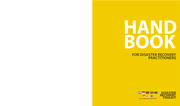
The ‘Toolkit’ is targeted at practitioners responsible for implementing recovery programmes, their objective to provide a ‘how to’ guide on development, implementing and managing complex post-disaster recovery programmes.
Disaster Recovery Toolkit
