
Filter
812
Text search:
World
Health
Organization
(Regional
Office
for
South-East-Asia)
Featured
113
218
Language
Document type
364
169
151
45
40
13
9
8
7
2
2
2
Countries / Regions
62
60
44
28
27
22
16
12
11
11
10
9
9
8
4
4
4
4
4
4
4
3
3
3
3
3
3
3
3
3
3
3
3
3
2
2
2
2
2
2
2
2
2
2
2
1
1
1
1
1
1
1
1
1
1
1
1
1
1
1
1
1
1
1
1
1
1
1
1
1
1
1
1
1
1
1
1
Authors & Publishers
Publication Years
Category
184
111
73
66
42
21
13
Toolboxes
72
58
58
51
48
42
36
31
30
21
19
19
19
16
16
12
9
9
7
7
6
6
5
4
1
The WHO South-East Asia (SEA) Region bears a high burden of tuberculosis (TB) and MDR-TB. In 2015, the Region accounted
...

With the goal of ending viral hepatitis as a public health threat by 2030, the Regional Action Plan will provide an actionable framework for implem
...
Oral diseases are among the most common chronic diseases worldwide and constitute a major public health problem due to the huge health and economic burden on individuals, families, societies, and
...
A series of information sheets to help empower communities and strengthen health systems
This series of information sheets introduces health literacy, its
relevance to public policy, and the way
...

Based on WHO South-East Asia Regional Strategy on Autism Spectrum Disorder
The collaborativ ...
The collaborativ ...
To implement the set of recommendations on the marketing of foods and non-alcoholic beverages to children
With the growing obesity crisis among children, WHO and other public health advocates and consumer groups have called ...
With the growing obesity crisis among children, WHO and other public health advocates and consumer groups have called ...
The current SEARVAP (South-East Asia regional vaccine action plan) describes a set of
...
The document contains a set of indicators that can be used for monitoring traditional and complementary medicine (T&CM) systems in a country.
The core indicator set consists of 16 indicators that were considered essential and collectively able to p
...

hese are two parallel guidelines, one for small hospitals and another one for large hospitals. In view of heavy burden of malaria and prevalence of drug resistant falciparum malaria in the
...
WHO-SEARO in partnership with WHOCC AIIMS, UNICEF, UNFPA and USAID has prepared a training package for building capacity of healthcare teams in health facilities
...
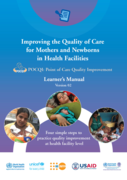
A training package for building capacity of healthcare teams in health facilities for continous quality improvement of maternal and newborn healthc
...
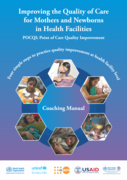
Four simple steps to practice quality improvement at health facility level
The Report describes the evaluation of WHO's contribution to the Maternal Health Program in South-East
...

