
Filter
10
Featured
5
Language
Document type
5
4
1
Countries
2
Authors & Publishers
Publication Years
Category
2
The information in the brief version is excerpted directly from the full-text guidelines. The brief version is a compilation of the tables and boxed recommendations. The guidelines were updated to comply with Executive Orders
Guidelines for the Prevention and Treatment of Opportunistic Infections in Adults and Adolescents With HIV
recommended
The Guidelines for the Prevention and Treatment of Opportunistic Infections in Adults and
Adolescents With HIV document is published in an electronic format and updated as relevant changes
in prevention and treatment recommendations occur.
Guidelines for the Prevention and Treatment of Opportunistic Infections in Children With and Exposed to HIV
recommended
Full Guidelines

Dosing Recommendations for Prevention and Treatment
BMC Infectious Diseases Volume 25, article number 1289, (2025)

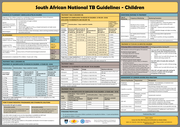
A Clinical Guideline for the Diagnosis and Treatment of Drug-susceptible TB in Children and Adolescents
in South Africa. This new guidance is aligned with the updated WHO guidelines but has been adapted specifically for the South African context.
The intention of this publication is to provide g
...
Int. J. Transl. Med. 2023, 3(2), 187-202; https://doi.org/10.3390/jtm3020014 .
Malaria and HIV are geographically in the tropics and subtropics of the world, including sub-Saharan Africa. Understanding the overlapping effect of both infections, especially among pregnant women, is crucial in managin
...
Pathogens 2022, 11, 33. https://doi.org/10.3390/pathogens11010033
Front. Cell. Infect. Microbiol., 12 April 2021 Sec. Parasite and Host
Volume 11 - 2021 | https://doi.org/10.3389/fcimb.2021.656938
Over the past several decades, malaria/HIV-1 co-infection has become a significant global public health problem in co-endemic areas of the world.
Accessed: 08.10.2019
Based on the National Guidelines for the Management of Tuberculosis in Children 2013, Department of Health, South Africa.
