
Filter
144
Featured
19
2
Language
Document type
44
36
26
15
14
4
2
2
1
Countries
8
5
5
3
2
1
1
1
1
1
1
1
1
Authors & Publishers
Publication Years
Category
30
12
2
1

WHO's Department for HIV, Tuberculosis, Hepatitis and Sexually Transmitted Infections (STIs) has consolidated all existing normative guidance on STIs into a single publication. Structured around 10 chapters that follow the STI prevention and care cascade, the handbook covers primary prevention, synd
...

Pregnancy often results in exclusion from clinical trials of antiretroviral (ARV) drugs, resulting in limited data on pharmacokinetics (PK), drug safety, and the efficacy of new ARV drugs in pregnancy and lactation. However, pregnancy, lactation, or the potential for pregnancy should not preclude th
...
In order to ramp up our efforts in the fight against AIDS, there is a need for more concentrated focus on adolescents and young people
The federally approved clinical practice guidelines for HIV/AIDS are developed by panels of experts in HIV care. More information about the panels can be found in each set of guidelines.
The recommendations in these guidelines represent the current, evidence-based consensus of the U.S. Departmen
...

Men lag behind women regarding use of HIV services and represent the majority of individuals living with uncontrolled HIV, advanced HIV, and who experience HIV-related mortality. Men (15+) globally are less likely than women (15+) to know their HIV status (83% for men vs 91% for women), be on antire
...

This publication provides guidance for planning country-specific programming to achieve the triple elimination of mother-to-child (or vertical) transmission of HIV, syphilis and hepatitis B virus. It is based on the WHO Triple Elimination Framework, which promotes an integrated, person-centred appro
...

The findings of the report are both urgent and devastating. At the current rate of progress, by 2040 we would still have 1.9 million new HIV infections and 990,000 AIDS-related deaths in children. But if funding for HIV prevention and treatment continues to fall as current trends suggest, the world
...

WHO updated recommendations on HIV clinical management: recommendations for a public health approach
recommended
This document provides an overview of the updated World Health Organization recommendations for HIV clinical management, which focus on optimizing antiretroviral therapy, preventing vertical transmission, and enhancing tuberculosis prevention among individuals with HIV. These updates are intended to
...
The information in the brief version is excerpted directly from the full-text guidelines. The brief version is a compilation of the tables and boxed recommendations. The guidelines were updated to comply with Executive Orders
Guidelines for the Prevention and Treatment of Opportunistic Infections in Adults and Adolescents With HIV
recommended
The Guidelines for the Prevention and Treatment of Opportunistic Infections in Adults and
Adolescents With HIV document is published in an electronic format and updated as relevant changes
in prevention and treatment recommendations occur.
Guidelines for the Prevention and Treatment of Opportunistic Infections in Children With and Exposed to HIV
recommended
Full Guidelines

Dosing Recommendations for Prevention and Treatment
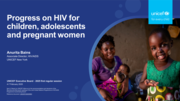
Progress in reducing new HIV infections among children has stagnated in recent years
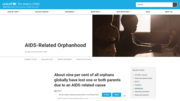
About nine per cent of all orphans globally have lost one or both parents due to an AIDS-related cause
About six in ten adolescents 10-19 years of age living with HIV are on antiretroviral medications
Slightly more than half of children under 15 years of age living with HIV are on antiretroviral medications
The Lancet HIV Volume 12, Issue 6e459-e462June 2025
The information in the brief version is excerpted directly from the full-text guidelines. The brief version is a compilation of the tables and boxed recommendations. The guidelines were updated to comply with Executive Orders. You can download the full guidelines, charts and recommendations
BMC Infectious Diseases Volume 25, article number 1289, (2025)
