
Filter
239
Featured
28
40
Language
Document type
81
71
18
13
11
9
8
7
6
5
4
2
2
Countries
11
8
5
5
4
3
3
3
3
2
2
2
2
2
2
2
2
2
1
1
1
1
1
1
1
1
1
1
1
1
1
1
1
1
1
1
1
1
1
1
1
1
1
1
1
Authors & Publishers
Publication Years
Category
28
20
4
3
2
1
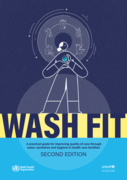
2nd edition
WASH FIT is a risk-based, continuous improvement framework with a set of tools for undertaking water, sanitation and hygiene (WASH) improvements as part of wider quality improvements in health care facilities. It is aimed at small primary, and in some instances secondary, health care fa
...
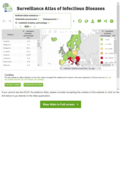
Interactive Atlas
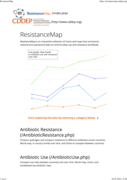
ResitanceMap
recommended
ResistanceMap is an interactive collection of charts and maps that summarize national and subnational data on antimicrobial use and resistance worldwide.
ournal of Public Health in Africa 2021; volume 12:2009
On April 1, 2017, the Ukrainian government launched the Affordable Medicines National Prescription Drugs Cost Reimbursement Program providing for full or partial reimbursement of essential medicines for treatment of cardiovascular diseases, asthma and diabetes mellitus type 2 (also known as type 2 d
...
Member States have requested WHO policy guidance on how to facilitate the implementation of national AMS activities in an integrated and programmatic approach. This policy guidance responds to that demand from Member States and is anchored in public health guiding principles in the human health sect
...
The toolkit provides guidance on where to get started, including the structures and resources that should be put in place at the national and health-care facility level, through a stepwise approach in low-resource settings. As the ultimate goal of an AMS programme is sustainable behaviour change in
...
A view of global supply chains, pressure points, and implications for antimicrobial resistance response
During the COVID-19 health crisis, community pharmacists had an enhanced role in supporting health-care systems that were overburdened by managing seriously ill patients. This study was undertaken to determine the patterns of community supply of antiviral and antibacterial agents from community phar
...
The GEHM series is an evidence-informed normative product of the WHO
Health and Migration Programme to inform policy-makers on migrationrelated public health priorities. These reviews aim to respond to policy questions identified as priorities by summarizing the best available evidence worldwide an
...

The WHO Global Antimicrobial Resistance and Use Surveillance System (GLASS) was launched in 2015 to foster AMR surveillance and inform strategies to contain AMR. The system started with surveillance of AMR in bacteria causing common human infections and has expanded its scope to include surveillance
...

Antimicrobial resistance (AMR) is a major global public health concern and a food safety issue. When pathogens become resistant to antimicrobial agents they can pose a greater human health risk as a result of potential treatment failure, loss of treatment options and increased likelihood and severi
...
How to address the global crisis in antibiotic research and development.
The report includes a comprehensive summary and critical evaluation of recent initiatives to overcome the barriers to achieve sustainable access to antibiotics. As antibiotic resistance will continue to develop as long as we
...
Member States have requested WHO policy guidance on how to facilitate the implementation of national AMS activities in an integrated and programmatic approach. This policy guidance responds to that demand from Member States and is anchored in public health guiding principles in the human health sect
...

This document provides additional guidance for the responsible and prudent use of antimicrobials in food-producing animals, and should be read in conjunction with the Recommended International Code of Practice for Control of the Use of Veterinary Drugs CAC/RCP 38-1993. Its obj
...

Le présent document donne des indications supplémentaires pour un usage responsable et prudent des
antimicrobiens chez les animaux élevés pour l’alimentation humaine. II convient de le lire en conjonction
avec le Code d’usages international recommandé pour le contrôle de l'utilisation de
...

Este documento brinda orientación adicional para el uso responsable y prudente de los antimicrobianos en los animales productores de alimentos y debería leerse junto con el Código Internacional Recomendado de Prácticas para la Regulación del Uso de Medicamentos Veterinarios CAC/RCP 38-1993. Su
...
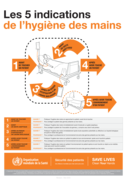
Ces cinq indications sur l’hygiène des mains sont extraites des directives de l'OMS sur l'hygiène des mains dans les soins de santé pour ajouter de la valeur à toute stratégie d'amélioration de l'hygiène des mains. Tout simplement, elles définissent des moments clés de l'hygiène des main
...
Ces cinq indications sur l’hygiène des mains sont extraites des directives de l'OMS sur l'hygiène des mains dans les soins de santé pour ajouter de la valeur à toute stratégie d'amélioration de l'hygiène des mains. Tout simplement, elles définissent des moments clés de l'hygiène des main
...
