Filter
239
Featured
28
40
Language
Document type
81
71
18
13
11
9
8
7
6
5
4
2
2
Countries
11
8
5
5
4
3
3
3
3
2
2
2
2
2
2
2
2
2
1
1
1
1
1
1
1
1
1
1
1
1
1
1
1
1
1
1
1
1
1
1
1
1
1
1
1
Authors & Publishers
Publication Years
Category
28
20
4
3
2
1
Essential medicines are those that satisfy the priority health care needs of a population. They are selected with due regard to disease prevalence and public health relevance, evidence of efficacy and safety and comparative cost-effectiveness. They are intended to be available in functioning health
...
The WHO Model List of Essential Medicines and Model List of Essential Medicines for Children are updated and published every two years, intended as a guide for countries or regional authorities to adopt or adapt in accordance with local priorities and treatment guidelines for the development and upd
...
List of available resources and courses
WHO Antibiotic Categorization AWaRE
recommended
Online Database: Provides recommendations for 21 common infectious diseases; Classifies antibiotics into three groups based on the potential to induce and propagate resistance; Identifies antibiotics that are priorities for monitoring and surveillance of use
WHO Global Essential Medicines
recommended
Database of the essential lists for 137 countries based on the national essential lists repository
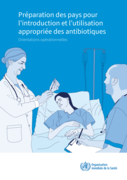
Ces orientations opérationelles ont pour but de soutenir les pays dans le processus d’introduction d’un antibiotique. Leur objectif est de garantir un accès rapide aux antimicrobiens et l’utilisation appropriée de ces produits ainsi que des résultats optimaux pour les patients, tout en ré
...
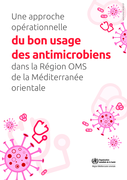
La promotion du bon usage et l’utilisation appropriée des antimicrobiens sont à la base du quatrième objectif du Plan d’action mondial pour combattre la résistance aux antimicrobiens de l’Organisation mondiale de la Santé (OMS), adopté par les États Membres lors de la Soixante-Huitième
...

Objective To determine whether adding urine culture to urinary tract infection diagnosis in pregnant women from refugee camps in
Lebanon reduced unnecessary antibiotic use.

Antimicrobial resistance (AMR) is impacting our health, economies and development. Up to 5.2 million people may die because of resistant bacterial infections across the Western Pacific Region from 2020-2030. Childbirth, surgery, cancer treatment and other interventions will become impossibly d
...
The primary objective of this curriculum is to equip health and care workers with the essential knowledge and competencies necessary for delivering safe and effective care. By doing so it aims to significantly reduce HAIs and combat antimicrobial resistance, thereby safeguarding both patient and HCW
...

Until fairly recently, debates about how to tackle the looming threat of antibiotic resistance have tended to focus on how to come up with new antibiotics

Antimicrobial resistance (AMR) is a global public health crisis that resulted in 1.14 million deaths in 2021. According to the Institute for Health Metrics and Evaluation estimates, 96 416 of these deaths occurred in the World Health Organization (WHO) Eastern Mediterranean Region. All 22 countr
...
This volume contains monographs prepared at the ninety-first meeting of the Joint FAO/WHO Expert Committee on Food Additives (JECFA), which met virtually online from 1 to 12 February 2021.
The detailed monographs in this volume summarize data on specific contaminants in food. Individual monographs
...
Au cours des trente dernières années, la mortalité des enfants de moins de cinq ans a chuté de près de 60 % au niveau mondial
Issue Brief 31: Antimicrobial resistance (AMR) can occur when viruses, bacteria, parasites and fungi change over time. There is no longer a response to medicines, and the infection treatment gets really difficult which increases the risk of a disesase spread, which can lead to severe health problems
...

Those who clean are the first line of defense against health care-associated infections (HAIs), and support efforts to reduce antimicrobial resistance (AMR).
Strengthening the training of this important group can contribute to resolving many of today’s public health challenges. This is importan
...
En 2014, la soixante-septième Assemblée Mondiale de la Santé a exprimé sa préoccupation croissante au sujet de la situation
de la RAM, et elle a exhorté les pays membres à renforcer leurs programmes d’action nationale ainsi que la collaboration
internationale. Dans sa résolution WHA67.25
...

Antimicrobial resistance (AMR) is a global human, animal, plant and environment health threat that needs to be addressed by every country. The impacts of AMR are wide-ranging in terms of human health, animal health, food security and safety, environmental effects on ecosystems and biodiversity, and
...
This document outlines the concept and content of the WHO people-centred approach to addressing antimicrobial resistance (AMR) in the human health sector. The proposed approach recognizes and aims to address the challenges and health system barriers people face when accessing health services to prev
...