
Filter
91
Featured
16
4
Language
Document type
32
18
13
13
6
5
2
Countries
10
4
2
1
1
1
1
1
1
1
1
Authors & Publishers
Publication Years
Category
10
2
1
1
1
1
The Lancet Global Health Online firstFebruary 02, 2026
Forecasting analyses projected that ongoing reductions in ODA funding could, under a severe defunding scenario, result in 22·6 million (95% uncertainty interval [UI] 16·3-29·3) additional deaths across all ages by 2030, including 5·4 millio
...

The Global Aids Strategy 2026-2031
recommended
United- Towards Ending AIDS. The Global AIDS Strategy 2026-2031 focuses global efforts for the future of the AIDS response to end AIDS as a public health threat by 2030 and sustain the HIV response after 2030. This is a strategy uniting the world.
The Strategy will shape the June 2026 United Natio
...

United- Towards Ending AIDS. The Global AIDS Strategy 2026-2031 focuses global efforts for the future of the AIDS response to end AIDS as a public health threat by 2030 and sustain the HIV response after 2030. This is a strategy uniting the world.
The Strategy will shape the June 2026 United Natio
...
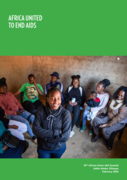
39th African Union (AU) Summit, Addis Ababa, Ethiopia, February 2026
National HIV Policies
recommended
Here you can download different national policies from Africa, Asia and Latin America

medRxiv preprint;https://doi.org/10.64898/2026.02.18.26346597. This model application demonstrates that the sudden cessation of USAID and CDC
commitments in the largest HIV epidemic in the world leads to increased incidence and mortality
and threatens decades of progress in KZN, South Africa. Rest
...
The New England Journal of Medicine Correspondence March 26, 2026

A Global Access Framework for Country-Led.
ResponsesThis 2030 Prevention access framework focuses on one of those top-line targets, which covers primary prevention and requires that 90% of people in need of HIV prevention are using effective prevention options by 2030. This target is disaggregated
...

The Gender Assessment Tool for National HIV Responses (Gender Assessment Tool) is intended to assist countries in assessing their HIV epidemic, context and response through an intersectional gender lens, with the aim of strengthening gender-transformative, equitable and rights-based HIV responses. T
...

Indicators and questions to monitor progress towards the Global AIDS Strategy 2026-2031 targets

This report developed by UNAIDS and the United for Global Mental Health reviews and maps Global Fund investments in priority HIV and TB comorbidities in Grant Cycle 7 (GC7), including key non-communicable diseases (NCDs), cervical, anorectal and other cancers, and mental health and substance use co
...

Community-led responses (CLRs) are a vital pillar of the HIV response and central to achieving national and global targets, including the 30-80-60 commitments outlined in the 2021 Political Declaration on HIV and AIDS. These guidelines provide practical, step-by-step methods for costing and budgetin
...
Dieses Dokument bietet eine Problemanalyse der US-Kürzungen im Bereich globale Gesundheit und leitet daraus konkrete Handlungsempfehlungen für medizinische Akteure ab. Im Fokus steht die Analyse der direkten Auswirkungen auf die gesundheitsspezifische Entwicklungszusammenarbeit.
Diese zweiseitige Kurzfassung bietet eine Problemanalyse der US-Kürzungen im Bereich globale Gesundheit und leitet daraus konkrete Handlungsempfehlungen für medizinische Akteure ab. Im Fokus steht die Analyse der direkten Auswirkungen auf die gesundheitsspezifische Entwicklungszusammenarbeit.

This publication provides a problem analysis of the U.S. cuts in global health and derives concrete recommendations for action for medical actors. The focus is on analyzing the direct effects on health-specific development cooperation.
This two-page summary provides a problem analysis of the U.S. cuts in global health and derives concrete recommendations for action for medical actors. The focus is on analyzing the direct effects on health-specific development cooperation.

A historic funding crisis is threatening to unravel decades of progress unless countries can make radical shifts to HIV programming and funding. The report highlights the impact that the sudden, large-scale funding cuts from international donors are having on countries most affected by HIV. Yet it a
...

Abrupt reductions in international HIV assistance in 2025 have deepened existing funding shortfalls. The OECD estimates that external health assistance is projected to drop by 30–40% in 2025 compared with 2023, causing immediate and even more severe disruption to health services in low- and middle
...
New HIV Response Sustainability Approach
recommended
This holistic approach includes programmatic, political, policy-related and financial aspects of the HIV response. The new Primer provides the rationale, the definitions, and an in-depth explanation of this new sustainability approach. Additionally, UNAIDS has released a new Companion Guide which in
...
