
Filter
906
Text search:
pathogen
Featured
138
168
Language
Document type
254
229
221
90
50
26
17
6
5
4
2
1
1
Countries
57
34
27
24
19
18
16
16
15
12
11
10
9
9
7
7
7
6
6
6
6
5
5
5
5
5
5
4
4
4
4
4
4
4
4
3
3
3
3
3
3
3
3
3
3
3
2
2
2
2
2
2
2
2
2
2
2
2
2
2
2
2
2
2
2
2
1
1
1
1
1
1
1
1
1
1
1
1
1
1
1
1
1
1
1
1
1
1
1
1
1
1
1
1
1
1
1
1
1
1
1
1
1
1
1
1
1
1
1
1
1
Authors & Publishers
Publication Years
Category
204
92
87
55
32
21
16
Toolboxes
137
137
72
70
68
50
49
42
21
18
18
16
15
15
13
12
11
9
8
8
8
8
7
1

Africa CDC Institute of Pathogen Genomics (IPG) was launched in November 2019 and operates under the Division of Laboratory Systems and Networks.
IPG coordinate the implementation of molecular diagnostics,
...
The text “Pathogen Genomic Surveillance Policy Framework (2023)” is a strategic framework developed by Africa CDC to strengthen genomic surveillance of pathogens in the Member States of the African Union.
Its content focuses on how African coun
...
This checklist is an operational tool to help national authorities develop or revise national respiratory pathogen (inclusive of influenza and coronaviruses) pandemic preparedness plans.
Planning for public health emergencies should ensure that capabilities developed during previous emergencies are maintained, incorporated, and put into practice when a new event of public health concern arises. Investments in pandemic preparedness lead to more rapid detection and a stronger response
...

Through technical consultations with countries and partners, WHO has led the development of Preparedness and Resilience for Emerging Threats Module 1: Planning for respiratory pathogen pandemics. Version 1.0. The Module, currently available as an ad
...
Pathogen genomic surveillance has become a priority for public health systems in recent years. Genomic sequencing is increasingly being used to characterize pathogens and monitor important public health priorities (e.g. poliovirus, influenza virus,
...

J Clin Med . 2020 May 18;9(5):1517. doi: 10.3390/jcm9051517.
Chagas disease (CD) is a major burden in Latin America, expanding also to non-endemic countries. A gold standard to detect the CD causing pathogen Trypanosoma cruzi is currently not avai
...
Buruli ulcer is a disease caused by the environmental pathogen Mycobacterium ulcerans that affects skin and soft tissue. It was first described in Australia in 1948 and has been reported in several sub-Saharan African countries since the late 19th c
...
All vaccines work by exposing the body to molecules from the target pathogen to trigger an immune response – but the method of exposure varies. Here’s how DNA and RNA vaccines work.
Whole-genome sequencing (WGS) provides a vast amount of information and the highest possible resolution for pathogen subtyping. The application of WGS for global surveillance can provide information on the early emergence and spread of AMR and furth
...
This policy brief outlines core elements that Member States are encouraged to a) develop an integrated approach to respiratory pathogen pandemic preparedness planning and b) enhance national and sub-national functional capacities for preparedness. I
...
All lyssaviruses have evolved closely with distinct natural reservoir hosts. The latter are animals species in which a pathogen of an infectious disease are maintained independently. For lyssaviruses, these are a wide range of mammalian species with
...

This report presents a WHO–PREZODE collaboration to develop and validate standardized indicators that assess the risk of zoonotic disease emergence by modeling pathogen circulation in animals and the risk of animal to human zoonotic spillover. The
...

Health workers are at the front line of the COVID-19 outbreak response and as such are exposed to hazards that put them at risk of infection. Hazards include pathogen exposure, long working hours, psychological distress, fatigue, occupational burnou
...

DOI: 10.5772/intechopen.102891Little progress has been made since the 1960s and 19. 70s to widen the therapeutic arsenal against Trypanosoma cruzi, the causative pathogen of Chagas disease, which remains a frustrating and perplexing infectious disea
...

Buruli ulcer is a disease of skin and soft tissue with the potential to leave sufferers scarred and disabled. It is caused by an environmental pathogen, Mycobacterium
ulcerans, that produces a destructive toxin. The exact mode of transmission is u
...
The PRET simulation exercise packages are a comprehensive set of resources designed to support countries and different stakeholders in conducting tailored exercises for respiratory pathogen preparedness and response planning. These packages are vers
...
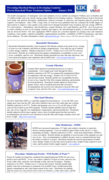
The CDC report on Preventing Diarrheal Disease in Developing Countries highlights five effective household water treatment methods to reduce waterborne illnesses, which cause millions of deaths annually. These methods include ceramic filtration, solar disinfection (SODIS), flocculant/disinfectant po
...
Drawing on lessons from recent events, WHO launched ‘PRET - Preparedness and Resilience for Emerging Threats’ to support countries in updating their pandemic plans. Building on the current global momentum, PRET applies a “mode of transmission lens.”
The first PRET module focuses on preparin
...

The following protocol has been designed to investigate the First Few X cases (FFX) and their close contacts. It is envisioned that the FFX 2019-nCoV investigation will be conducted across several countries or sites with geographical and demographical diversity. Using a standardized protocol such a
...
