
Filter
1566
Text search:
gender
empowerment
Featured
110
506
Language
Document type
980
276
113
74
73
26
15
4
2
1
1
1
Countries
84
68
57
55
53
49
45
45
40
39
37
33
33
32
29
29
26
25
22
22
19
19
17
14
10
10
10
10
10
10
9
9
9
9
8
8
8
8
7
7
7
6
6
5
5
5
5
5
4
4
4
4
3
3
3
3
3
3
3
3
2
2
2
2
2
2
2
2
2
1
1
1
1
1
1
1
1
1
1
1
1
1
1
1
1
1
1
Authors & Publishers
Publication Years
Category
774
133
90
75
33
21
Toolboxes
176
126
91
65
60
48
46
38
37
31
22
21
18
14
12
9
8
6
5
4
4
4
2
2
1
1

Conflicts and disasters, including pandemics, affect women and men in all their diversity differently, and women and girls often suffer the most. Crisis-related hardships combine and compound pre-existing disadvantages, for example, they often cause women’s working conditions to worsen while incre
...
DHS Working Papers No. 108 | Zimbabwe Working Papers
No. 9
The impact of intersecting issues and key continental priorities
abridged version, March 2021
he study highlights the impacts of COVID-19 on women and men as gleaned from research conducted during 2020, as well as the Computer Assisted Telephonic Interviews (CATI) Rapid Gender Assessments (RGAs) executed by UN W
...

Regulation of Minister of Women Empowerment and Child Protection
Republic of Indonesia Number 09 Year 2010 on Guidelines for Planning and Budgeting in HIV / AIDS Responsive Prevention and Control
The United Nations Population Fund (UNFPA) is the lead UN agency working to further gender equality and women’s empowerment in Sri Lanka. We are pleased to be a part of the joint effort with the M
...

The UNICEF Gender Equality Action Plan, 2026–2029 provides the road map
for the organization’s key commitments to advancing gender equality and the
...
The war in Ukraine has had devasting impact on women and girls
worldwide, widening gender gaps and increasing rates of food insecurity, malnutrition and energy poverty. This brief reviews the available evidence of that impact, recommending urgent a
...

The NDMS&IP focuses on mainstreaming disability to promote equitable access to services in the six thematic areas of health, education, livelihoods, empowerment, and social inclusion and cross-cutting issues.
The first part of the NDMS&IP outlines
...
This publication provides an overview of UN Women’s commitments to the humanitarian community guided by the “UN Women strategic plan 2022–2025”. It highlights areas where UN Women has a unique advantage in advancing gender equality and the
...

As Uganda builds back from the COVID-19 shock, the Ugandan government is strengthening its commitment to a more gender-inclusive and sustainable economy. This report supports these efforts by describing the gendered impacts of COVID-19 and provides
...
HIV, viral hepatitis and STI epidemics, particularly among people who inject drugs and other key populations, continue to be fuelled by laws and policies criminalizing sex work; drug use or possession; diverse forms of gender expression and sexualit
...
This resource is a practical, user-friendly tools that aid in the application of gender-transformative approaches for everyday work at the frontlines within the social, health, education, or legal sectors, among others.
...
This resource is a practical, user-friendly tools that aid in the application of gender-transformative approaches for everyday work at the frontlines within the social, health, education, or legal sectors, among others.
...
DEMOGRAPHIC AND HEALTH SURVEYS DHS WORKING PAPERS 2015 No. 117
The present Community Empowerment Manual draws upon the lessons learned of the Community Protection Approach implementation in Lebanon, the occupied Palestinian territory and Central America during the period 2015-2020 by WeWorld – GVC and its par
...
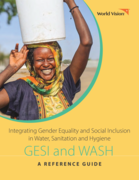
World Vision’s Gender Equality and Social Inclusion (GESI) approach actively strives to examine, question, and change harmful social norms and power imbalances as a means of reaching gender equali
...

he United Nations Development Programme’s (UNDP) Gender Equality Strategy 2022-2025 has
been created during turbulent times. Multiple crises and risks are threatening the world and
we are witnessing an alarming backlash against women’s rights
...
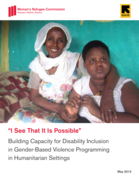
This toolkit is intended to support GBV staff to build disability inclusion into their work, and to strengthen the capacity of GBV practitioners to use a survivor-centered approach when providing services to survivors with disabilities.
The tools are designed to complement existing guidelines, prot
...
