
Filter
178
Text search:
eau
salubre
Featured
27
52
Language
Document type
79
30
23
16
9
6
6
3
2
2
1
1
Countries
9
7
6
4
4
3
3
3
2
2
2
2
2
2
2
2
2
2
2
2
1
1
1
1
1
1
1
1
1
1
1
1
1
1
1
1
1
1
1
1
1
1
1
1
1
1
1
1
1
Authors & Publishers
Publication Years
Category
118
36
10
8
3
3
Toolboxes
19
18
14
13
8
7
7
5
5
5
4
4
2
1

UNICEF – SOS Enfants Mai 2018
Lorsque des actes d’une violence inouïe ont frappé la région du Kasaï, en République démocratique du Congo, en 2016, des centaines de milliers de personnes ont dû fuir pour sauver leur vie. Parmi ces personnes en fuite, beaucoup étaient des enfants.
...
Lorsque des actes d’une violence inouïe ont frappé la région du Kasaï, en République démocratique du Congo, en 2016, des centaines de milliers de personnes ont dû fuir pour sauver leur vie. Parmi ces personnes en fuite, beaucoup étaient des enfants.
...
L’année 2024 a été particulièrement éprouvante pour les enfants. Face à l’intensification des conflits violents, des chocs climatiques et de la pauvreté, leurs besoins n’ont en effet cessé de croître tandis que les ressources disponibles pour y répondre ont continué de diminuer.
...
La mise à jour 2017 du rapport du Programme commun de suivi de l'approvisionnement en eau et de l'assainissement présente les indicateurs et les estimations de base pour les objectifs de développement durable liés à l'approvisionnement en
...
L'eau potable et les services d'assainissement et d'hygiène (WASH) sont essentiels à la prévention des 17 maladies tropicales négligées (MTN) pour lesquelles une intensification de la lutte ou l'élimination sont prévues à l'horizon 2020.
...
...
Personne ne se rend dans un établissement de soins de santé pour tomber malade. On s’y rend pour aller mieux, pour accoucher, pour se faire vacciner. Cependant, des centaines de millions de gens sont confrontés à un risque accru d’infection quand ils se font soigner dans des établissements
...

La conception des services permettant d'ameliorer l'accessibilite.
les fichiers pdf sont disponibles par chapitre ou pour la version complète.

These guidelines deal specifically with water, sanitation and hygiene, and are designed to be used in schools in low-cost settings in low- and medium-resource countries to:
• assess prevailing situations and plan for required improvements;
• develop and reach essential safety standards as a f
...
Le présent guide pratique explique ce qu’est un plan de gestion de la sécurité sanitaire de l’eau (PGSSE) et de quelle manière celui-ci peut vous aider à renforcer la sécurité sanitaire de votre alimentation en
...
Le choléra est une infection diarrhéique aiguë causée par l'ingestion d'eau ou d'aliments contaminés. Ce cours offre une introduction générale au choléra et s'adresse au personnel qui intervient en cas d'apparition de la maladie dans des sit
...
Ce rapport identifie les principales lacunes mondiales dans les services WASH : un tiers des établissements de santé ne dispose pas des installations de lavage des mains nécessaires sur les lieux de soins ; un établissement sur quatre n’a pas de services de base pour l’approvisionnement en
...
Le document fournit des directives essentielles pour prévenir et gérer les maladies diarrhéiques aiguës, en particulier dans les situations d'urgence complexes comme les conflits, les catastrophes naturelles ou les crises sanitaires. Il met en avant l'importance de l'accès à l'
...

Le document fournit des directives complètes pour la gestion des épidémies de choléra, y compris la prévention, le diagnostic et le traitement. Il met l'accent sur les mesures de réponse rapide, l'importance de la thérapie de réhydratation (orale et intraveineuse), ainsi que sur les interven
...
comment prévenir le choléra et les décès dans vos communautés. Ces diapositives et modules comprennent des informations sur les sujets suivants :
• Introduction et engagement de la communauté
• Ce qu’il faut savoir sur le choléra
• Les soins des personnes souffrant de diarrhée pen
...
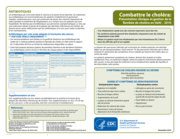
Le document fournit des directives détaillées pour le diagnostic et la gestion des cas de choléra, en mettant l'accent sur la thérapie de réhydratation et la prévention des décès liés à la déshydratation. Il décrit l'utilisation de solutions de réhydratation orale (SRO), de fluides intr
...
Personne ne va dans un établissement de soins de santé pour tomber malade. On s’y rend pour se faire soigner, pour accoucher
ou pour se faire vacciner. Cependant, des centaines de millions de personnes s’exposent à un risque accru d’infection en cherchant à obtenir des soins dans des éta
...
Flambées de choléra
recommended
Le document fournit des directives complètes pour la gestion des flambées de choléra, y compris la détection, la confirmation, la réponse, le traitement et la prévention. Il met l'accent sur l'importance de la réhydratation, de l'assainissement de l'
...
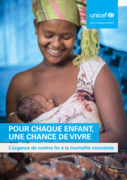
Chaque année, 2,6 millions de bébés meurent avant l’âge d’un mois. Un million d’entre eux rendent leur dernier souffle le jour même de leur naissance. Pourtant, des millions de jeunes vies pourraient être épargnées chaque année si les mères et les bébés avaient accès à des soins
...
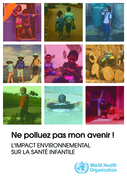
En 2015, 5,9 millions d'enfants de moins de cinq ans sont décédés (1). Les principales causes de mortalité infantile dans le monde sont la pneumonie, la prématurité, les complications durant l'accouchement, la septicémie néonatale, les anomalies congénitales, la diarrhée, les tra
...
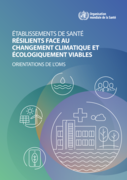
RÉSUMÉ D’ORIENTATION
L’objectif des présentes orientations est de renforcer la capacité des établissements de santé à protéger et à améliorer la santé des communautés desservies face à un climat instable et changeant ; et de donner aux établissements de santé les moyens d’assur
...

These guidelines deal specifically with water, sanitation and hygiene, and are designed to be used in schools in low-cost settings in low- and medium-resource countries to:
• assess prevailing situations and plan for required improvements;
• develop and reach essential safety standards as a f
...
