
Filter
769
Text search:
child
stunting
Featured
45
321
Language
Document type
534
133
32
27
15
11
10
4
3
Countries
43
34
33
31
31
27
26
26
24
22
21
20
18
17
16
15
14
14
12
12
11
9
8
8
7
7
6
6
6
5
5
5
4
4
4
4
3
3
3
3
3
3
3
3
2
2
2
2
2
2
2
2
2
2
1
1
1
1
1
1
1
1
1
1
1
1
1
Authors & Publishers
Publication Years
Category
502
71
47
21
21
20
1
Toolboxes
47
29
27
27
24
19
15
9
8
5
4
3
3
3
2
2
1
1
1
1
The report studied child poverty in nine dimensions – development/stunting, nutrition, health, water, sanitation, and housing. Other dimensions included education, health related knowledge, and in
...
Poverty and associated health, nutrition, and social factors prevent at least 200 million children in developing countries from attaining their developmental potential. We review the evidence linking compromised development with modifiable biological and psychosocial risks encountered by children fr
...
In 2014 UNICEF, WHO and the World Bank report new joint estimates of child malnutrition using available data up to 2013 The Interactive dashboard allows users to generate a variety of graphs and charts, using the newest joint estimates of prevalence
...

Only 10 per cent of households have electricity. Less than one half (46 per cent) of the households use basic sanitation facilities. Three in every four of the household population had basic drinking water services. More than one third of under-5 Malawian children (boys 39 per cent than girls 32 per
...
1000 days communication initiative to fight against child stunting | In an effort to accelerate the elimination of stunting among children, Ministr
...
1000 days communication initiative to fight against child stunting | In an effort to accelerate the elimination of stunting among children, Ministr
...
1000 days communication initiative to fight against child stunting | In an effort to accelerate the elimination of stunting among children, Ministr
...
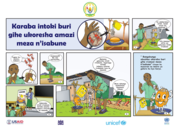
1000 days communication initiative to fight against child stunting | In an effort to accelerate the elimination of stunting among children, Ministr
...
1000 days communication initiative to fight against child stunting | In an effort to accelerate the elimination of stunting among children, Ministr
...
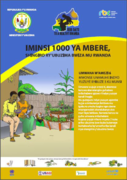
1000 days communication initiative to fight against child stunting | In an effort to accelerate the elimination of stunting among children, Ministr
...
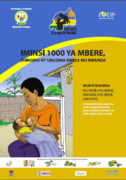
1000 days communication initiative to fight against child stunting | In an effort to accelerate the elimination of stunting among children, Ministr
...
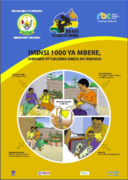
1000 days communication initiative to fight against child stunting |
In an effort to accelerate the elimination of stunting among children, Minis
...
Children malnutrition eradication in developing countries is a real challenge, especially among
vulnerable population. There are so many effort towards women (who are the main care providers)
socio-economic situation in order to improve their children nutrition. This article aims to identify the
...

Malnutrition in childhood and pregnancy has many adverse consequences for child survival and long-term well-being. It
also has far-reaching consequences for human capital, economic productivity, and national development overall. The
consequences o
...
This National Food and Nutrition Policy developed in 2013 builds on several achievements that have improved the status of nutrition and household food security in Rwanda during the past six years. The outlines ambitious but necessary strategies needed to solve serious and
persistent problems includ
...
Level of stunting among Bangladeshi children <5years declined from 51% in 2004 to 36% and underweight from 41% in 2007 to 33% (BDHS 2014). But the decrease in wasting rate is not as expected, which is only from 17% to 14.3 % over last decade. Approximately 3.1 % (BDHS
...
DHS Working Papers No. 84
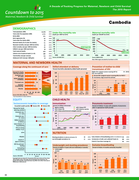
The Countdown country profile presents in one place the best and latest evidence to enable an assessment of a country’s progress in improving reproductive, maternal, newborn, and child health (RMNCH)
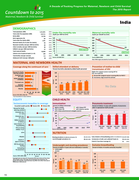
The Countdown country profile presents in one place the best and latest evidence to enable an assessment of a country’s progress in improving reproductive, maternal, newborn, and child health (RMNCH)
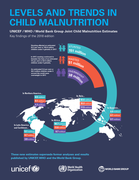
Key findings of the 2018 edition
