
Filter
222
Text search:
UN
Habitat
et
al.
Featured
Recommendations
21
New Publications
61
Language
Document type
No document type
93
Studies & Reports
79
Guidelines
21
Manuals
15
Strategic & Response Plan
7
Training Material
4
Resource Platforms
2
Situation Updates
1
Countries / Regions
Myanmar / Burma
12
Global
12
Syria
6
Congo, Democratic Republic of
5
Kenya
5
Venezuela
5
Ghana
4
Haiti
4
Nepal
4
Africa
4
Guinea
3
Senegal
3
Cameroon
3
South Africa
3
Bangladesh
3
Brazil
3
Western and Central Europe
3
Burkina Faso
2
Sierra Leone
2
Côte d’Ivoire / Ivory Coast
2
USA
2
Ethiopia
2
Uganda
2
India
2
South Sudan
2
Zambia
2
Chad
2
China
2
Rwanda
2
Madagascar
2
Latin America and the Carribbean
2
Asia
2
Liberia
1
Nigeria
1
Mali
1
Guinea-Bissau
1
Morocco
1
Niger
1
Togo
1
Philippines
1
Jordan
1
Cambodia
1
Thailand
1
Indonesia
1
Sudan
1
Benin
1
Central African Republic
1
Dominican Republic
1
Ukraine
1
Colombia
1
Angola
1
Sri Lanka
1
Yemen
1
West and Central Africa
1
Palestine
1
Congo-Brazzaville
1
France
1
Authors & Publishers
Publication Years
Category
Countries
56
Key Resources
25
Public Health
18
Women & Child Health
8
Clinical Guidelines
3
Capacity Building
1
Toolboxes
Planetary Health
63
Global Health Education
16
Natural Hazards
14
NTDs
13
Conflict
9
COVID-19
9
Mental Health
7
NCDs
6
Malaria
6
HIV
5
TB
5
Disability
4
Rapid Response
4
Refugee
3
Zika
3
Cholera
2
Ebola & Marburg
1
Specific Hazards
1
Caregiver
1
Pharmacy
1

Tsetse traps and targets (insecticide-impregnated screens) function by attracting the flies to a device that collects and/or kills them. Traps can be used for entomological surveillance, and also for control. Targets are simpler than traps, but are not used for surveillance. They are impregnated wit
...

The Food and Agriculture Organization of the United Nations (FAO) launched a new Framework for Environmental and Social Management (FESM) to ensure that both people and the environment are protected from any potential impacts of FAO programmes and projects.
“This Framework ensures that our proj
...

An estimated 1.3 billion people – or 16% of global population worldwide – experience a significant disability today. Persons with disabilities have the right to the highest attainable standard of health as those without disabilities. However, the WHO Global report on health equity for persons w
...
The Urban Health Equity Assessment and Response Tool (Urban HEART) is a user-friendly guide for policy- and decision-makers at national and local levels to: identify and analyse inequities in health between people living in various parts of cities, or belonging to different socioeconomic groups with
...
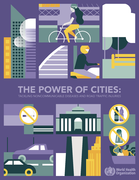
The report is geared towards mayors, local government officials and city policy planners.It highlights key areas where city leaders can tackle the drivers of NCDs, including tobacco use, air pollution, poor diets and lack of exercise, and improve road safety.
From anti-tobacco actions in Beijing a
...
The purpose of this manual is to provide a resource for training to increase understanding of Health in All Policies (HiAP) by health and other professionals. It is anticipated that the material in this manual will form the basis of two- or three-day workshops, which will:
• Bu
...
Unhealthy diets and excess body weight are leading risk factors for death and disability in the WHO European Region. Addressing malnutrition in all its forms is essential to ensure health and well-being for all and, consequently, sustainable development. It requires coherent and innovative actions c
...
Disaster Recovery Toolkit
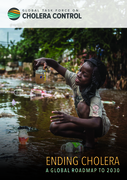
Ending Cholera. A global roadmap to 2030
recommended
Ending Cholera—A Global Roadmap to 2030 operationalises the new global strategy for cholera control at the country level and provides a concrete path toward a world in which cholera is no longer a threat to public health
This guide is available in English, French, Spanish, Russian, Arabic and Chinese
This guide consolidates COVID-19 guidance for human resources for health managers and policy-makers at national, subnational and facility levels to design, manage and preserve the workforce necessary to manage the COVI
...
Findings, interpretations and conclusions
expressed in this document are based on infor-
mation gathered by GIZ and its consultants,
partners and contributors from reliable sources.
This timely report comes at a decisive moment in history where
we can reshape urban environments and health systems for the
majority of the world’s population that live in cities. Enabling
this transformation are the SDGs, which have reconfigured how
governments and the international community
...


The development of the Country Cooperation Strategy (CCS) was based on a consultative and participatory process with strong commitment and support from the Ministry of Health of Ghana. The CCS draws on lessons from the implementation of the first, and second generation CCSs, the country focus strate
...
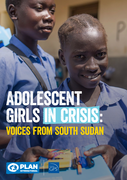
In the last 5 years, the conflict in South Sudan has displaced 4 million people and placed 7 million in need of humanitarian assistance.
This report commissioned by Plan International draws on research conducted with girls and members of their families and communities in multiple sites in South ...
This report commissioned by Plan International draws on research conducted with girls and members of their families and communities in multiple sites in South ...

Cities are uniquely positioned to understand local needs and respond rapidly to changing conditions to safeguard health. These changes require strong city leadership to implement multisectoral, health-relevant policies and public services that engage communities. The response to malaria must be an i
...
