
Filter
2422
Text search:
North
Africa
Featured
231
585
Language
2231
115
86
56
49
29
22
10
7
6
5
5
5
4
4
4
4
4
4
3
3
3
2
2
2
2
2
2
2
2
2
2
2
1
1
1
1
1
1
1
1
1
1
1
1
1
1
1
1
1
1
1
1
1
1
1
1
1
1
1
Document type
1130
688
228
115
92
59
33
28
19
13
6
6
3
1
Countries
175
142
96
90
83
82
77
76
75
66
64
64
61
59
57
48
47
44
40
37
34
33
32
31
30
23
23
21
21
21
19
19
19
17
15
15
15
14
13
13
13
12
11
11
10
10
9
9
9
9
9
8
8
8
8
8
8
7
7
7
7
6
6
6
6
6
5
5
5
5
5
5
4
4
4
4
4
4
4
4
3
3
3
3
3
3
3
3
2
2
2
2
2
2
2
2
2
2
2
2
2
2
2
2
1
1
1
1
1
1
1
1
1
1
1
1
1
1
1
1
1
1
1
1
1
1
1
1
Authors & Publishers
273
98
79
54
51
48
48
43
41
39
39
32
21
21
16
16
14
11
11
11
11
10
9
9
9
8
8
8
8
8
7
7
7
7
7
7
6
6
6
6
6
6
6
6
6
6
6
6
6
5
5
5
5
5
5
5
5
5
5
5
5
5
5
5
4
4
4
4
4
4
4
4
4
4
4
4
4
4
4
4
4
4
4
4
4
4
4
4
4
4
4
4
4
4
4
4
4
4
4
4
4
3
3
3
3
3
3
3
3
3
3
3
3
3
3
3
3
3
3
3
3
3
3
3
3
3
3
3
3
3
3
3
3
3
3
3
3
3
3
3
3
3
3
3
3
3
3
3
3
3
3
3
3
2
2
2
2
2
2
2
2
2
2
2
2
2
2
2
2
2
2
2
2
2
2
2
2
2
2
2
2
2
2
2
2
2
2
2
2
2
2
2
2
2
2
2
2
2
2
2
2
2
2
2
2
2
2
2
2
2
2
2
2
2
2
2
2
2
2
2
2
2
2
2
2
2
2
2
2
2
2
2
2
2
2
2
2
2
2
2
2
2
2
2
2
2
2
2
2
2
2
2
2
2
2
2
2
2
2
2
2
2
2
2
2
2
2
2
2
2
2
2
2
2
2
2
2
2
2
2
2
2
2
2
2
2
2
2
2
2
2
2
2
2
2
2
2
2
2
2
2
1
1
1
1
1
1
1
1
1
1
1
1
1
1
1
1
1
1
1
1
1
1
1
1
1
1
1
1
1
1
1
1
1
1
1
1
1
1
1
1
1
1
1
1
1
1
1
1
1
1
1
1
1
1
1
1
1
1
1
1
1
1
1
1
1
1
1
1
1
1
1
1
1
1
1
1
1
1
1
1
1
1
1
1
1
1
1
1
1
1
1
1
1
1
1
1
1
1
1
1
1
1
1
1
1
1
1
1
1
1
1
1
1
1
1
1
1
1
1
1
1
1
1
1
1
1
1
1
1
1
1
1
1
1
1
1
1
1
1
1
1
1
1
1
1
1
1
1
1
1
1
1
1
1
1
1
1
1
1
1
1
1
1
1
1
1
1
1
1
1
1
1
1
1
1
1
1
1
1
1
1
1
1
1
1
1
1
1
1
1
1
1
1
1
1
1
1
1
1
1
1
1
1
1
1
1
1
1
1
1
1
1
1
1
1
1
1
1
1
1
1
1
1
1
1
1
1
1
1
1
1
1
1
1
1
1
1
1
1
1
1
1
1
1
1
1
1
1
1
1
1
1
1
1
1
1
1
1
1
1
1
1
1
1
1
1
1
1
1
1
1
1
1
1
1
1
1
1
1
1
1
1
1
1
1
1
1
1
1
1
1
1
1
1
1
1
1
1
1
1
1
1
1
1
1
1
1
1
1
1
1
1
1
1
1
1
1
1
1
1
1
1
1
1
1
1
1
1
1
1
1
1
1
1
1
1
1
1
1
1
1
1
1
1
1
1
1
1
1
1
1
1
1
1
1
1
1
1
1
1
1
1
1
1
1
1
1
1
1
1
1
1
1
1
1
1
1
1
1
1
1
1
1
1
1
1
1
1
1
1
1
1
1
1
1
1
1
1
1
1
1
1
1
1
1
1
1
1
1
1
1
1
1
1
1
1
1
1
1
1
1
1
1
1
1
1
1
1
1
1
1
1
1
1
1
1
1
1
1
1
1
1
1
1
1
1
1
1
1
1
1
1
1
1
1
1
1
1
1
1
1
1
1
1
1
1
1
1
1
1
1
1
1
1
1
1
1
1
1
1
1
1
1
1
1
1
1
1
1
1
1
1
1
1
1
1
1
1
1
1
1
1
1
1
1
1
1
1
1
1
1
1
1
1
1
1
1
1
1
1
1
1
1
1
1
1
1
1
1
1
1
1
1
1
1
1
1
1
1
1
1
1
1
1
1
1
1
1
1
1
1
1
1
1
1
1
1
1
1
1
1
1
1
1
1
1
1
1
1
1
1
1
1
1
1
1
1
1
1
1
1
1
1
1
1
1
1
1
1
1
1
1
1
1
1
1
1
1
1
1
1
1
1
1
1
1
1
1
1
1
1
1
1
1
1
1
1
1
1
1
1
1
1
1
1
1
1
1
1
1
1
1
1
1
1
1
1
1
1
1
1
1
1
1
1
1
1
1
1
1
1
1
1
1
1
1
1
1
1
1
1
1
1
1
1
1
1
1
1
1
1
1
1
1
1
1
1
1
1
1
1
1
1
1
1
1
1
1
1
1
1
1
1
1
1
1
1
1
1
1
1
1
1
1
1
1
1
1
1
1
1
1
1
1
1
1
1
1
1
1
1
1
1
1
1
1
1
1
1
1
1
1
1
1
1
1
1
1
1
1
1
1
1
1
1
1
1
1
1
1
1
1
1
1
1
1
1
1
1
1
1
1
1
1
1
1
1
1
1
1
1
1
1
1
1
1
1
1
1
1
1
1
1
1
1
1
1
1
1
1
1
1
1
1
1
1
1
1
1
1
1
1
1
1
1
1
1
1
1
1
1
1
1
1
1
1
1
1
1
1
1
1
1
1
1
1
1
1
1
1
1
1
1
1
1
1
1
1
1
1
1
1
1
1
1
1
1
1
1
1
1
1
1
1
1
1
1
1
1
1
1
1
1
1
1
1
1
1
1
1
1
1
1
1
1
1
1
1
1
1
1
1
1
1
1
1
1
1
1
1
1
1
1
1
1
1
1
1
1
1
1
1
1
1
1
1
1
1
1
1
1
1
1
1
1
1
1
1
1
1
1
1
1
1
1
1
1
1
1
1
1
1
1
1
1
1
1
1
1
1
1
1
1
1
1
1
1
1
1
1
1
1
1
1
1
1
1
1
1
1
1
1
1
1
1
1
1
1
1
1
1
1
1
1
1
1
1
1
1
1
1
1
1
1
1
1
1
1
1
1
1
1
1
1
1
1
1
1
1
1
1
1
1
1
1
1
1
1
1
1
1
1
1
1
1
1
1
1
1
1
1
1
1
1
1
1
1
1
1
1
1
1
1
1
1
1
1
1
1
1
1
1
1
1
1
1
1
1
1
1
1
1
1
1
1
1
1
1
1
1
1
1
1
1
1
1
1
1
1
1
1
1
1
1
1
1
1
1
1
1
1
1
1
1
1
1
1
1
1
1
1
1
1
1
1
1
1
1
1
1
1
1
1
1
1
1
1
1
1
1
1
1
1
1
1
1
1
1
1
1
1
1
1
1
1
1
1
1
1
1
1
1
1
1
1
1
1
1
1
1
1
1
1
1
1
1
1
1
1
1
1
1
1
1
1
1
1
1
1
1
1
1
1
1
1
1
1
1
1
1
1
1
1
1
1
1
1
1
1
1
1
1
1
1
1
1
1
1
1
1
1
1
1
1
1
1
1
1
1
1
1
1
1
1
1
1
1
1
1
1
1
1
1
1
1
1
1
1
1
1
1
1
1
1
1
1
1
1
1
1
1
1
1
1
1
1
1
1
1
1
1
1
1
1
1
1
1
1
1
1
1
1
1
1
1
1
1
1
1
1
1
1
1
1
1
1
1
1
1
1
1
1
1
1
1
1
1
1
1
1
1
1
1
1
1
1
1
1
1
1
1
1
1
1
1
1
1
1
1
1
1
1
1
1
1
1
1
1
1
1
1
1
1
1
1
1
1
1
1
1
1
1
1
1
1
1
1
1
1
1
1
1
1
1
1
1
1
1
1
1
1
1
1
1
1
1
1
1
1
1
1
1
1
1
1
1
1
1
1
1
1
1
1
1
1
1
1
1
1
1
1
1
1
1
1
1
1
1
1
1
1
1
1
1
1
1
1
1
1
1
1
1
1
1
1
1
1
1
1
1
1
1
1
1
1
1
1
1
1
1
1
1
1
1
1
1
1
1
1
1
1
1
1
1
1
1
1
1
1
1
1
1
1
1
1
1
1
1
1
1
1
1
1
1
1
1
1
1
1
1
1
1
1
1
1
1
1
1
1
1
1
1
1
1
1
1
1
1
1
1
1
1
1
1
1
1
1
1
1
1
1
1
1
1
1
1
1
1
1
1
1
1
1
1
1
1
1
1
1
1
1
1
1
1
1
1
1
1
1
1
1
1
1
1
1
1
1
1
1
1
1
1
1
1
1
1
1
1
1
1
1
1
1
1
1
1
1
1
1
1
1
1
1
1
1
1
1
1
1
1
1
1
1
1
1
1
1
1
1
1
1
1
1
1
1
1
1
1
1
1
1
1
1
1
1
1
1
1
1
1
1
1
1
1
1
1
1
1
1
1
1
1
1
1
1
1
1
1
1
1
1
1
1
1
1
1
1
1
1
1
1
1
1
1
1
1
1
1
1
1
1
1
1
1
1
1
1
1
1
1
1
1
1
1
1
1
1
1
1
1
1
1
1
1
1
1
1
1
1
1
1
1
1
1
1
1
1
1
1
1
1
1
1
1
1
1
1
1
1
1
1
1
1
1
1
1
1
1
1
1
1
1
1
1
1
1
1
1
1
1
1
1
1
1
1
1
1
1
1
1
1
1
1
1
1
1
1
1
1
1
1
1
1
1
1
1
1
1
1
1
1
1
1
1
1
1
1
1
1
1
1
1
1
1
1
1
1
1
1
1
1
1
1
1
1
1
1
1
1
1
1
1
1
1
1
1
1
1
1
1
1
1
1
1
1
1
1
1
1
1
1
1
1
1
1
1
1
1
1
1
1
1
1
1
1
1
1
1
1
1
1
1
1
1
1
1
1
1
1
1
1
1
1
1
1
1
1
1
1
1
1
1
1
1
1
1
1
1
1
1
1
1
1
1
1
1
1
1
1
1
1
1
1
1
1
1
1
1
1
1
1
1
1
1
1
1
1
1
1
1
1
1
1
1
1
1
1
1
1
1
1
1
1
1
1
1
1
1
1
1
1
1
1
1
1
1
1
1
1
1
1
1
1
1
1
1
1
1
1
1
1
1
1
1
1
1
1
1
1
1
1
1
1
1
1
1
1
1
1
1
1
1
1
1
1
1
1
1
1
1
1
1
1
1
1
1
1
1
1
1
1
1
1
1
1
1
1
1
1
1
1
1
1
1
1
1
1
1
1
1
1
1
1
1
1
1
1
1
1
1
1
1
1
1
1
1
1
1
1
1
1
1
1
1
1
1
1
1
1
1
1
1
1
1
1
1
1
1
1
1
1
1
1
1
1
1
1
1
1
1
1
1
1
1
1
1
1
1
1
1
1
1
1
1
1
1
1
1
1
1
1
1
1
1
1
1
1
1
1
1
1
1
1
1
1
1
1
1
1
1
1
1
1
1
1
1
1
1
1
1
1
1
1
1
1
1
1
1
1
1
1
1
1
1
1
1
1
1
1
1
1
1
1
1
1
1
1
1
1
1
Publication Years
859
1395
155
13
Category
940
149
142
134
134
25
9
1
Toolboxes
266
176
160
109
95
94
87
85
84
73
66
65
53
39
38
38
36
25
22
20
19
18
15
9
7
1
This policy guideIine is intended for use by healthcare professionals invoIved in the management of Covid-19 in South Africa. The document provides guidance on diagnostic tests available, on antigen test performance and accessibility. 1t focuses on
...
key issues such as when to
Perform antigen tests′ how to use and interpret results. Capturing and reporting testing information is also covered.
more
South Africa has a long history of community health workers (CHWs). It has been a journey that has required balancing constrained resources and competing priorities. CHWs form a bridge between communities and healthcare service provision within heal
...
th facilities and act as the cornerstone of South Africa’s Ward-Based Primary Healthcare Outreach Teams. This study aimed to document the CHW policy implementation landscape across six provinces in South Africa and explore the reasons for local adaptation of CHW models and to identify potential barriers and facilitators to implementation of the revised framework to help guide and inform future planning.
more

Stats SA has released an in-depth report on persons with disabilities. The report, written using Census 2011 data, is the first in a series of in-depth analyses of various Census 2011 variables, such as ageing and education.
The report provides statistical evidence relating to the prevalence of dis
...
ability and characteristics of persons with disabilities at both individual and household levels. Two methods were used to profile disability prevalence and patterns based on the six functional domains, namely seeing, hearing, communication, remembering/concentrating, walking and self-care. These two methods were:
- the level/degree of difficulty in a specific functional domain and;
- the disability index.
more

Antimicrobial resistance (AMR) as a serious public health threat was globally acknowledged by WHO in 2015, through the launch of the Global Action Plan (GAP). With a limited number of new antibiotics in the developmental pipeline, many countries are in the process of establishing strategies for anti
...
microbial stewardship (AMS). Within each country, different healthcare challenges have
contributed to AMR. This has also shaped individual AMS strategies and policies. In South Africa (SA), there is a high burden of infectious diseases, mainly of bacterial origin. In addition, SA also has the highest number of people living with
human immunodeficiency virus (HIV) globally. According to the 2019 statistics, there are approximately 7.97 million people living with HIV in SA. Together with this, SA has the fourth largest tuberculosis population globally.
Other important challenges include poverty, malnutrition, a high burden of non-communicable diseases, and a dire shortage of trained healthcare professionals (e.g. clinicians, pharmacists, and nurses).
more

Non-communicable diseases (NCDs) are the second common cause of death in sub-Saharan Africa (SSA) accounting for about 35% of all deaths, after a composite of communicable, maternal, neonatal, and nutritional diseases. Despite prior perception of lo
...
w NCDs mortality rates, current evidence suggests that SSA is now at the dawn of the epidemiological transition with contemporary double burden of disease from NCDs and communicable diseases. In SSA, cardiovascular diseases (CVDs) are the most frequent causes of NCDs deaths, responsible for approximately 13% of all deaths and 37% of all NCDs deaths. Although ischemic heart disease (IHD) has been identified as the leading cause of CVDs mortality in SSA followed by stroke and hypertensive heart disease from statistical models, real field data suggest IHD rates are still relatively low. The neglected endemic CVDs of SSA such as endomyocardial fibrosis and rheumatic heart disease as well as congenital heart diseases remain unconquered. While the underlying aetiology of heart failure among adults in high-income countries (HIC) is IHD, in SSA the leading causes are hypertensive heart disease, cardiomyopathy, rheumatic heart disease, and congenital heart diseases. Of concern is the tendency of CVDs to occur at younger ages in SSA populations, approximately two decades earlier compared to HIC. Obstacles hampering primary and secondary prevention of CVDs in SSA include insufficient health care systems and infrastructure, scarcity of cardiac professionals, skewed budget allocation and disproportionate prioritization away from NCDs, high cost of cardiac treatments and interventions coupled with rarity of health insurance systems. This review gives an overview of the descriptive epidemiology of CVDs in SSA, while contrasting with the HIC and highlighting impediments to their management and making recommendations.
more

Non-Communicable Diseases (NCDs), including mental disorders, currently pose one of the biggest threats to health and development globally, particularly in low and middle income countries2. It is predicted that unless proven interventions are rapidly implemented in countries, in the short to medium
...
term, health care costs will increase exponentially and severe negative consequences will ensue not only to individuals and families but to whole societies and economies. NCDs are already a major burden in South Africa, but without added rigorous and timely action the health and development consequences may well become catastrophic. Immediate and additional, high quality, evidence based and focussed interventions are needed to promote health, prevent disease and provide more effective and equitable care and treatment for people living with NCDs at all levels of the health system. The problem is further compounded by the rising global prevalence of multi-morbidity (defined as the coexistence of two or more chronic diseases in one individual).
more
Background
Asthma remains highly prevalent, with more severe symptoms in low-income to middle-income countries (LMICs) compared with high-income countries. Identifying risk factors for severe asthma symptoms can assist with improving outcomes. We aimed to determine the prevalence, severity and ris
...
k factors for asthma in adolescents in an LMIC.
Methods
A cross-sectional survey using the Global Asthma Network written and video questionnaires was conducted in adolescents aged 13 and 14 from randomly selected schools in Durban, South Africa, between May 2019 and June 2021.
Results
A total of 3957 adolescents (51.9% female) were included. The prevalence of lifetime, current and severe asthma was 24.6%, 13.7% and 9.1%, respectively. Of those with current and severe asthma symptoms; 38.9% (n=211/543) and 40.7% (n=147/361) had doctor-diagnosed asthma; of these, 72.0% (n=152/211) and 70.7% (n=104/147), respectively, reported using inhaled medication in the last 12 months. Short-acting beta agonists (80.4%) were more commonly used than inhaled corticosteroids (13.7%). Severe asthma was associated with: fee-paying school quintile (adjusted OR (CI)): 1.78 (1.27 to 2.48), overweight (1.60 (1.15 to 2.22)), exposure to traffic pollution (1.42 (1.11 to 1.82)), tobacco smoking (2.06 (1.15 to 3.68)), rhinoconjunctivitis (3.62 (2.80 to 4.67)) and eczema (2.24 (1.59 to 3.14)), all p<0.01.
Conclusion
Asthma prevalence in this population (13.7%) is higher than the global average (10.4%). Although common, severe asthma symptoms are underdiagnosed and associated with atopy, environmental and lifestyle factors. Equitable access to affordable essential controller inhaled medicines addressing the disproportionate burden of asthma is needed in this setting.
more

The South African WHO Country Cooperation Strategy (CCS) 2023–2027 focuses on four key strategic priorities based on the country’s health needs and disease epidemiology, while also considering the need for building resilient health systems for UHC and health security in the post pandemic period.
...
These include:
1. augment health systems strengthening reforms to accelerate progress towards universal health coverage.
2. address the quadruple burden of diseases and promote well-being across the life course in view of achieving global targets.
3. build health systems resilience and strengthen health emergency preparedness and response capacities.
4. enhance multisectoral collaboration and global partnerships for concerted action on health and its determinants.
In order to harness its expertise across its three levels, namely: the WHO Country Office (WCO), WHO Regional Office for Africa, and WHO headquarters, WHO will work closely and collaboratively with the Government of South Africa to implement the 2023–2027 strategic priorities.
more

An Independent Report
of the West Africa Commission on Drugs
Received Date: Jun 15, 2017; Accepted Date: Jun 28, 2017; Published Date: Jun 30, 2017
Citation: Etindele Sosso FA, Nakamura O, Nakamura M (2017) Epidemiology of Alzheimer’s Disease: Comparison between Africa and South America. J Neurol Neurosc
...
i Vol.8 No.4:204. DOI: 10.21767/2171-6625.1000204
more
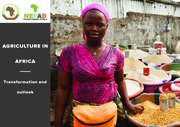
Transformation and outlook

Internationally, there is a growing concern over antimicro-bial resistance (AMR) which is currently estimated to ac-count for more than 700,000 deaths per year worldwide. If no appropriate measures are taken to halt its pro-gress, AMR will cost approximately 10 million lives andabout US$100 trillion
...
per year by 2050. In contrast tosome other health issues, AMR is a problem that con-cerns every country irrespective of its level of incomeand development as resistant pathogens do not respect borders.Despite the threat presented by AMR, the 2014 WorldHealth Organization (WHO) and the recent O’Neill re-port describe significant gaps in surveillance, standardmethodologies and data sharing. The 2014 WHOreport identified Africa and South East Asia as the regions without established AMR surveillance systems.
Tadesseet al. BMC Infectious Diseases (2017) 17:616 DOI 10.1186/s12879-017-2713-1
more

The ECA, says over 300,000 Africans could lose their lives due to COVID-19. This, as the pandemic continues to impact on the Continent’s struggling economies whose growth is expected to slow down from 3.2 percent to 1.8 percent in a best-case scenario, pushing close to 27 million people into extr
...
eme poverty.
more
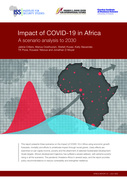
This report presents three scenarios on the impact of COVID-19 in Africa using economic growth forecasts, mortality and efforts to ameliorate impact through social grants. Likely effects are examined on per capita income, poverty and the attainment
...
of selected Sustainable Development Goals targets. Africa’s development trajectory has suffered a severe setback, with extreme poverty rising in all the scenarios. The pandemic threatens Africa in several ways, and the report provides policy recommendations to reduce vulnerability and strengthen resilience.
more
The second edition of the “A Region on the Move” report provides an overview of population movement trends in West and Central Africa in 2021. It aims to provide a comprehensive overview of mobility in the region and showcase the versatility, mu
...
ltidimensionality and nuances of regional mobility in West and Central Africa.
more
Asia Pac J Oncol Nurs 2017;4:4-5.

In 2015, the United Nations set important targets to reduce premature
cardiovascular disease (CVD) deaths by 33% by 2030. Africa disproportionately
bears the brunt of CVD burden and has one of the highest risks of dying
from non-communicable dise
...
ases (NCDs) worldwide. There is currently
an epidemiological transition on the continent, where NCDs is projected
to outpace communicable diseases within the current decade. Unchecked
increases in CVD risk factors have contributed to the growing burden of three
major CVDs—hypertension, cardiomyopathies, and atherosclerotic diseasesleading to devastating rates of stroke and heart failure. The highest age
standardized disability-adjusted life years (DALYs) due to hypertensive heart
disease (HHD) were recorded in Africa. The contributory causes of heart failure
are changing—whilst HHD and cardiomyopathies still dominate, ischemic
heart disease is rapidly becoming a significant contributor, whilst rheumatic
heart disease (RHD) has shown a gradual decline. In a continent where health
systems are traditionally geared toward addressing communicable diseases,
several gaps exist to adequately meet the growing demand imposed by CVDs.
Among these, high-quality research to inform interventions, underfunded
health systems with high out-of-pocket costs, limited accessibility and
affordability of essential medicines, CVD preventive services, and skill
shortages. Overall, the African continent progress toward a third reduction
in premature mortality come 2030 is lagging behind. More can be done in
the arena of effective policy implementation for risk factor reduction and
CVD prevention, increasing health financing and focusing on strengthening
primary health care services for prevention and treatment of CVDs, whilst
ensuring availability and affordability of quality medicines. Further, investing
in systematic country data collection and research outputs will improve the accuracy of the burden of disease data and inform policy adoption on
interventions. This review summarizes the current CVD burden, important
gaps in cardiovascular medicine in Africa, and further highlights priority
areas where efforts could be intensified in the next decade with potential
to improve the current rate of progress toward achieving a 33% reduction
in CVD mortality.
more

This review examines high-quality research evidence that synthesises the efects of extreme heat on human health in tropical
Africa. Web of Science (WoS) was used to identify research articles on the efects extreme heat, humidity, Wet-bulb Globe
Te
...
mperature (WBGT), apparent temperature, wind, Heat Index, Humidex, Universal Thermal Climate Index (UTCI), heatwave, high temperature and hot climate on human health, human comfort, heat stress, heat rashes, and heat-related morbidity
and mortality
more
