
Filter
250
Text search:
World
Health
Organization
WHO,
SEARO
Featured
Recommendations
17
New Publications
87
Language
Document type
No document type
153
Guidelines
43
Studies & Reports
23
Manuals
8
Fact sheets
5
Training Material
4
Online Courses
4
Strategic & Response Plan
4
Infographics
3
Situation Updates
2
Resource Platforms
1
Countries / Regions
India
26
South–East Asia Region
23
Asia
19
Nepal
14
Bangladesh
14
Myanmar / Burma
13
Global
11
Indonesia
8
Thailand
3
Africa
3
Timor Leste/ East Timor
3
Russia
3
Bhutan
2
Guinea
1
Sierra Leone
1
Liberia
1
Nigeria
1
Philippines
1
Afghanistan
1
Cambodia
1
Malawi
1
Mozambique
1
Brazil
1
North Macedonia
1
Sri Lanka
1
Yemen
1
Middle East and North Africa
1
Latin America and the Carribbean
1
Western and Central Europe
1
Other region
1
Venezuela
1
North Korea
1
Armenia
1
Laos
1
Georgia
1
Vietnam
1
Belgium
1
Maldives
1
Belarus
1
Authors & Publishers
Publication Years
Category
Countries
73
Clinical Guidelines
29
Public Health
22
Key Resources
16
Women & Child Health
15
Capacity Building
14
Pharmacy & Technologies
1
Toolboxes
HIV
22
TB
19
Mental Health
14
NTDs
14
AMR
13
Rapid Response
9
COVID-19
8
Planetary Health
7
Ebola & Marburg
6
Global Health Education
5
Pharmacy
5
NCDs
5
Malaria
5
2.0 Rapid Response
5
Caregiver
4
Disability
3
Polio
3
Natural Hazards
3
Zika
2
Conflict
1
Typhoon
1
Specific Hazards
1
Health Financing Toolbox
1

The WHO continuously reviews available data on SARS-CoV-2 variants of concern. For this version, the global epidemiological
situation of the COVID-19 pandemic as of 21 January 2022 – at a time when the Omicron VOC had been identified in 171
coun
...
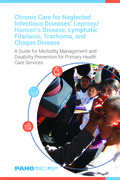
This manual provides a framework for morbidity management and disability prevention of patients affected by NIDs and gives specific guidance for the proper care of patients suffering from chronic conditions caused by lymphatic filariasis, leprosy, trachoma, and Chagas disease. It is intended to be u
...
Please download the other parts from the Webseite
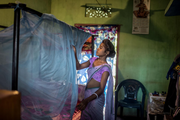
Malaria remains a significant public health challenge in the South-East Asia Region, which bears the second highest malaria burden in the world.
An infection control programme puts together various practices which when used appropriately restrict the spread of infection
A multidisciplinary and multisectoral collaboration, through a One Health approach is required to effectively prepare for, detect, assess, and respond to emerging and endemic zoonotic diseases. However, external and internal
...
The GHS Index is intended to be a key resource in the face of increasing risks of high-consequence and globally catastrophic biological events and in light of major gaps in international financing for preparedness. These risks are magnified by a rapidly changing and interconnected
...
In case of resistance to rifampicin, fluoroquinolones become the preferred category of second-line drugs. Unfortunately, quinolone-resistant strains of Mycobacterium leprae have also been reported in several countries, probably due to the extensive use of quinolones for treating several types of inf
...
The second edition of the WHPCA Global Atlas of Palliative Care was launched during World Hospice & Palliative Care Day 10 October. The Atlas is an update of the original WHPCA/WHO Global Atlas of P
...
India is experiencing rapid demographic and epidemiological transitions with NCDs causing significant disability, morbidity and mortality both in urban and rural populations and across all socioeconomic strata. According to the ICMR State Level Disease Burden Initiative, in 2016, NCDs accounted to a
...
