
Filter
175
Text search:
UN
Environment
Programme
UNEP
Featured
Recommendations
14
New Publications
27
Language
Document type
Studies & Reports
70
No document type
42
Guidelines
25
Strategic & Response Plan
18
Manuals
10
Fact sheets
4
Training Material
3
Resource Platforms
2
Online Courses
1
Countries / Regions
Global
15
Kenya
6
South–East Asia Region
4
Latin America and the Carribbean
4
Ghana
3
Nepal
3
Zambia
3
Syria
3
Africa
3
Uganda
2
India
2
Bangladesh
2
Namibia
2
Myanmar / Burma
2
Ethiopia
1
Zimbabwe
1
Haiti
1
Philippines
1
Germany
1
Turkey
1
Thailand
1
Malawi
1
Ukraine
1
Yemen
1
Middle East and North Africa
1
Asia
1
Laos
1
Authors & Publishers
Publication Years
Category
Countries
43
Key Resources
16
Public Health
5
Women & Child Health
4
Capacity Building
2
Pharmacy & Technologies
2
Clinical Guidelines
1
Toolboxes
Planetary Health
79
Global Health Education
20
COVID-19
12
AMR
11
Pharmacy
9
Specific Hazards
6
2.0 Rapid Response
6
Conflict
5
Caregiver
5
Natural Hazards
4
Rapid Response
4
Refugee
4
Health Financing Toolbox
2
NCDs
2
Ebola & Marburg
1
Cholera
1
Mental Health
1
NTDs
1

Over the ages, human societies have altered local ecosystems and modified regional climates. Today the human influence has attained a global scale. This reflects the recent rapid increase in population size, energy consumption, intensity of land use, international trade and travel, and other human a
...
This open access book not only describes the challenges of climate disruption, but also presents solutions. The challenges described include air pollution, climate change, extreme weather, and related health impacts that range from heat stress, vector-borne diseases, food and water insecurity and ch
...
Improvements in water sanitation and hygiene (WASH) and wastewater management in all sectors are critical elements of preventing infections and reducing the spread of antimicrobial resistance (AMR) as identified in the Global Action Plan to combat AMR. Yet, at present, WASH and wastewater management
...
Conflicts and disasters, including pandemics, affect women and men in all their diversity differently, and women and girls often suffer the most. Crisis-related hardships combine and compound pre-existing disadvantages, for example, they often cause women’s working conditions to worsen while incre
...

This paper was developed to support AMR coordination committees and others tasked with addressing AMR at country level to do just that. Drawing on the published literature and the operational experience and expertise of different LMICs, the paper points to six key strategies for success and offers a
...
The threat posed by antimicrobial resistance (AMR) to public health as well as global health security has been reiterated in umerous World Health Assembly (WHA) resolutions. AMR is also prioritized under the Global Health Security Agenda (GHSA), and India is one of the contributing countries. The Mi
...
Disaster Recovery Toolkit
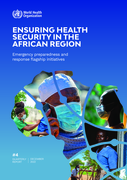
The World Health Organization Regional Office for Africa (WHO AFRO), in accordance with recommendations from various WHO committees, has developed three flagship initiatives to support Member States in the African region to prepare for, detect and respond to public health emergencies. They are the r
...
The report identifies major global gaps in WASH services: one third of health care facilities do not have what is needed to clean hands where care is provided; one in four facilities have no water services, and 10% have no sanitation services. This means that 1.8 billion people use facilities that l
...

The development of the Country Cooperation Strategy (CCS) was based on a consultative and participatory process with strong commitment and support from the Ministry of Health of Ghana. The CCS draws on lessons from the implementation of the first, and second generation CCSs, the country focus strate
...
Project Drawdown (2022) provides evidence of how climate solutions can also be win-win opportunities for meeting development and human well-being needs while boosting prosperity for rural communities in sub-Saharan Africa and South Asia. The report summarizes the co-benefits of five groups of a subs
...
A resource for pesticide registrars and regulators.
The WHO urged governments to restrict access to highly toxic pesticides used for self-poisoning . Other effective interventions include education, youth intervention programs and follow-up of people at risk—and better data. Only 80 out of 183 WH
...
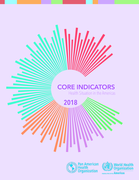
For the 24th consecutive year, PAHO has published the report Health Situation in the Americas: Core Indicators featuring the latest information on key indicators for the Region of the Americas. This 2018 edition includes data on the 82 core indicators for the countries, territories, and sub regions
...
