
Filter
199
Text search:
K.
Daly
Featured
Recommendations
13
New Publications
27
Language
Document type
No document type
93
Studies & Reports
59
Guidelines
23
Manuals
10
Strategic & Response Plan
7
Training Material
4
Fact sheets
3
Countries / Regions
Global
12
India
9
South Africa
7
Western and Central Europe
6
Russia
6
Latin America and the Carribbean
5
Africa
4
Ethiopia
3
Nepal
3
Kenya
3
Ukraine
3
Eastern Europe
3
Cambodia
2
Lesotho
2
Senegal
1
Uganda
1
Haiti
1
Pakistan
1
Germany
1
Zambia
1
Tanzania
1
Thailand
1
China
1
Malawi
1
Namibia
1
Brazil
1
Colombia
1
Honduras
1
Chile
1
Middle East and North Africa
1
South–East Asia Region
1
Asia
1
Armenia
1
Kazakhstan
1
Vietnam
1
Authors & Publishers
Publication Years
Category
Countries
49
Clinical Guidelines
25
Public Health
23
Women & Child Health
13
Key Resources
7
Capacity Building
2
Pharmacy & Technologies
2
Toolboxes
Mental Health
28
COVID-19
18
Planetary Health
15
TB
14
HIV
10
Health Financing Toolbox
9
NCDs
9
Global Health Education
8
Caregiver
7
NTDs
6
Disability
5
Malaria
4
Natural Hazards
2
Zika
2
AMR
2
Polio
1
Refugee
1
Specific Hazards
1
Social Ethics
1
2.0 Rapid Response
1

In: Bonk M., Ulrichs T. (eds). Global Health: Das Konzept der Globalen Gesundheit. Berlin: De Gruyter, 2021, pp. 557–580

People with mental disorders in low-income countries are at risk of being left behind during efforts to expand universal health coverage. Aim is to propose context-relevant strategies for moving towards universal health coverage for people with mental disorders in Ethiopia.

Physical activity plays an important role in the care of people living type 2 diabetes. Regular physical
activity can help reduce some of the harmful effects and slow or even reverse disease progression.
Being active can also reduce symptoms of depression and anxiety, and enhance thinking, learnin
...
BMC Medicine201614:112 DOI: 10.1186/s12916-016-0660-0

Background
Cardiovascular diseases (CVDs) are one of the global leading causes of concern due to the rising prevalence and consequence of mortality and disability with a heavy economic burden. The objective of the current study was to analyze the trend in CVD incidence, mortality, and mortality-to-
...
HRH Strategy for the Health Sector: 2012/13 – 2016/17
This Guide provides practical guidance for governments regarding how to effectively communicate with communities during the recovery phase following an emergency. It explains how to identify communication needs, and presents “best fit” communication methods and strategies to deploy to support Di
...

Africa CDC Non Communicable Diseases, Injuries Prevention and Control and Mental Health Promotion Strategy
recommended
Non-communicable diseases (NCDs) & injuries and mental health conditions constitute a serious impediment to achieving the vision of Agenda 2063 to build an integrated, prosperous, and peaceful Africa driven by its own citizens. Each year, these conditions cause millions of premature deaths and disab
...

Background: Cardiovascular disease (CVD), mainly heart attack and stroke, is the
leading cause of premature mortality in low and middle income countries (LMICs).
Identifying and managing individuals at high risk of CVD is an important strategy to prevent and control CVD, in addition to multisector
...
Health care-associated infections (HAIs) affect patients and health systems every day, causing immense suffering, driving higher health-care costs and hampering efforts to achieve high-quality care for all. HAIs are often difficult to treat, are the major driver of antimicrobial resistance (AMR) and
...
PLOS One November 20, 2020 https://doi.org/10.1371/journal.pone.0241799 . The first autochthonous case of chikungunya virus (CHIKV) infection in Brazil was in September 2014 in the State of Amapá, and from there it rapidly spread across the country. The present study was conducted in 2016 in the st
...
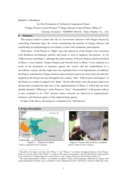
This project aimed to reduce the risk of vector-borne infection with Chagas disease by
controlling triatomine bugs, the vectors transmitting the parasite of Chagas disease, and
establishing an epidemiological surveillance system with community participation.
Guidelines for the care and treatment of persons diagnosed with chronic hepatitis C virus infection
In this review, the editors will investigate the impact of eight WASH interventions in preventing (reducing the risk of) and controlling outbreaks in LMIC, with particular focus on three diseases of current concern to the response community – cholera, Ebola, and Hepatitis E. Additionally, we will
...
In 2015, 5.9 million children under age five died (1). The major causes of child deaths globally are pneumonia, prematurity, intrapartum-related complications, neonatal sepsis, congenital anomalies, diarrhoea, injuries and malaria (2). Most of these diseases and conditions are at least partially cau
...
Noncommunicable diseases (NCDs) such as cancer, cardiovascular disease, diabetes and chronic respiratory diseases and their risk factors are an increasing public health and development challenge in Kazakhstan. This report provides evidence through three analyses that NCDs reduce economic output and
...
