Filter
192
Text search:
Jacob,
N.
Featured
Recommendations
18
New Publications
35
Language
Document type
No document type
95
Studies & Reports
50
Guidelines
24
Manuals
14
Training Material
4
Strategic & Response Plan
4
Fact sheets
1
Countries / Regions
Global
14
India
6
Zambia
6
Liberia
5
Latin America and the Carribbean
5
Ukraine
4
Sierra Leone
3
Russia
3
Nigeria
2
Ghana
2
Zimbabwe
2
Haiti
2
Germany
2
Rwanda
2
South Africa
2
Malawi
2
Central African Republic
2
Sri Lanka
2
West and Central Africa
2
Asia
2
Eastern Europe
2
Guinea
1
Burkina Faso
1
Senegal
1
Congo, Democratic Republic of
1
Uganda
1
South Sudan
1
Kenya
1
Tanzania
1
Indonesia
1
Mozambique
1
Peru
1
Colombia
1
Chile
1
Western and Central Europe
1
Africa
1
Authors & Publishers
Publication Years
Category
Countries
46
Clinical Guidelines
22
Public Health
15
Key Resources
12
Women & Child Health
9
Capacity Building
2
Pharmacy & Technologies
1
Toolboxes
Mental Health
31
Ebola & Marburg
14
Planetary Health
13
COVID-19
12
Caregiver
11
Disability
10
TB
10
NTDs
7
NCDs
7
Natural Hazards
6
AMR
6
HIV
5
Global Health Education
5
Rapid Response
4
Refugee
4
2.0 Rapid Response
4
Specific Hazards
2
Social Ethics
2
Pharmacy
2
Health Financing Toolbox
2
Conflict
1
Malaria
1
PROGRAMA NACIONAL DE EPILEPSIA
2019-2020
Int. J. Environ. Res. Public Health 2018, 15(12), 2626; https://doi.org/10.3390/ijerph15122626
Climate change is increasing risks to human health and to the health systems that seek to protect the safety and well-being of populations. Health authorities require information about current associatio
...

Available in English, French, Spanish and Russian from the website https://apps.who.int/iris/handle/10665/344562
Operational Guidelines

The report identifies major global gaps in WASH services: one third of health care facilities do not have what is needed to clean hands where care is provided; one in four facilities have no water services, and 10% have no sanitation services. This means that 1.8 billion people use facilities that l
...
Sepsis contributes significantly to preventable mortality and is the final common pathway to death for severe infectious diseases; it can also arise as a complication of injuries and non-communicable diseases.
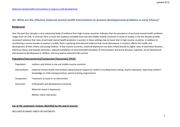
Q1: What are the effective maternal mental health interventions to prevent developmental problems in early infancy?
First published in 2020, this toolkit is intended for clinicians working in acute care, managing adult and paediatric patients with acute respiratory infection, including severe pneumonia, acute respiratory distress syndrome, sepsis and septic shock. The main objective is to provide key tools for us
...
This revision covers the main non-communicable diseases in Mozambique as well as the National Strategic Plan's aim to create a positive environment to minimize or eliminate the exposure to risk factors and guarantee access to care.
Background: The impacts of air pollutants on health range from short-term health impairments to hospital admissions
and deaths. Climate change is leading to an increase in air pollution.
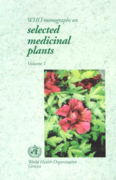
• provide scientific information on the safety, efficacy, and quality control/ quality assurance of widely used medicinal plants, in order to facilitate their appropriate use in Member States;
• provide models to assist Member States in developing their own mono- graphs or formularies for these
...
International Journal of Mental Health Systems December 2011, 5:3
Community mental health programs in low-income countries face a number of challenges. Using a case study methodology developed for this purpose, it is possible to compare programs and begin to assess the effectiveness of diverse serv
...
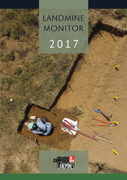
This is the 19th annual Landmine Monitor report. It is the sister publication to the Cluster Munition Monitor report, first published in November 2010.
Landmine Monitor 2016 provides a global overview of the landmine situation. Chapters on developments in specific countries and other areas are ava
...
BMJ VOLUME 322 24 FEBRUARY 2001 bmj.com
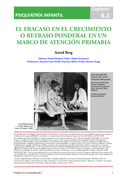
Psiquiatría infantil
Capítulo B.2

manual de aplicación de la OMS

Antimicrobials are precious agents for combating infectious diseases and had saved millions of lives throughout the world. However, the current trend of increasing antimicrobial resistance (AMR) has become a global health problem with increased morbidity and mortality in infectious diseases. Sri La
...