
Filter
579
Text search:
Avert
Featured
Recommendations
47
New Publications
167
Language
Document type
No document type
291
Studies & Reports
126
Guidelines
65
Strategic & Response Plan
36
Manuals
29
Training Material
9
Situation Updates
8
Infographics
6
Fact sheets
6
Brochures
1
Resource Platforms
1
Online Courses
1
Countries / Regions
Global
43
Kenya
29
Ethiopia
25
India
22
Nigeria
12
Africa
11
Zambia
10
Sierra Leone
9
Uganda
9
Bangladesh
9
Myanmar / Burma
9
Yemen
9
South–East Asia Region
9
Asia
9
South Sudan
8
Philippines
7
Syria
7
Ukraine
7
Liberia
6
Ghana
6
Pakistan
6
Malawi
6
Senegal
5
Nepal
5
Tanzania
5
South Africa
5
Mali
4
Afghanistan
4
Namibia
4
Latin America and the Carribbean
4
Guinea
3
Congo, Democratic Republic of
3
Cameroon
3
Somalia
3
Germany
3
Cambodia
3
Sudan
3
East and Southern Africa
3
Western and Central Europe
3
Indonesia
2
Lesotho
2
Palestine
2
Burkina Faso
1
Niger
1
Togo
1
Iraq
1
Lebanon
1
Chad
1
Gambia
1
Rwanda
1
Mauritania
1
Mozambique
1
Central African Republic
1
Botswana
1
West and Central Africa
1
Middle East and North Africa
1
Western Pacific Region
1
Eastern Europe
1
Djibouti
1
Armenia
1
Tajikistan
1
Russia
1
Iran
1
Kyrgyzstan
1
Kazakhstan
1
Georgia
1
Vietnam
1
Authors & Publishers
Publication Years
Category
Countries
194
Clinical Guidelines
47
Key Resources
38
Women & Child Health
37
Public Health
28
Capacity Building
4
Pharmacy & Technologies
4
Toolboxes
HIV
82
COVID-19
53
Planetary Health
32
Conflict
27
TB
21
Mental Health
19
AMR
19
Global Health Education
17
Caregiver
15
Ebola & Marburg
13
Rapid Response
12
Health Financing Toolbox
12
Malaria
11
Refugee
10
Natural Hazards
9
NTDs
9
NCDs
9
2.0 Rapid Response
8
Specific Hazards
6
Polio
5
Disability
4
Pharmacy
4
Cholera
2
Zika
2

WHO today released its first roadmap to tackle postpartum haemorrhage (PPH) – defined as excessive bleeding after childbirth - which affects millions of women annually and is the world’s leading cause of maternal deaths.
Despite being preventable and treatable, PPH results in around 70 000 de
...
The Global Health Security Agenda programme develops national capacity to prevent zoonotic and non-zoonotic diseases while quickly and effectively detecting and controlling diseases when they do emerge. The Emerging Pandemic Threats programme improves national capacity to pre-empt the emergence and
...

Maternal, Infant and Young Child Nutrition Strategic Actions:
1 Endorse and disseminate key policies and regulations
2 Improve maternal nutrition
3 Protect, promote, and support optimal infant and young child feeding practices
4 Support optimal infant and young child feeding in ...
1 Endorse and disseminate key policies and regulations
2 Improve maternal nutrition
3 Protect, promote, and support optimal infant and young child feeding practices
4 Support optimal infant and young child feeding in ...
This report presents three scenarios on the impact of COVID-19 in Africa using economic growth forecasts, mortality and efforts to ameliorate impact through social grants. Likely effects are examined on per capita income, poverty and the attainment of selected Sustainable Development Goals targets.
...
The international reconstruction effort in Afghanistan after 2001 created an opportunity to advance human rights, and women’s and girls’ rights in particular. Although its achievements have fallen short of what was envisioned, significant improvements in legal protections have emerged through th
...
New displacements by conflict and disasters in 2020
Operational Guidelines

Over the ages, human societies have altered local ecosystems and modified regional climates. Today the human influence has attained a global scale. This reflects the recent rapid increase in population size, energy consumption, intensity of land use, international trade and travel, and other human a
...
The primary audience for these recommendations includes health professionals who are responsible for developing national and local health-care guidelines and protocols and health workers involved in the provision of care to women and their newborns during pregnancy, labour and childbirth; this inclu
...

The Coronavirus Disease 2019 (COVID-19) has had a continuous and robust impact on world health. The resulting COVID-19 pandemic has had a devastating physical, mental and fiscal impact on the millions of people living with noncommunicable diseases (NCDs), as they have a higher risk of severe illness
...
Humanitarian emergencies result in a breakdown of critical health-care services and often make vulnerable communities dependent on external agencies for care. In resource-constrained settings, this may occur against a backdrop of extreme poverty, malnutrition, insecurity, low literacy and poor infra
...
The new WHO guidelines provide recommended steps for safe phlebotomy and reiterate accepted principles for drawing, collecting blood and transporting blood to laboratories/blood banks.
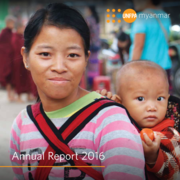
Census data shows that Myanmar can harness a double dividend – both youth and gender. This year’s annual report provides many facets of the journey to gender equality. It tells a story of widening horizons for women and girls who are capable in their own right. It is also a story of women fulfil
...
At least half of the world’s population does not have full coverage of essential health services. Health expenses push more than 100 million people into extreme poverty each and every year, forcing them into terrible choices that no one should ever have to make: Buy medicine or food? Education or
...
This policy brief examines the implications of COVID-19 and the government’s preventative measure for political stability,9 especially in the short to medium term. It argues that in the short term the disease and the preventative measures could make the country less vulnerable to organised politic
...
These WHO interim recommendations for use of the BBV152 COVAXIN vaccine were developed on the basis of advice issued by the Strategic Advisory Group of Experts on Immunization (SAGE) and the evidence summary included in the background document and annexes referenced below.
This document has been
...

Access to NCD medicines: emergent issues during the COVID-19 pandemic and key structural factors
recommended
The coronavirus disease (COVID-19) pandemic exacerbated pre-existing inequalities in the treatment and care of noncommunicable diseases (NCDs). This report examines the effect of the COVID-19 pandemic on access to NCD medicines, and the policies and strategies implemented by countries and health sys
...
