
Filter
1585
Text search:
mitigation
plan
Featured
Recommendations
128
New Publications
442
Language
Document type
No document type
676
Studies & Reports
362
Guidelines
207
Strategic & Response Plan
136
Manuals
118
Training Material
29
Situation Updates
27
Fact sheets
27
Brochures
1
Resource Platforms
1
Online Courses
1
Countries / Regions
Global
84
Myanmar / Burma
65
Kenya
59
Nigeria
41
Syria
35
India
31
Zambia
31
Sierra Leone
30
Congo, Democratic Republic of
30
Bangladesh
30
Nepal
29
Uganda
27
Rwanda
26
Malawi
26
Liberia
24
Latin America and the Carribbean
24
Ethiopia
23
South Sudan
22
Western and Central Europe
21
East and Southern Africa
20
Ghana
17
Tanzania
17
Ukraine
17
West and Central Africa
17
Africa
17
Lesotho
16
Namibia
14
Haiti
13
South Africa
13
Mozambique
13
Yemen
13
Zimbabwe
11
Philippines
11
South–East Asia Region
11
Guinea
10
Burkina Faso
10
Indonesia
9
Middle East and North Africa
9
Venezuela
9
Colombia
8
Senegal
7
Pakistan
7
Afghanistan
7
Cambodia
7
Eswatini/ Swaziland
7
Brazil
7
Asia
7
Eastern Europe
7
Jordan
6
Lebanon
6
Central African Republic
6
Eastern Europe and Central Asia
6
USA
5
Thailand
5
Burundi
5
Madagascar
5
Chile
5
Laos
5
Mali
4
Somalia
4
Germany
4
Turkey
4
Sudan
4
Ecuador
4
Botswana
4
Vietnam
4
Niger
3
Chad
3
Papua New Guinea
3
Peru
3
Bolivia
3
Western Pacific Region
3
Timor Leste/ East Timor
3
Mauritius
3
Cameroon
2
Iraq
2
Egypt
2
Argentina
2
Angola
2
Albania
2
Russia
2
Iran
2
France
2
Portugal
2
Spain
2
Guinea-Bissau
1
Côte d’Ivoire / Ivory Coast
1
China
1
Malaysia
1
Dominican Republic
1
Serbia
1
Croatia
1
Libya
1
Sri Lanka
1
Paraguay
1
Bhutan
1
Palestine
1
Lithuania
1
Moldova
1
Kyrgyzstan
1
Gabon
1
Turkmenistan
1
Japan
1
Denmark
1
United Kingdom
1
Azerbaijan
1
Bosnia and Herzegovina
1
Authors & Publishers
Publication Years
Category
Countries
682
Key Resources
182
Public Health
67
Women & Child Health
37
Clinical Guidelines
33
Capacity Building
15
Pharmacy & Technologies
6
Toolboxes
COVID-19
255
Planetary Health
180
Conflict
87
Natural Hazards
67
HIV
66
Rapid Response
58
AMR
44
Mental Health
43
2.0 Rapid Response
42
Global Health Education
39
Ebola & Marburg
36
Disability
30
Refugee
29
Health Financing Toolbox
24
TB
23
Caregiver
21
Malaria
20
Specific Hazards
17
NTDs
16
Zika
11
Pharmacy
10
NCDs
10
Cholera
9
Polio
9
South Sudan
1
Typhoon
1
Prepared by the Independent Panel for Pandemic Preparedness and Response for the WHO Executive Board, January 2021
“The world was not as prepared as it should have been, and it must do better,” concludes a WHO panel reviewing the pandemic response "
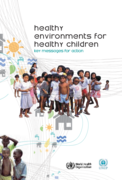
This booklet presents key messages for action, summarized from a set of
chapters on different environmental health issues.
Kenya Quality Model for Health - Level 2 Facilities
To realize Agenda 2030, aid agencies, private philanthropies, and their partners in the Global South need better data to monitor how official development finance (ODF) dollars advance the Sustainable Development Goals (SDGs) and avoid missing the mark. In this report, we summarize the results of a n
...

Achieving financial risk protection for the whole population requires significant financing for health. Health systems in low- and middle-income countries (LMIC) are plagued with persistent underfunding, and recent reductions in official development assistance have been registered. To create fiscal
...

The world is facing a sustainable development crisis. The 2024 Financing for Sustainable Development Report: Financing for Development at a Crossroads finds that financing challenges are at the heart of the crisis and imperil the SDGs and climate action. The window to rescue the SDGs and prevent a c
...
BMC Infectious Diseases volume 23, Article number: 342 (2023).
Tuberculosis (TB) is among the leading causes of death globally. The disease has a huge burden in Namibia, with a case notification rate of at least 442 per 100,000. To date, Namibia is among the countries with the highest global TB bur
...

ith a view to support the monitoring and reporting on the denial of humanitarian access against children, the Office of the Special Representative of the Secretary-General for Children and Armed Conflict and UNICEF publish today* a guidance note offering new tools to practitioners to better address
...

The document outlines essential steps and provides guidance to countries on the adoption and deployment of c-IPTp so that it is integrated into the existing health system. It draws upon best practices and lessons learned from pilot implementation experiences in eight African countries and targets st
...

The WHO guidelines for malaria bring together the Organization’s most up-to-date recommendations for malaria in one user-friendly and easy-to-navigate online platform.
The WHO guidelines for malaria bring together the Organization’s most up-to-date recommendations for malaria in one user-frie
...

Meeting report, Kampala, Uganda,
7–8 November 2023

Vector control, alongside case management, remains the most effective approach to controlling and eliminating malaria. Key interventions, such as indoor residual spraying (IRS) and long-lasting insecticidal nets (LLINs), have significantly reduced malaria transmission in many African countries. This
...

Malaria Journal (2021) 20:190
STANDARD OPERATING PROCEDURES - PREVENTION AND CARE FOR CHILD SURVIVORS

Integrated Outbreak Analytics (IOA) applies a multidisciplinary approach to understanding outbreak dynamics and to inform outbreak response. It aims to drive comprehensive, accountable, and effective public health and clinical strategies by enabling communities, and national and subnational health a
...

The Compendium of Solid Waste Management in Humanitarian Contexts is a comprehensive, structured and userfriendly manual and planning guide that provides a systematic overview of existing Solid Waste Management (SWM) technologies and approaches appropriate for use in humanitarian contexts.

This report synthesizes the state of knowledge on the interlinkages between environmental degradation climate change conflict and mobility in the East and Horn of Africa, focusing on Burundi, Djibouti, Ethiopia, Kenya, Somalia, South Sudan, Tanzania, and Uganda.

Building on the WHO guidelines for disclosure to children up to age 12 in 2011, this implementation guidance provides evidence on existing interventions that support children and adolescents living with HIV in the process of disclosure. It includes interventions that focuses on safe disclosure, as w
...
