
Filter
496
Text search:
malaria
vectors
Featured
46
141
Language
Document type
216
115
51
49
35
14
7
4
3
1
1
Countries
37
13
12
12
10
9
8
8
8
7
7
7
7
7
6
6
5
5
5
4
4
4
4
4
3
3
3
3
3
2
2
2
2
2
2
2
2
2
2
2
2
2
2
2
2
2
2
1
1
1
1
1
1
1
1
1
1
1
1
1
1
1
1
1
1
1
1
1
1
1
1
1
1
1
1
1
1
1
1
1
1
1
1
1
1
1
1
Authors & Publishers
Publication Years
Category
165
68
41
22
11
7
5
Toolboxes
75
75
63
21
19
14
13
11
11
9
6
5
5
4
3
3
2
1
1
1

The WHO guidelines for malaria bring together the Organization’s most up-to-date recommendations for malaria in one user-friendly and easy-to-navigate online platform.
The WHO guidelines for
...
Vector control, alongside case management, remains the most effective approach to controlling and eliminating malaria. Key interventions, such as indoor residual spraying (IRS) and long-lasting insecticidal nets (LLINs), have significantly reduced
...

BMC Public Health (2025) 25:3774 https://doi.org/10.1186/s12889-025-24555-6. The study results provide useful insights on how climate change influences malaria in African countries, and reiterates the need for a greater engagement of policymakers an
...
This Training module on malaria elimination has been developed by WHO to support health professionals in planning, managing, monitoring and evaluating malaria elimination programmes.
Supporting exe
...
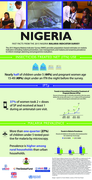

The overall goal of the programme, to reduce the malaria morbidity and mortality by 75% (using 2012 as baseline) by the year 2020, continued to be pursued in 2014. The following areas were identified as some of the priorities for the year:
...
The purpose of this manual is to provide guidance on how to implement Pan American Health Organization (PAHO) recommendations for malaria elimination at the local level. It is a streamlined, more operational version of the Manual for Stratifying
...

The document titled "Manual for Stratifying Malaria Risk and the Elimination of Foci" by PAHO provides guidance for countries in the Americas on how to systematically assess and classify malaria tra
...

The National Strategic Plan for Malaria Elimination in India (2023-2027) focuses on achieving malaria elimination by 2030, in alignment with the Global Technical Strategy. The document outlines the
...
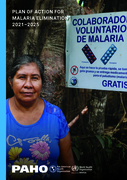
The Plan subscribes to the goals and pillars of the WHO Global Technical Strategy against Malaria 2016-2030 (GTS), while presenting key elements to address the specific challenges of the Region.

Community led-monitoring is based on the principle that «Nothing that is done for us should
be done without us”. The combination of this principle with evidence shows that community-led
monitoring is an important driver of improved service delivery and health outcomes that needs to
be re-empha
...

The annual bulletin of the Mekong Malaria Elimination (MME) programme is a yearly report that reviews ongoing efforts to combat multidrug resistance and eliminate malaria in the 6 countries of the G
...
In 2022, a total of 6,131 confirmed malaria cases were reported across the EU/EEA. Of these, 5,375 had a known importation status and nearly all (99.8%) were travel-related. Only 13 infections were acquired within Europe, with seven occurring in Fra
...

This issue brief aims to provide a comprehensive overview of key publications, guidelines, and practical materials on malaria prevention, diagnosis, and treatment. The selected documents reflect current evidence and field-based experiences, support
...

The "Regional Action Plan 2017–2030: Towards a Malaria-Free South-East Asia Region" by the World Health Organization (WHO) outlines a strategic framework to eliminate malaria in the 11 countries o
...
Las Directrices de la OMS sobre la malaria reúnen las recomendaciones más actualizadas de la Organización acerca de la malaria (o paludismo) en una plataforma en línea fácil de usar y de navega
...
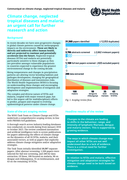
In recent decades we have seen progressive changes to global climate patterns caused by anthropogenic impacts on the environment. These are likely to directly and indirectly affect human health, and are projected to continue and potentially
accelerate into the future. Neglected tropical diseases (N
...
Published: April 26, 2017 https://doi.org/10.1371/journal.pone.0176004
