
Filter
632
Text search:
World
Health
Organization.
Regional
Office
for
the
Eastern
Mediterranean
Featured
Recommendations
100
New Publications
129
Language
Document type
No document type
207
Studies & Reports
167
Guidelines
129
Manuals
56
Strategic & Response Plan
35
Training Material
10
Situation Updates
10
Fact sheets
8
Resource Platforms
5
Brochures
1
App
1
Infographics
1
Online Courses
1
Videos
1
Countries / Regions
Global
61
Syria
20
Africa
17
Middle East and North Africa
15
Western and Central Europe
13
Somalia
9
Yemen
7
Pakistan
6
Eastern Europe
6
Nigeria
5
Sudan
5
South–East Asia Region
5
Latin America and the Carribbean
5
Sierra Leone
4
Liberia
4
Iraq
4
Jordan
4
Afghanistan
4
Lebanon
4
Myanmar / Burma
4
Iran
4
Saudi Arabia
3
Ethiopia
3
Ghana
3
India
3
Kenya
3
Rwanda
3
Senegal
2
Nepal
2
Turkey
2
Thailand
2
China
2
Ukraine
2
West and Central Africa
2
Asia
2
Venezuela
2
Congo, Democratic Republic of
1
Morocco
1
USA
1
Cameroon
1
Uganda
1
Philippines
1
South Sudan
1
Egypt
1
Tanzania
1
Cambodia
1
South Africa
1
Bangladesh
1
Benin
1
North Macedonia
1
Croatia
1
Ecuador
1
Greece
1
Libya
1
Sri Lanka
1
East and Southern Africa
1
Western Pacific Region
1
Eastern Europe and Central Asia
1
Palestine
1
Albania
1
Djibouti
1
Russia
1
Qatar
1
Georgia
1
Tunisia
1
Authors & Publishers
Publication Years
Category
Clinical Guidelines
88
Countries
76
Public Health
68
Women & Child Health
56
Key Resources
45
Capacity Building
13
Pharmacy & Technologies
12
Toolboxes
Mental Health
75
COVID-19
59
Planetary Health
43
TB
39
HIV
35
NTDs
33
Conflict
27
Global Health Education
26
Refugee
25
AMR
25
Rapid Response
23
Caregiver
23
NCDs
21
Disability
19
2.0 Rapid Response
16
Pharmacy
14
Malaria
12
Ebola & Marburg
9
Cholera
8
Polio
8
Zika
7
Natural Hazards
5
Specific Hazards
4
Health Financing Toolbox
4
Typhoon
1

The WHO handbook “Epidemiological Data Analysis for the Early Warning Alert and Response Network (EWARN) in Humanitarian Emergencies” explains
...

This manual presents a compelling case for action on carbapenem-resistant organisms (CROs) and describes the linkages between the prevention and co
...
The WHO Global strategy on human resources for health: workforce 2030 encourages development partners and global
...
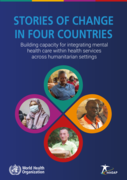
The world is facing an unprecedented range of emergencies. In reaction to these complex adversities, many people experience considerable distress and impairment, and a minority may even go on to dev
...
The Quality Criteria for Health National Adaptation Plans (HNAPs) presents examples of good practice in HNAP development to assist countries in dev
...

Self-care interventions are among the most promising and exciting new approaches to improve health and well-being, both from a health systems persp
...

Lessons learned from recent public health events such as the COVID-19 pandemic, Ebola virus disease, Zika virus disease outbreaks, and other public health
...

PHSM are vital in reducing the risk and scale of infectious disease transmission and lowering hospitalization and deaths. Examples include contact tracing, quarantine and isolation, mask use, ventilation, school or workplace measures, mobility restr
...

This document presents the World Health Organization Operational framework
...
Millennium Development Goal 8E aims for affordable access to essential medicines. Essential medicines, as defined by WHO, are those that “satisfy the he
...
Self-care interventions are among the most promising and exciting new approaches to improve health and well-being, both from a health systems persp
...
1. Provide treatment for mental disorders in primary care
2. Ensure wider accessibility to essential psychotropic drugs
3. Provide care in the community
4. Educate
...
Interim Guidance, 12 July 2021; This tool was developed to assess present and surge capacities for the treatment of COVID-19 in health facilities.
...
The Guidelines on promotive and preventive mental health interventions for adolescents - Helping Adolescents thrive (HAT), provide evidence-informe
...

The HEARTS technical package provides a strategic approach to improving cardiovascular health in countries. It comprises six modules and an implementation guide. This package supports Ministries of
...
This handbook follows a comprehensive approach to health system strengthening at borders in order to support IHR national focal points and other national agencies in developing and implementing evidence-based action plans
...
To assess national-level responses to NCDs, WHO has implemented NCD country capacity surveys periodically since 2001. This report is the latest in that series. Since the first survey round,
...
The COVID-19 pandemic has led to large increases in healthcare waste, straining under resourced healthcare facilities and exacerbating environmental impacts from solid waste. This report quantifies the
...

The WHO document "Integrating the prevention and control of noncommunicable diseases in HIV/AIDS, tuberculosis, and sexual and reproductive health
...

Countries reported disruptions in all health-care settings. In more than half of countries surveyed, many people are still unable to access care at the primary care and community care levels. Signi
...
