
Filter
5081
Text search:
Health
and
Hygiene
Featured
604
1251
Language
4620
266
144
110
102
69
64
37
18
15
15
13
11
11
9
8
8
7
7
6
5
5
5
5
5
5
4
4
4
4
4
3
3
3
3
3
3
3
3
3
3
3
3
3
2
2
2
2
2
2
2
2
2
1
1
1
1
1
1
1
1
1
1
1
1
1
1
1
1
1
Document type
2239
866
849
324
236
195
133
100
67
20
19
17
15
Countries
226
199
140
134
122
104
103
100
91
91
91
85
83
79
68
67
65
60
56
55
55
54
52
52
51
51
49
45
45
44
40
38
37
33
32
30
29
29
28
27
27
22
21
21
19
19
18
18
18
18
18
17
16
16
15
15
13
13
13
13
12
12
12
11
11
10
9
9
9
8
8
8
7
7
6
6
6
5
5
5
5
5
4
4
4
4
4
4
4
4
4
4
4
3
3
3
3
3
3
3
3
3
3
3
3
3
2
2
2
2
2
2
2
2
2
2
2
2
1
1
1
1
1
1
1
1
1
1
1
1
1
1
1
1
1
1
1
1
1
1
1
1
1
1
Authors & Publishers
756
194
161
119
116
115
87
83
71
57
44
41
34
33
33
27
27
26
25
24
24
24
24
23
22
22
22
20
19
19
18
18
17
17
17
17
17
16
16
16
15
15
13
13
12
12
12
12
12
11
11
11
11
11
11
11
10
10
10
10
10
10
10
10
10
9
9
9
9
9
9
9
9
9
9
9
8
8
8
8
8
8
8
8
8
8
8
8
8
8
7
7
7
7
7
7
7
7
7
7
7
7
7
7
7
7
7
7
7
7
7
6
6
6
6
6
6
6
6
6
6
6
6
6
6
6
6
6
6
6
6
6
6
6
6
5
5
5
5
5
5
5
5
5
5
5
5
5
5
5
5
5
5
5
5
5
5
5
5
5
5
5
5
5
5
5
5
5
5
5
5
5
5
5
4
4
4
4
4
4
4
4
4
4
4
4
4
4
4
4
4
4
4
4
4
4
4
4
4
4
4
4
4
4
4
4
4
4
4
4
4
4
4
4
4
4
4
4
4
4
4
4
4
3
3
3
3
3
3
3
3
3
3
3
3
3
3
3
3
3
3
3
3
3
3
3
3
3
3
3
3
3
3
3
3
3
3
3
3
3
3
3
3
3
3
3
3
3
3
3
3
3
3
3
3
3
3
3
3
3
3
3
3
3
3
3
3
3
3
3
3
3
3
3
3
3
3
3
3
3
3
3
3
3
3
3
3
3
3
3
3
3
3
3
3
3
3
3
3
3
3
3
3
3
3
3
2
2
2
2
2
2
2
2
2
2
2
2
2
2
2
2
2
2
2
2
2
2
2
2
2
2
2
2
2
2
2
2
2
2
2
2
2
2
2
2
2
2
2
2
2
2
2
2
2
2
2
2
2
2
2
2
2
2
2
2
2
2
2
2
2
2
2
2
2
2
2
2
2
2
2
2
2
2
2
2
2
2
2
2
2
2
2
2
2
2
2
2
2
2
2
2
2
2
2
2
2
2
2
2
2
2
2
2
2
2
2
2
2
2
2
2
2
2
2
2
2
2
2
2
2
2
2
2
2
2
2
2
2
2
2
2
2
2
2
2
2
2
2
2
2
2
2
2
2
2
2
2
2
2
2
2
2
2
2
2
2
2
2
2
2
2
2
2
2
2
2
2
2
2
2
2
2
2
2
2
2
2
2
2
2
2
2
2
2
2
2
2
2
2
2
2
2
2
2
2
2
2
2
2
2
2
2
2
2
2
2
2
2
2
2
2
2
2
2
2
2
2
2
2
2
2
2
2
2
2
2
2
2
2
2
2
2
2
2
2
2
2
2
2
2
1
1
1
1
1
1
1
1
1
1
1
1
1
1
1
1
1
1
1
1
1
1
1
1
1
1
1
1
1
1
1
1
1
1
1
1
1
1
1
1
1
1
1
1
1
1
1
1
1
1
1
1
1
1
1
1
1
1
1
1
1
1
1
1
1
1
1
1
1
1
1
1
1
1
1
1
1
1
1
1
1
1
1
1
1
1
1
1
1
1
1
1
1
1
1
1
1
1
1
1
1
1
1
1
1
1
1
1
1
1
1
1
1
1
1
1
1
1
1
1
1
1
1
1
1
1
1
1
1
1
1
1
1
1
1
1
1
1
1
1
1
1
1
1
1
1
1
1
1
1
1
1
1
1
1
1
1
1
1
1
1
1
1
1
1
1
1
1
1
1
1
1
1
1
1
1
1
1
1
1
1
1
1
1
1
1
1
1
1
1
1
1
1
1
1
1
1
1
1
1
1
1
1
1
1
1
1
1
1
1
1
1
1
1
1
1
1
1
1
1
1
1
1
1
1
1
1
1
1
1
1
1
1
1
1
1
1
1
1
1
1
1
1
1
1
1
1
1
1
1
1
1
1
1
1
1
1
1
1
1
1
1
1
1
1
1
1
1
1
1
1
1
1
1
1
1
1
1
1
1
1
1
1
1
1
1
1
1
1
1
1
1
1
1
1
1
1
1
1
1
1
1
1
1
1
1
1
1
1
1
1
1
1
1
1
1
1
1
1
1
1
1
1
1
1
1
1
1
1
1
1
1
1
1
1
1
1
1
1
1
1
1
1
1
1
1
1
1
1
1
1
1
1
1
1
1
1
1
1
1
1
1
1
1
1
1
1
1
1
1
1
1
1
1
1
1
1
1
1
1
1
1
1
1
1
1
1
1
1
1
1
1
1
1
1
1
1
1
1
1
1
1
1
1
1
1
1
1
1
1
1
1
1
1
1
1
1
1
1
1
1
1
1
1
1
1
1
1
1
1
1
1
1
1
1
1
1
1
1
1
1
1
1
1
1
1
1
1
1
1
1
1
1
1
1
1
1
1
1
1
1
1
1
1
1
1
1
1
1
1
1
1
1
1
1
1
1
1
1
1
1
1
1
1
1
1
1
1
1
1
1
1
1
1
1
1
1
1
1
1
1
1
1
1
1
1
1
1
1
1
1
1
1
1
1
1
1
1
1
1
1
1
1
1
1
1
1
1
1
1
1
1
1
1
1
1
1
1
1
1
1
1
1
1
1
1
1
1
1
1
1
1
1
1
1
1
1
1
1
1
1
1
1
1
1
1
1
1
1
1
1
1
1
1
1
1
1
1
1
1
1
1
1
1
1
1
1
1
1
1
1
1
1
1
1
1
1
1
1
1
1
1
1
1
1
1
1
1
1
1
1
1
1
1
1
1
1
1
1
1
1
1
1
1
1
1
1
1
1
1
1
1
1
1
1
1
1
1
1
1
1
1
1
1
1
1
1
1
1
1
1
1
1
1
1
1
1
1
1
1
1
1
1
1
1
1
1
1
1
1
1
1
1
1
1
1
1
1
1
1
1
1
1
1
1
1
1
1
1
1
1
1
1
1
1
1
1
1
1
1
1
1
1
1
1
1
1
1
1
1
1
1
1
1
1
1
1
1
1
1
1
1
1
1
1
1
1
1
1
1
1
1
1
1
1
1
1
1
1
1
1
1
1
1
1
1
1
1
1
1
1
1
1
1
1
1
1
1
1
1
1
1
1
1
1
1
1
1
1
1
1
1
1
1
1
1
1
1
1
1
1
1
1
1
1
1
1
1
1
1
1
1
1
1
1
1
1
1
1
1
1
1
1
1
1
1
1
1
1
1
1
1
1
1
1
1
1
1
1
1
1
1
1
1
1
1
1
1
1
1
1
1
1
1
1
1
1
1
1
1
1
1
1
1
1
1
1
1
1
1
1
1
1
1
1
1
1
1
1
1
1
1
1
1
1
1
1
1
1
1
1
1
1
1
1
1
1
1
1
1
1
1
1
1
1
1
1
1
1
1
1
1
1
1
1
1
1
1
1
1
1
1
1
1
1
1
1
1
1
1
1
1
1
1
1
1
1
1
1
1
1
1
1
1
1
1
1
1
1
1
1
1
1
1
1
1
1
1
1
1
1
1
1
1
1
1
1
1
1
1
1
1
1
1
1
1
1
1
1
1
1
1
1
1
1
1
1
1
1
1
1
1
1
1
1
1
1
1
1
1
1
1
1
1
1
1
1
1
1
1
1
1
1
1
1
1
1
1
1
1
1
1
1
1
1
1
1
1
1
1
1
1
1
1
1
1
1
1
1
1
1
1
1
1
1
1
1
1
1
1
1
1
1
1
1
1
1
1
1
1
1
1
1
1
1
1
1
1
1
1
1
1
1
1
1
1
1
1
1
1
1
1
1
1
1
1
1
1
1
1
1
1
1
1
1
1
1
1
1
1
1
1
1
1
1
1
1
1
1
1
1
1
1
1
1
1
1
1
1
1
1
1
1
1
1
1
1
1
1
1
1
1
1
1
1
1
1
1
1
1
1
1
1
1
1
1
1
1
1
1
1
1
1
1
1
1
1
1
1
1
1
1
1
1
1
1
1
1
1
1
1
1
1
1
1
1
1
1
1
1
1
1
1
1
1
1
1
1
1
1
1
1
1
1
1
1
1
1
1
1
1
1
1
1
1
1
1
1
1
1
1
1
1
1
1
1
1
1
1
1
1
1
1
1
1
1
1
1
1
1
1
1
1
1
1
1
1
1
1
1
1
1
1
1
1
1
1
1
1
1
1
1
1
1
1
1
1
1
1
1
1
1
1
1
1
1
1
1
1
1
1
1
1
1
1
1
1
1
1
1
1
1
1
1
1
1
1
1
1
1
1
1
1
1
1
1
1
1
1
1
1
1
1
1
1
1
1
1
1
1
1
1
1
1
1
1
1
1
1
1
1
1
1
1
1
1
1
1
1
1
1
1
1
1
1
1
1
1
1
1
1
1
1
1
1
1
1
1
1
1
1
1
1
1
1
1
1
1
1
1
1
1
1
1
1
1
1
1
1
1
1
1
1
1
1
1
1
1
1
1
1
1
1
1
1
1
1
1
1
1
1
1
1
1
1
1
1
1
1
1
1
1
1
1
1
1
1
1
1
1
1
1
1
1
1
1
1
1
1
1
1
1
1
1
1
1
1
1
1
1
1
1
1
1
1
1
1
1
1
1
1
1
1
1
1
1
1
1
1
1
1
1
1
1
1
1
1
1
1
1
1
1
1
1
1
1
1
1
1
1
1
1
1
1
1
1
1
1
1
1
1
1
1
1
1
1
1
1
1
1
1
1
1
1
1
1
1
1
1
1
1
1
1
1
1
1
1
1
1
1
1
1
1
1
1
1
1
1
1
1
1
1
1
1
1
1
1
1
1
1
1
1
1
1
1
1
1
1
1
1
1
1
1
1
1
1
1
1
1
1
1
1
1
1
1
1
1
1
1
1
1
1
1
1
1
1
1
1
1
1
1
1
1
1
1
1
1
1
1
1
1
1
1
1
1
1
1
1
1
1
1
1
1
1
1
1
1
1
1
1
1
1
1
1
1
1
1
1
1
1
1
1
1
1
1
1
1
1
1
1
1
1
1
1
1
1
1
1
1
1
1
1
1
1
1
1
1
1
1
1
1
1
1
1
1
1
1
1
1
1
1
1
1
1
1
1
1
1
1
1
1
1
1
1
1
1
1
1
1
1
1
1
1
1
1
1
1
1
1
1
1
1
1
1
1
1
1
1
1
1
1
1
1
1
1
1
1
1
1
1
1
1
1
1
1
1
1
1
1
1
1
1
1
1
1
1
1
1
1
1
1
1
1
1
1
1
1
1
1
1
1
1
1
1
1
1
1
1
1
1
1
1
1
1
1
1
1
1
1
1
1
1
1
1
1
1
1
1
1
1
1
1
1
1
1
1
1
1
1
1
1
1
1
1
1
1
1
1
1
1
1
1
1
1
1
1
1
1
1
1
1
1
1
1
1
1
1
1
1
1
1
1
1
1
1
1
1
1
1
1
1
1
1
1
1
1
1
1
1
1
1
1
1
1
1
1
1
1
1
1
1
1
1
1
1
1
1
1
1
1
1
1
1
1
1
1
1
1
1
1
1
1
1
1
1
1
1
1
1
1
1
1
1
1
1
1
1
1
1
1
1
1
1
1
1
1
1
1
1
1
1
1
1
1
1
1
1
1
1
1
1
1
1
1
1
1
1
1
1
1
1
1
1
1
1
1
1
1
1
1
1
1
1
1
1
1
1
1
1
1
1
1
1
1
1
1
1
1
1
1
1
1
1
1
1
1
1
1
1
1
1
1
1
1
1
1
1
1
1
1
1
1
1
1
1
1
1
1
1
1
1
1
1
1
1
1
1
1
1
1
1
1
1
1
1
1
1
1
1
1
1
1
1
1
1
1
1
1
1
1
1
1
1
1
1
1
1
1
1
1
1
1
1
1
1
1
1
1
1
1
1
1
1
1
1
1
1
1
1
1
1
1
1
1
1
1
1
1
1
1
1
1
1
1
1
1
1
1
1
1
1
1
1
1
1
1
1
1
1
1
1
1
1
1
1
1
1
1
1
1
1
1
1
1
1
1
1
1
1
1
1
1
1
1
1
1
1
1
1
1
1
1
1
1
1
1
1
1
1
1
1
1
1
1
1
1
1
1
1
1
1
1
1
1
1
1
1
1
1
1
1
1
1
1
1
1
1
1
1
1
1
1
1
1
1
1
1
1
1
1
1
1
1
1
1
1
1
1
1
1
1
1
1
1
1
1
1
1
1
1
1
1
1
1
1
1
1
1
1
1
1
1
1
1
1
1
1
1
1
1
1
1
1
1
1
1
1
1
1
1
1
1
1
1
1
1
1
1
1
1
1
1
1
1
1
1
1
1
1
1
1
1
1
1
1
1
1
1
1
1
1
1
1
1
1
1
1
1
1
1
1
1
1
1
1
1
1
1
1
1
1
1
1
1
1
1
1
1
1
1
1
1
1
1
1
1
1
1
1
1
1
1
1
1
1
1
1
1
1
1
1
1
1
1
1
1
1
1
1
1
1
1
1
1
1
1
1
1
1
1
1
1
1
1
1
1
1
1
1
1
1
1
1
1
1
1
1
1
1
1
1
1
1
1
1
1
1
1
1
1
1
1
1
1
1
1
1
1
1
1
1
1
1
1
1
1
1
1
1
1
1
1
1
1
1
1
1
1
1
1
1
1
1
1
1
1
1
1
1
1
1
1
1
1
1
1
1
1
1
1
1
1
1
1
1
1
1
1
1
1
1
1
1
1
1
1
1
1
1
1
1
1
1
1
1
1
1
1
1
1
1
1
1
1
1
1
1
1
1
1
1
1
1
1
1
1
1
1
1
1
1
1
1
1
1
1
1
1
1
1
1
1
1
1
1
1
1
1
1
1
1
1
1
1
1
1
1
1
1
1
1
1
1
1
1
1
1
1
1
1
1
1
1
1
1
1
1
1
1
1
1
1
1
1
1
1
1
1
1
1
1
1
1
1
1
1
1
1
1
1
1
1
1
1
1
1
1
1
1
1
1
1
1
1
1
1
1
1
1
1
1
1
1
1
1
1
1
1
1
1
1
1
1
1
1
1
1
1
1
1
1
1
1
1
1
1
1
1
1
1
1
1
1
1
1
1
1
1
1
1
1
1
1
1
1
1
1
1
1
1
1
1
1
1
1
1
1
1
1
1
1
1
1
1
1
1
1
1
1
1
1
1
1
1
1
1
1
1
1
1
1
1
1
1
1
1
1
1
1
1
1
1
1
1
1
1
1
1
1
1
1
1
1
1
1
1
1
1
1
1
1
1
1
1
1
1
1
1
1
1
1
1
1
1
1
1
1
1
1
1
1
1
1
1
1
1
1
1
1
1
1
1
1
1
1
1
1
1
1
1
1
1
1
1
1
1
1
1
1
1
1
1
1
1
1
1
1
1
1
1
1
1
1
1
1
1
1
1
1
1
1
1
1
1
1
1
1
1
1
1
1
1
1
1
1
1
1
1
1
1
1
1
1
1
1
1
1
1
1
1
1
1
1
1
1
1
1
1
1
1
1
1
1
1
1
1
1
1
1
1
1
1
1
1
1
1
1
1
1
1
1
1
1
1
1
1
1
1
1
1
1
1
1
1
1
1
1
1
1
1
1
1
1
1
1
1
1
1
1
1
1
1
1
1
1
1
1
1
1
1
1
1
1
1
1
1
1
1
1
1
1
1
1
1
1
1
1
1
1
1
1
1
1
1
1
1
1
1
1
1
1
1
1
1
1
1
1
1
1
1
1
1
1
1
1
1
1
1
1
1
1
1
1
1
1
1
1
1
1
1
1
1
1
1
1
1
1
1
1
1
1
1
1
1
1
1
1
1
1
1
1
1
1
1
1
1
1
1
1
1
1
1
1
1
1
1
1
1
1
1
1
1
1
1
1
1
1
1
Publication Years
1944
2700
404
31
2
Category
1811
537
314
281
220
130
41
1
Toolboxes
788
307
242
220
196
193
186
180
178
146
144
129
123
118
96
91
76
52
50
40
36
27
23
18
8
3
1
Human health and well-being are intimately linked to the state of the environment. Water, sanitation and
...
hygiene (WASH), climate change, air pollution and exposure to hazardous chemicals are major causes of environment-related burden of disease across the world. In the WHO South-East Asia Region, almost a quarter of all deaths are attributable to the health impacts of environmental hazards. Air pollution is the leading cause of deaths from environmental risks and is a leading contributor to the NCD epidemic.
more
Best practice for hand hygiene requires the availability of clean water, soap, and single use disposable towels or alcohol based hand sanitiser with a concentration of 70%. Availability of these res
...
ources is not always assured. When resources for hand hygiene are not available other materials need to be considered to prevent transmission of infection. This document provides community guidance on evidence-based alternative hand hygiene strategies in the absence of clean running water, soap or alcohol-based hand rub.
more
No country can claim to be free from health-care associated infections, therefore, improvement of infection prevention and control (IPC) strategies is essential. WHO recommends the use of multimodal
...
improvement strategies to implement IPC interventions. These include each item of standard and transmission-based precautions according to national guidelines or standard operating procedures and under the coordination of the national IPC focal point (or team, if existing). This publication consists of three focused improvement tools, called “aide-memoires”, which focus on 1) respiratory and hand hygiene, 2) personal protective equipment, and 3) environmental cleaning, waste and linen management, all elements of standard, droplet/contact and airborne precautions.
more
The steps are presented in a user-friendly guidebook, designed to be a working resource for implementers and leads in infection control, safety, and quality.
These guidelines deal specifically with water, sanitation and hygiene, and are designed to be used in schools in low-cost settings in low-
...
and medium-resource countries to:
• assess prevailing situations and plan for required improvements;
• develop and reach essential safety standards as a first goal; and
• support the development and application of national policies.
more
The National Integrated Comprehensive Cholera Prevention and Control Plan (2017-2022) outlines Uganda's strategy to reduce cholera cases and mortality by 50% by 2022. The plan focuses on improving a
...
ccess to clean water, sanitation, and hygiene (WASH), strengthening disease surveillance, enhancing case management, and implementing oral cholera vaccination (OCV) in high-risk areas. It emphasizes multi-sectoral collaboration, involving government agencies, NGOs, and local communities to ensure a sustainable response. Key interventions include community engagement, improved health services, and better outbreak preparedness, aiming for long-term cholera elimination in Uganda.
more
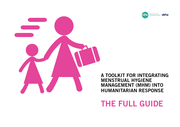
In many humanitarian emergencies, there is a serious lack of access to even the most basic materials needed for managing the blood in addition to a lack of appropriate sanitation facilities (including water), which are critical for addressing menstrual hy
...
giene. Privacy in emergencies is often scarce, and even if toilets are available they often lack locks, functioning doors, lighting and separation between genders. These barriers are often intensified by cultural beliefs and taboos surrounding menstruation which can restrict the movements and behaviors of girls and women
more

On Global Handwashing Day, WHO and UNICEF have released the first-ever global Guidelines on Hand Hygiene in Community Settings to support governments and
...
practitioners in promoting effective hand hygiene outside health care – across households, public spaces and institutions. Framing hand hygiene as a public good and a government responsibility, the Guidelines translate evidence into ready-to-adopt actions that enable sustainable access to effective hygiene services. This will reduce diarrhoeal disease, acute respiratory infections and other preventable illnesses, strengthening routine public health where people live, work, visit and study, and emergency preparedness, including outbreaks like cholera.
Despite clear benefits, 1.7 billion people still lacked basic hand hygiene services at home in 2024, including 611 million with no facility at all. Meeting the 2030 target will require accelerated progress – about a doubling in the global rate, and much faster in specific settings (up to 11-fold in least-developed countries and 8-fold in fragile contexts). Hand hygiene remains one of the most cost-effective health investments, reducing diarrhoea by 30% and acute respiratory infections by 17%, with large, measurable gains for population health.
“Clean hands save lives, but results at scale require policy, financing and accountability,” said Dr Ruediger Krech, Director a.i, Department of Environment, Climate Change, One Health & Migration at the World Health Organization. “These Guidelines help countries move beyond fragmented projects to government-led systems that make soap, water, and conditions conducive to everyday hand hygiene the norm.”
“Children and young people pay the highest price when basic hygiene is out of reach,” said Cecilia Scharp, Director, Water Sanitation and Hygiene (WASH) Team, Programme Group, UNICEF. “These Guidelines provide practical steps to ensure facilities are accessible when they need to be – in homes, schools, markets, and transport hubs – so every child can learn, play and thrive with dignity.”
more
Development and Introduction of the Filariasis Test Strip: A New Diagnostic Test for the Global Program to Eliminate Lymphatic Filariasis
Pantelias, A.; King, J.D.; Lammie, P.; Weil, G.J.
The American Journal of Tropical Medicine and Hygiene
(2022)
CC
Am. J. Trop. Med. Hyg., 106 (Suppl 5), 2022, pp. 56–60. Lymphatic filariasis (LF) is a parasitic disease that is a major cause of chronic disability in the developing world. According to the 2021–2030 road map for neglected tropical diseases (NTDs) published by the World
...
Health Organization (WHO), the global goal for LF is elimination as a public health problem by 2030 through repeated rounds of mass drug administration (MDA). Critical components of any elimination program are monitoring and surveillance. Appropriate assessment tools and methods are needed for each stage of an elimination program; mapping to identify which areas require intervention, monitoring to assess the impact of interventions, and post-intervention surveillance to validate elimination or detect recrudescence.
more
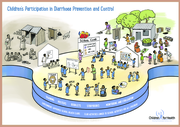
The document provides educational messages and practical guidance to prevent and manage diarrhoea, particularly in children. It emphasizes hygiene
...
practices like proper handwashing, using latrines, and safe food handling. It also highlights the importance of breastfeeding, balanced nutrition, immunization, and the use of Oral Rehydration Solutions (ORS) and zinc for treating dehydration caused by diarrhoea. Developed alongside Save the Children programs in the Democratic Republic of the Congo, the material integrates health education into schools and communities, encouraging children to act as agents of change in promoting hygiene and health practices.
more

The "National Guideline for Cholera Surveillance and Outbreak Response" by the Ethiopian Public Health Institute (EPHI) provides a comprehensive approach to combating cholera outbreaks in Ethiopia.
...
It emphasizes the importance of a multisectoral approach, including case management, WASH measures, and the use of cholera vaccines. A key component is the establishment of Cholera Treatment Centers (CTCs) that provide 24/7 care. Additionally, the guideline stresses water quality monitoring and hygiene practices to prevent the spread of cholera and protect public health.
more
Online Resouce with guidelines, posters, e-learning courses for healthcare settings and community health
Infection prevention and control of COVID in ports
Nation Institute for Communicable Diseases, South Africa
Department: Health Republic of South Africa
(2020)
C2
Overview
• How are diseases transmitted from person to person?
• What are the principles of infection prevention and control
• What IPC measures are other countries / organisations recommending for the transport industry/workers?
• Ho
...
w can we apply this knowledge to protect us while we protect our country?
• Administrative controls = screening and awareness, people flow, health promotion
• Environmental controls = ventilation, airflow
• Personal protective equipment = use of masks, gloves, hand hygiene
more
A critical building block to achieving the global goal of universal hand hygiene by 2030 is adequate levels of funding. Understanding the costs of implementing hand hygiene plans is an essential pre
...
cursor to fund allocation. This tool aims to provide country-specific cost estimates of achieving universal hand hygiene in households by 2030. It has been developed jointly by WHO and UNICEF, through a consultancy with WASHeconomics, and with input from the London School of Hygiene and Tropical Medicine, the World Bank and WaterAid
more

The video "Cholera - Questions & Answers" by the World Health Organization (WHO) explains the essential aspects of cholera, an acute diarrheal disease caused by ingesting water or food contaminated with the Vibrio cholerae bacterium. It highlights t
...
he main symptoms, including severe watery diarrhea, vomiting, and rapid dehydration, which can be fatal without proper treatment. Transmission occurs primarily through unsafe water and poor sanitation conditions. To prevent the disease, it is crucial to have access to clean drinking water, improve hygiene and sanitation, and use vaccination in high-risk areas. In case of infection, oral or intravenous rehydration is the primary treatment, while antibiotics are sometimes administered in severe cases. The video emphasizes the importance of rapid intervention and preventive measures to limit the spread of cholera and protect at-risk populations.
more
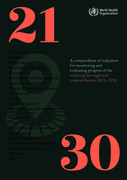
The road map 2030 was developed by WHO through an extensive global consultation, with indicators set for measuring progress against targets and milestones. This compendium of indicators provides a comprehensive
...
and standardized listing of recommended indicators, including the 70 core indicators presented in the M&E framework. These indicators will also support reporting on strategies described in other road map companion documents to guide action against neglected tropical diseases include the sustainability framework, the global strategy on water, sanitation and hygiene, the One Health approach and the strategic framework for integrated control and elimination of skin-related neglected tropical diseases.
The purpose of this compendium is to guide monitoring and evaluation of programmes and thereby to improve their quality and effectiveness in alignment with the road map goals. It provides a standardized listing of the most widely used indicators relevant to countries, with uniformity in defining indicators to allow comparisons over time and among different programmes. Detailed metadata are provided for each of these indicators to facilitate validity, internal consistency, standardized measurement, estimation methods and comparability of data across countries.
more

Cholera is an acute gastrointestinal infection caused by the bacterium Vibrio Cholerae serogroup O1 or O139, and is often linked to unsafe drinking water, lack of proper sanitation and personal
...
hygiene. It adversely affects mostly the poor and vulnerable populations in countries, which are already deprived of proper health facilities and conducive environmental conditions. The disease spreads through oro-fecal transmission by the ingestion of contaminated food or water or by person-to-person contact. It has a short incubation period of 2 hours to 5 days and the number of affected cases can rapidly increase across large regions. Cholera is a significant threat to global public health leading to an estimated 3-5 million cases per year worldwide, with an annual toll of 100,000 deaths. The disease was first reported in 1817 from the Ganges Delta of India and since then the ongoing 7th pandemic has emerged from Indonesia, reached Africa in 1970 and Somalia happens to be one of the early affected countries. Over the past few decades,
Somalia has witnessed the occurrence of repeated AWD/Cholera disease outbreaks that have caused high morbidity and mortality across the country.
more

The WHO publication “Surveillance, case investigation and contact tracing for mpox: interim guidance” provides updated global technical guidance on monitoring and responding to mpox (formerly k
...
nown as monkeypox). It explains how countries should conduct surveillance to detect new outbreaks, carry out case investigation including clinical assessment and lab specimen collection, and perform contact tracing to monitor people exposed to confirmed or probable cases in order to stop transmission and protect at-risk groups. The guidance includes practical recommendations for how long contacts should be monitored (e.g., daily for 21 days without requiring quarantine if symptom-free) and advising good hygiene and reduced exposure risk during the monitoring period. This interim guidance is intended to support public health authorities worldwide in strengthening mpox outbreak detection, response, and reporting.
more
African regional progress and status of the programme to eliminate lymphatic filariasis: 2000–2020
Deribe K., Bakajikaa D. K., Zourea H. MG. et al
The royal society of tropical medicine and hygiene
(2021)
C2
To eliminate lymphatic filariasis (LF) by 2020, the World Health Organization (WHO) has launched a campaign against the disease. Since the launch in 2000, significant progress has been made to achieve this ambitious goal. In this article we review t
...
he progress and status of the LF programme in Africa through the WHO neglected
tropical diseases preventive chemotherapy databank, the Expanded Special Project for Elimination of Neglected Tropical Diseases (ESPEN) portal and other publications. In the African Region there are 35 countries endemic for LF. The Gambia was reclassified as not requiring preventive chemotherapy in 2015, while Togo and Malawi eliminated LF as a public health problem in 2017 and 2020, respectively. Cameroon discontinued mass drug administration (MDA) and transitioned to post-MDA surveillance to validate elimination. The trajectory of coverage continues to accelerate; treatment coverage increased from 0.1% in 2000 to 62.1% in 2018. Geographical coverage has also significantly increased, from 62.7% in 2015 to 78.5% in 2018. In 2019, 23 of 31 countries requiring MDA achieved 100% geographic coverage. Although much remains to be done, morbidity management and disability prevention services have steadily increased in recent years. Vector control interventions conducted by other programmes, particularly malaria vector control, have had a profound effect in stopping transmission in some endemic countries in the region. In conclusion, significant progress has been made in the LF programme
in the region while we identify the key remaining challenges in achieving an Africa free of LF.
more
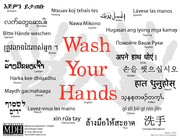
This poster simply says wash your hands in twenty-four languages (English, Amharic, Arabic, Burmese, Chinese (Mandarin), French, German, Hebrew, Hindi, Hmong, Karen, Khmer, Korean, Laotian, Nepali, Oromo, Ojibwe, Russian, Somali, Spanish, Swahili, Thai, an
...
d Vietnamese).
more
