Filter
2376
Text search:
Emergency
Capacity
Building
Project
Featured
Recommendations
170
New Publications
784
Language
Document type
No document type
1452
Studies & Reports
400
Guidelines
172
Manuals
145
Strategic & Response Plan
128
Training Material
37
Situation Updates
21
Fact sheets
10
Resource Platforms
5
Infographics
2
Online Courses
2
Brochures
1
App
1
Countries / Regions
Global
115
Kenya
87
Myanmar / Burma
77
Uganda
70
India
70
Liberia
63
Nepal
61
Sierra Leone
58
Ethiopia
56
Nigeria
55
Syria
52
Bangladesh
51
Zambia
42
Africa
38
South Sudan
36
Rwanda
35
South Africa
35
Malawi
35
Western and Central Europe
34
Ghana
33
Tanzania
33
Namibia
30
Ukraine
29
Guinea
22
Mozambique
21
Latin America and the Carribbean
21
Congo, Democratic Republic of
20
Haiti
20
Philippines
18
Indonesia
18
Lesotho
18
Asia
18
Zimbabwe
16
Cambodia
13
Botswana
12
East and Southern Africa
12
West and Central Africa
12
Eastern Europe
12
Senegal
11
Lebanon
11
Yemen
11
Pakistan
10
Laos
10
Jordan
9
South–East Asia Region
9
Eswatini/ Swaziland
8
Venezuela
8
Burkina Faso
7
Central African Republic
7
Colombia
7
Eastern Europe and Central Asia
7
Cameroon
6
Iraq
6
Sudan
6
Middle East and North Africa
6
Moldova
6
Somalia
5
Thailand
5
Mali
4
Côte d’Ivoire / Ivory Coast
4
Afghanistan
4
Turkey
4
Brazil
4
Burundi
4
Western Pacific Region
4
Albania
4
Russia
4
Iran
4
Vietnam
4
Germany
3
China
3
Benin
3
North Macedonia
3
Ecuador
3
Greece
3
Sri Lanka
3
Chile
3
Timor Leste/ East Timor
3
USA
2
Togo
2
Chad
2
Gambia
2
Argentina
2
Peru
2
Croatia
2
Libya
2
Angola
2
Madagascar
2
Paraguay
2
Palestine
2
Southern Africa
2
Estonia
2
Jamaica
2
Japan
2
Guinea-Bissau
1
Morocco
1
Saudi Arabia
1
Niger
1
Egypt
1
Malaysia
1
Singapore
1
Papua New Guinea
1
Dominican Republic
1
Serbia
1
El Salvador
1
Bolivia
1
Bhutan
1
Italy
1
Tajikistan
1
Qatar
1
Bulgaria
1
Kyrgyzstan
1
Kazakhstan
1
Georgia
1
Gabon
1
Turkmenistan
1
Tunisia
1
Portugal
1
Spain
1
Azerbaijan
1
Bosnia and Herzegovina
1
Authors & Publishers
Publication Years
Category
Countries
968
Key Resources
304
Women & Child Health
123
Public Health
114
Clinical Guidelines
71
Capacity Building
44
Pharmacy & Technologies
12
Toolboxes
Mental Health
162
HIV
158
COVID-19
146
Conflict
138
Planetary Health
104
Disability
97
Natural Hazards
79
Ebola & Marburg
68
TB
66
Caregiver
53
Refugee
51
Rapid Response
49
Global Health Education
48
Health Financing Toolbox
46
AMR
35
2.0 Rapid Response
33
NTDs
24
Pharmacy
21
NCDs
19
Malaria
17
Specific Hazards
15
Cholera
9
Polio
9
Zika
8
Social Ethics
4
Typhoon
2
South Sudan
1
Morbidity and Mortality Weekly Report
Recommendations and Reports: July 7, 2006 / Vol. 55 / No. RR-9
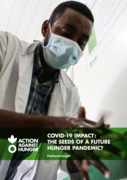
Previous pandemics have demonstrated that more people could die from the indirect consequences of an outbreak than from the disease itself. As the fight against the pandemic is pushing millions into poverty and hunger, COVID-19 will likely be no different.
The aim of this article is to identify the elements behind the country’s successful COVID-19 rollout as well as lessons and chal lenges derived from this process. The analysis is relevant to many countries today—as they keep searching for strategies to cope with the second year of the COVID-19 p
...
Joint Stakeholder Submission
Accessed: 29.09.2019
No publication year indicated.
Climate change presents the single biggest threat to human development, and its widespread impacts disproportionately burden the poorest and most vulnerable households in fragile and rural developing contexts – particularly women and children.
According to the Intergovernmental Panel on Climate C
...

Today, more children than ever before are displaced within their own countries. Their harrowing stories of displacement are unfolding every day, and with increasing frequency. At the end of 2019, approximately 45.7 million people were internally displaced by conflict and violence (Fig. 1.1). Nearly
...
Gender and security is a complex issue, and this research found that there are different levels of comprehension of what it means in humanitarian and development assistance practice. The aims of the paper are twofold: to raise general awareness about gender and how it relates to security risk manage
...
A step-by-step guide for child protection programmes to the design and implementation of KAP survey methods. In particular, this guide will help to strengthen the quality of our research, monitoring and evaluation work, and enable Save the Children to contribute to a step-change in the child protect
...
Security Survey for Health Facilities
recommended
The purpose of the survey is to identify the level of preparedness required by a health-care facility to be able to continue operating during, or following a conflict-related security event.
The survey method provides a measure of the security and preparedness of a given health facility in it ...
The survey method provides a measure of the security and preparedness of a given health facility in it ...
National-scale databases and reliability issue
Background report
27 April 2022 Chronic land degradation: UN offers stark warnings and practical remedies in Global Land Outlook 2. GLO2 offers hundreds of examples from around the world that demonstrate the potential of land restoration.
The way land resources – soil, water and biodiversity – are currently mi
...
This document is the national level companion to a broader document on health care facility level developed by the WHO Health Emergencies Programme for national level stakeholders
Physical distancing measures are important to reduce COVID-19 transmission. However, when stringently applied, they can result in negative health and socio-economic impacts. This report draws on a rapid review of available literature, case studies from across Africa and expert knowledge to make reco
...
Mental Health Atlas 2024
recommended
The Mental Health Atlas 2024 is the seventh in a series that began in 2001, and draws on data from 144 countries to assess mental health policies, laws, information systems, financing, workforce and services. It shows little change in investment: mental health accounts for only 2% of health budgets
...

Africa CDC Non Communicable Diseases, Injuries Prevention and Control and Mental Health Promotion Strategy
recommended
Non-communicable diseases (NCDs) & injuries and mental health conditions constitute a serious impediment to achieving the vision of Agenda 2063 to build an integrated, prosperous, and peaceful Africa driven by its own citizens. Each year, these conditions cause millions of premature deaths and disab
...

JOURNAL OF THE ASSOCIATION OF NURSES IN AIDS CARE, Vol. 28, No. 2, March/April 2017, 186-198
http://dx.doi.org/10.1016/j.jana.2015.09.003