Filter
2612
Text search:
health
inputs
Featured
217
855
Language
2567
51
47
28
25
14
10
10
3
2
2
2
1
1
1
1
1
1
1
1
Document type
1428
448
316
166
150
50
27
17
3
2
2
1
Countries / Regions
172
143
101
70
70
67
64
56
56
53
52
47
46
43
40
34
33
32
31
28
26
25
25
24
20
18
18
18
17
17
17
16
16
15
14
13
12
12
12
12
11
9
9
7
7
7
7
7
6
6
6
6
5
5
4
4
4
4
4
4
4
4
3
3
3
3
3
3
3
3
3
3
2
2
2
2
2
2
2
2
2
2
2
2
2
1
1
1
1
1
1
1
1
1
1
1
1
1
1
1
1
1
1
1
1
1
1
1
1
1
1
Authors & Publishers
359
102
93
82
77
69
41
35
34
24
23
21
19
18
16
16
16
14
13
12
12
12
12
11
11
11
11
10
10
10
9
9
8
8
8
8
8
8
8
7
7
7
7
7
7
7
7
7
7
6
6
6
6
6
6
6
6
6
6
6
6
6
6
6
6
6
5
5
5
5
5
5
5
5
5
5
5
5
5
5
5
5
5
5
5
5
5
5
5
5
5
5
5
5
5
4
4
4
4
4
4
4
4
4
4
4
4
4
4
4
4
4
4
4
4
4
4
4
4
4
4
4
4
3
3
3
3
3
3
3
3
3
3
3
3
3
3
3
3
3
3
3
3
3
3
3
3
3
3
3
3
3
3
3
3
3
3
3
3
3
3
3
3
3
3
2
2
2
2
2
2
2
2
2
2
2
2
2
2
2
2
2
2
2
2
2
2
2
2
2
2
2
2
2
2
2
2
2
2
2
2
2
2
2
2
2
2
2
2
2
2
2
2
2
2
2
2
2
2
2
2
2
2
2
2
2
2
2
2
2
2
2
2
2
2
2
2
2
2
2
2
2
2
2
2
2
2
2
2
2
2
2
2
2
2
2
2
2
2
2
2
2
2
2
2
2
2
2
2
2
2
2
2
2
2
2
2
2
2
2
2
2
2
2
2
2
2
2
2
2
2
2
2
2
2
2
2
2
2
2
2
2
2
2
2
2
2
2
2
2
2
2
2
2
2
2
2
2
1
1
1
1
1
1
1
1
1
1
1
1
1
1
1
1
1
1
1
1
1
1
1
1
1
1
1
1
1
1
1
1
1
1
1
1
1
1
1
1
1
1
1
1
1
1
1
1
1
1
1
1
1
1
1
1
1
1
1
1
1
1
1
1
1
1
1
1
1
1
1
1
1
1
1
1
1
1
1
1
1
1
1
1
1
1
1
1
1
1
1
1
1
1
1
1
1
1
1
1
1
1
1
1
1
1
1
1
1
1
1
1
1
1
1
1
1
1
1
1
1
1
1
1
1
1
1
1
1
1
1
1
1
1
1
1
1
1
1
1
1
1
1
1
1
1
1
1
1
1
1
1
1
1
1
1
1
1
1
1
1
1
1
1
1
1
1
1
1
1
1
1
1
1
1
1
1
1
1
1
1
1
1
1
1
1
1
1
1
1
1
1
1
1
1
1
1
1
1
1
1
1
1
1
1
1
1
1
1
1
1
1
1
1
1
1
1
1
1
1
1
1
1
1
1
1
1
1
1
1
1
1
1
1
1
1
1
1
1
1
1
1
1
1
1
1
1
1
1
1
1
1
1
1
1
1
1
1
1
1
1
1
1
1
1
1
1
1
1
1
1
1
1
1
1
1
1
1
1
1
1
1
1
1
1
1
1
1
1
1
1
1
1
1
1
1
1
1
1
1
1
1
1
1
1
1
1
1
1
1
1
1
1
1
1
1
1
1
1
1
1
1
1
1
1
1
1
1
1
1
1
1
1
1
1
1
1
1
1
1
1
1
1
1
1
1
1
1
1
1
1
1
1
1
1
1
1
1
1
1
1
1
1
1
1
1
1
1
1
1
1
1
1
1
1
1
1
1
1
1
1
1
1
1
1
1
1
1
1
1
1
1
1
1
1
1
1
1
1
1
1
1
1
1
1
1
1
1
1
1
1
1
1
1
1
1
1
1
1
1
1
1
1
1
1
1
1
1
1
1
1
1
1
1
1
1
1
1
1
1
1
1
1
1
1
1
1
1
1
1
1
1
1
1
1
1
1
1
1
1
1
1
1
1
1
1
1
1
1
1
1
1
1
1
1
1
1
1
1
1
1
1
1
1
1
1
1
1
1
1
1
1
1
1
1
1
1
1
1
1
1
1
1
1
1
1
1
1
1
1
1
1
1
1
1
1
1
1
1
1
1
1
1
1
1
1
1
1
1
1
1
1
1
1
1
1
1
1
1
1
1
1
1
1
1
1
1
1
1
1
1
1
1
1
1
1
1
1
1
1
1
1
1
1
1
1
1
1
1
1
1
1
1
1
1
1
1
1
1
1
1
1
1
1
1
1
1
1
1
1
1
1
1
1
1
1
1
1
1
1
1
1
1
1
1
1
1
1
1
1
1
1
1
1
1
1
1
1
1
1
1
1
1
1
1
1
1
1
1
1
1
1
1
1
1
1
1
1
1
1
1
1
1
1
1
1
1
1
1
1
1
1
1
1
1
1
1
1
1
1
1
1
1
1
1
1
1
1
1
1
1
1
1
1
1
1
1
1
1
1
1
1
1
1
1
1
1
1
1
1
1
1
1
1
1
1
1
1
1
1
1
1
1
1
1
1
1
1
1
1
1
1
1
1
1
1
1
1
1
1
1
1
1
1
1
1
1
1
1
1
1
1
1
1
1
1
1
1
1
1
1
1
1
1
1
1
1
1
1
1
1
1
1
1
1
1
1
1
1
1
1
1
1
1
1
1
1
1
1
1
1
1
1
1
1
1
1
1
1
1
1
1
1
1
1
1
1
1
1
1
1
1
1
1
1
1
1
1
1
1
1
1
1
1
1
1
1
1
1
1
1
1
1
1
1
1
1
1
1
1
1
1
1
1
1
1
1
1
1
1
1
1
1
1
1
1
1
1
1
1
1
1
1
1
1
1
1
1
1
1
1
1
1
1
1
1
1
1
1
1
1
1
1
1
1
1
1
1
1
1
1
1
1
1
1
1
1
1
1
1
1
1
1
1
1
1
1
1
1
1
1
1
1
1
1
1
1
1
1
1
1
1
1
1
1
1
1
1
1
1
1
1
1
1
1
1
1
1
1
1
1
1
1
1
1
1
1
1
1
1
1
1
1
1
1
1
1
1
1
1
1
1
1
1
1
1
1
1
1
1
1
1
1
1
1
1
1
1
1
1
1
1
1
1
1
1
1
1
1
1
1
1
1
1
1
1
1
1
1
1
1
1
1
1
1
1
1
1
1
1
1
1
1
1
1
1
1
1
1
1
1
1
1
1
1
1
1
1
1
1
1
1
1
1
1
1
1
1
1
1
1
1
1
1
1
1
1
1
1
1
1
1
1
1
1
1
1
1
1
1
1
1
1
1
1
1
1
1
1
1
1
1
1
1
1
1
1
1
1
1
1
1
1
1
1
1
1
1
1
1
1
1
1
1
1
1
1
1
1
1
1
1
1
1
1
1
1
1
1
1
1
1
1
1
1
1
1
1
1
1
1
1
1
1
1
1
1
1
1
1
1
1
1
1
1
1
1
1
1
1
1
1
1
1
1
1
1
1
1
1
1
1
1
1
1
1
1
1
1
1
1
1
1
1
1
1
1
1
1
1
1
1
1
1
1
1
1
1
1
1
1
1
1
1
1
1
1
1
1
1
1
1
1
1
1
1
1
1
1
1
1
1
1
1
1
1
1
1
1
1
1
1
1
1
1
1
1
1
1
1
1
1
1
1
1
1
1
1
1
1
1
1
1
1
1
1
1
1
1
1
1
1
1
1
1
1
1
1
1
1
1
1
1
1
1
1
1
1
1
1
1
1
1
1
1
1
1
1
1
1
1
1
1
1
1
1
1
1
1
1
1
1
1
1
1
1
1
1
1
1
1
1
1
1
1
1
1
1
1
1
1
1
1
1
1
1
1
1
1
1
1
1
1
1
1
1
1
1
1
1
1
1
1
1
1
1
1
1
1
1
1
1
1
1
1
1
1
1
1
1
1
1
1
1
1
1
1
1
1
1
1
1
1
1
1
1
1
1
1
1
1
1
1
1
1
1
1
1
1
1
1
1
1
1
1
1
1
1
1
1
1
1
1
1
1
1
1
1
1
1
1
1
1
1
1
1
1
1
1
1
1
1
1
1
1
1
1
1
1
1
1
1
1
1
1
1
1
1
1
1
1
1
1
1
1
1
1
1
1
1
1
1
1
1
1
1
1
1
1
1
1
1
1
1
1
1
1
1
1
1
1
1
1
1
1
1
1
1
1
1
1
1
1
1
1
1
1
1
1
1
1
1
1
1
1
1
1
1
1
1
1
1
1
1
1
1
1
1
1
1
1
1
1
1
1
1
1
1
1
1
1
1
1
1
1
1
1
1
1
1
1
1
1
1
1
1
1
1
1
1
1
1
1
1
1
1
1
1
1
1
1
1
1
1
1
1
1
1
1
1
1
1
1
1
1
1
1
1
1
1
1
1
1
1
1
1
1
1
1
1
1
1
1
1
1
1
1
1
1
1
1
1
1
1
1
1
1
1
1
1
1
1
1
1
1
1
1
1
1
1
1
1
1
1
1
1
1
1
1
1
1
1
1
1
1
1
1
1
1
1
1
1
1
1
1
1
1
1
1
1
1
1
1
1
1
1
1
1
1
1
1
1
1
1
1
1
1
1
1
1
1
1
1
1
1
1
1
1
1
1
1
1
1
1
1
1
1
1
1
1
1
1
1
1
1
1
1
1
1
1
1
1
1
1
1
1
1
1
1
1
1
1
1
1
1
1
1
1
1
1
1
1
1
1
1
1
1
Publication Years
809
1578
218
6
1
Category
1166
236
170
159
124
62
12
Toolboxes
173
146
124
106
96
93
81
69
66
65
64
48
45
44
43
35
34
31
22
19
12
12
10
4
3
3
1
Despite being a preventable and curable infectious disease, tuberculosis (TB) has continued to elude global controll efforts. In 2023, 8.2 milion people with TB were diagnosed and notified to the WHO, the hightest number ever reported since WHO began tracking.
The 2022 report reviews the global malaria diagnostics market and technological landscape to support Unitaid’s 2023–2027 strategy for quality malaria case management. The report highlights the stalled progress of malaria control efforts, the gaps in access to diagnostics and the public
...
health implications of P. falciparum HRP2/3 gene deletions, which compromise the accuracy of the widely used HRP2-detecting rapid diagnostic tests (RDTs). The report analyses the malaria RDT market, noting supplier diversification, price trends and production shifts resulting from the pandemic. It also addresses the emerging point-of-care G6PD testing market, which is required to ensure the safe radical cure of P. vivax infections. It surveys technological innovation, including digital microscopy, hemozoin tests, nucleic acid detection and biosensors, while emphasising that RDTs and microscopy will remain the mainstay of case management in the near term. The report identifies market shortcomings, access barriers and opportunities to improve malaria case management and diagnostic coverage.
more
On 4 September 2025, the Ministry of Health of the Democratic Republic of the Congo (DRC) declared an outbreak of Ebola Virus Disease (EVD) in Kasai Province, following confirmation of Zaire ebolavirus by the National Institute of Biomedical Researc
...
h (INRB) in Bulape and Mweka Health Zones. As of 19 September, there have been 48 total cases (38 confirmed, 10 probable) with 31 deaths (21 confirmed, 10 probable) and a CFR of 64.5%. Among laboratory confirmed cases, 16 deaths were recorded (CFR: 45.7%). Four deaths occurred among health workers, underscoring the risk of nosocomial transmission. Most cases (39.7%) are among adults aged 20 years and above, in a densely populated, remote, and under-resourced area.
The outbreak is driven by multiple risk factors, including transmission in health facilities with limited infection prevention and control (IPC) measures and personal protective equipment (PPE), incomplete contact tracing, delayed detection, and unsafe burial practices. High population mobility between Bulape and Tshikapa, reliance on traditional healers, and the concurrent mpox outbreak are further straining the fragile health system and increasing the risk of geographic spread.
more
Strengthening global health security to protect the world against future epidemics and pandemics requires well-tested and decentralized capacities for the local detection and rapid containment of outbreaks of infectious disease. For such capacitie
...
s to translate into effective response actions, individuals and teams must be well connected and coordinated, despite differences in the size, geography, technical focus or constituency of their parent institution.
more
In an era of constrained resources and tightening budgets, strategic prioritization in tuberculosis (TB) programming is more critical than ever. Countries must make informed decisions to allocate limited resources effectively - maximizing impact, preventing avoidable deaths, and sustaining progress
...
towards ending TB.
more
Operational Guidance. This operational guidance provides a structured approach to support countries in sustaining priority services for HIV, viral hepatitis and sexually transmitted infections in the context of reduced external funding. The guidance is intended for national governments, public
...
health programmes, community-led organizations, civil society, technical partners and donors working to safeguard priority services, support phased adaptation, protect health outcomes and preserve hard-won gains.
more
These guidelines update earlier WHO recommendations to maximize the HIV prevention impact of safe VMMC services and aim to guide the transition to the sustained provision of interventions with a focus on the health and well-being of both adolescent
...
boys and men.
more
Operational requirements for implementing WHO recommendations in digital systems. 2nd edition.
To ensure that countries can effectively benefit from digital health investments, “digital adaptation kits” (DAKs) are designed to facilitate the acc
...
urate reflection of WHO’s clinical, public health and data use guidelines in the digital systems that countries are adopting. DAKs are operational, software-neutral, standardized documentations that distil clinical, public health and data use guidance into a format that can be transparently incorporated into digital systems.
more
Essential triple EMTCT services include testing for HIV, syphilis and HBV in ante-
natal care (ANC) settings; prompt and efficacious interventions to treat women
who test positive; prevent transmission of any of the infections to their children;
counseling for women and their partners to reduce t
...
ransmission risk and ensure
appropriate treatment; encourage clean and safe delivery; appropriate follow
up of exposed infants including provision of HBV vaccine birth dose; promoting
optimal infant-feeding; and lifelong treatment and care for mothers living with
HIV or those eligible for treatment for hepatitis B infections and treatment for
syphilis.
more
National Policy
This technical brief describes promising models that demonstrate how FBOs could contribute to expanded access to improved HIV and other services for men. These models incorporate a range of WHO-recommended interventions and highlights operational considerations and key success factors. By capitalizi
...
ng on their strengths, FBOs can potentially serve as useful platforms for engaging men and other priority populations, promoting greater demand, uptake, and retention in care.
more
The WHO publication “Surveillance, case investigation and contact tracing for mpox: interim guidance” provides updated global technical guidance on monitoring and responding to mpox (formerly known as monkeypox). It explains how countries should conduct surveillance to detect new outbreaks, car
...
ry out case investigation including clinical assessment and lab specimen collection, and perform contact tracing to monitor people exposed to confirmed or probable cases in order to stop transmission and protect at-risk groups. The guidance includes practical recommendations for how long contacts should be monitored (e.g., daily for 21 days without requiring quarantine if symptom-free) and advising good hygiene and reduced exposure risk during the monitoring period. This interim guidance is intended to support public health authorities worldwide in strengthening mpox outbreak detection, response, and reporting.
more
Populations affected by emergencies are continually at risk of outbreaks of epidemic-prone diseases and other public health hazards. This operational guidance aims to guide decision-making on when and how to implement and strengthen Early Warning Al
...
ert and Response (EWAR) in preparation for and response to emergencies. Each module aims to provide updated operational guidance for EWAR practices, which may be more easily understood and applied during emergencies. Through its application, this operational guidance aims to contribute to:
- earlier detection of acute public health events
- earlier and more effective response
- reduced impact of emergencies on health
- increased trust of the population in the (public) health system
- fulfilling our collective commitments to the International Health Regulations (IHR,
2005).
This guidance was developed jointly by 69 experts from more than 20 organizations from global level to country level.
more
Despite gains in childhood survival, more effort is needed to improve the well-being of children with developmental delays and disabilities. All children, including children with developmental delays and disabilities, need nurturing care. Nurturing care can contribute to preventing developmental del
...
ays and protect children who are exposed to risk factors, as well as improve functioning and long-term outcomes for children with developmental disabilities. This Brief outlines why and how nurturing care is relevant for children with developmental delays and disabilities. Recognizing that these children have diverse needs requiring different levels of coordinated and family-centred support, it recommends a set of actions to strengthen policies, services, communities and caregiver capabilities so that these children receive nurturing care.
more
This Mobile user guidance is aimed at supporting implementation of EWARS in a box, WHO’s electronic early warning, alert and response system in emergencies. This guidance fulfills a long felt need to have an easy to use resource with step-by-step instructions in establishing EWARS in a box, facili
...
tating field epidemiologists, surveillance officers and emergency responders.
more
Female genital mutilation (FGM) is a human rights violation deeply rooted in gender inequality and discrimination. FGM violates various human rights under international human rights law including, among others, the rights to equality, life and health
...
and the rights to be free from discrimination, torture and cruel, inhuman and degrading treatment. The failure by States to end this harmful practice against women and girls is a violation of States’ obligations to respect, protect and fulfil the enjoyment of all human rights. These obligations are accompanied by certain human rights accountability mechanisms that are critical in holding States to account for implementing their international and regional human rights obligations and commitments
more
This guide aims to support the implementation of evidence-based practices to reduce morbidity and mortality due to postpartum haemorrhage (PPH). Implementation is a multidisciplinary process that requires engagement from multiple stakeholders. Furthermore, implementation can and should be pursued in
...
a systematic and evidence-based manner.
This Implementation guide presents a structured process that will aid countries in their efforts to incorporate the latest PPH recommendations into national PPH guidelines and clinical practice.
more
Regional Network for Equity in Health in east and southern Africa (EQUINET): Disussion Paper 110
This report compiles evidence from published, grey literature and key informants on the UNMHCP since its introduction in Uganda’s ... health system, and findings were further validated during a oneday national stakeholder meeting.
Three main factors motivated introduction of the UNMHCP. First, Uganda, along with other lowincome countries, was unable to implement holistically the primary healthcare (PHC) concepts as set out in the Alma Ata Declaration. Second, the macro-economic restructuring carried out in the 1990s, which was an international conditionality for low-income countries to access development financing, influenced the trend towards more stringent prioritisation of health interventions as a means of rationing and targeting use of resources. Third, the government sought to achieve equity with a service package that would be universally available for all people. more
This report compiles evidence from published, grey literature and key informants on the UNMHCP since its introduction in Uganda’s ... health system, and findings were further validated during a oneday national stakeholder meeting.
Three main factors motivated introduction of the UNMHCP. First, Uganda, along with other lowincome countries, was unable to implement holistically the primary healthcare (PHC) concepts as set out in the Alma Ata Declaration. Second, the macro-economic restructuring carried out in the 1990s, which was an international conditionality for low-income countries to access development financing, influenced the trend towards more stringent prioritisation of health interventions as a means of rationing and targeting use of resources. Third, the government sought to achieve equity with a service package that would be universally available for all people. more
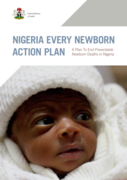
The Newborn Situational Analysis reports of 2009 and 2011, as well as the “Bottleneck analysis on neonatal health” of 2013, culminated in the Nigeria launch of “Call to action on Newborn health
...
” at the first National Newborn Health Conference in 2014. This call to action provided the framework for the development of the Nigeria Every Newborn Action
Plan (NiENAP). The NiENAP lays out a vision to end preventable stillbirths and newborn deaths by accelerating progress and scaling up evidence- based high-impact and cost effective interventions. The plan is guided by the principles of country-leadership, integration, accountability, equity, human rights, innovation and research. This blue print outlines our commitment as government and stakeholders to repositioning newborn health as we implement approaches that impact on the lives of newborns for improved health outcome.
more