
Filter
2372
Filtered Results: 2372
Text search:
World
Health
Organization
WHO,
Save
the
Children
Featured
Recommendations
212
New Publications
715
Language
Document type
No document type
1341
Studies & Reports
408
Guidelines
228
Manuals
158
Strategic & Response Plan
109
Training Material
41
Fact sheets
36
Situation Updates
34
Brochures
6
Resource Platforms
5
Infographics
4
Online Courses
2
Countries / Regions
Global
144
India
76
Nepal
74
Myanmar / Burma
63
Sierra Leone
62
Ethiopia
57
Bangladesh
55
Syria
54
Malawi
54
Kenya
48
Nigeria
45
Liberia
44
Uganda
43
South Africa
37
South Sudan
31
Western and Central Europe
30
Rwanda
26
Africa
26
Ukraine
25
Tanzania
25
Haiti
24
Philippines
21
Yemen
21
Zambia
21
Mozambique
20
Indonesia
19
Latin America and the Carribbean
17
Eastern Europe
17
Congo, Democratic Republic of
16
Ghana
15
Namibia
15
South–East Asia Region
14
Guinea
13
Venezuela
13
Asia
12
Central African Republic
12
Cambodia
11
Lebanon
11
Afghanistan
10
West and Central Africa
10
Middle East and North Africa
10
Eswatini/ Swaziland
10
Thailand
9
Lesotho
9
Cameroon
9
Zimbabwe
9
Jordan
9
Brazil
9
Somalia
9
Senegal
8
Burkina Faso
8
East and Southern Africa
8
Colombia
7
China
7
Germany
7
Vietnam
7
Sri Lanka
7
Botswana
6
Pakistan
6
Western Pacific Region
5
Sudan
5
Iraq
5
Eastern Europe and Central Asia
4
Papua New Guinea
4
Russia
4
Turkey
3
Benin
3
Albania
3
Peru
3
USA
3
Guinea-Bissau
3
Japan
3
Spain
3
Côte d’Ivoire / Ivory Coast
3
Mali
3
Libya
3
Bhutan
3
Serbia
2
Togo
2
Iran
2
Singapore
2
Kyrgyzstan
2
Burundi
2
Malaysia
2
Italy
2
Croatia
2
Turkmenistan
2
Portugal
2
Greece
2
Angola
2
Chad
2
Switzerland
1
Timor Leste/ East Timor
1
El Salvador
1
Gambia
1
Kazakhstan
1
Laos
1
Niger
1
Mongolia
1
Lithuania
1
Saudi Arabia
1
Tunisia
1
United Kingdom
1
Azerbaijan
1
Israel
1
Bosnia and Herzegovina
1
Southern Africa
1
Bolivia
1
Egypt
1
Palestine
1
Georgia
1
Madagascar
1
Authors & Publishers
Publication Years
Category
Countries
822
Key Resources
250
Women & Child Health
220
Clinical Guidelines
140
Public Health
119
Capacity Building
46
Pharmacy & Technologies
8
Toolboxes
COVID-19
182
Mental Health
158
HIV
147
Disability
128
Conflict
126
Planetary Health
87
Refugee
86
Ebola & Marburg
70
Natural Hazards
67
TB
64
Caregiver
59
NTDs
47
Global Health Education
44
AMR
39
Health Financing Toolbox
37
Rapid Response
36
2.0 Rapid Response
27
Pharmacy
24
NCDs
23
Cholera
20
Specific Hazards
15
Malaria
15
Social Ethics
12
Zika
11
Polio
8
Typhoon
3
South Sudan
1
The school and a community teaching modules are aimed at preventing vector-borne diseases through community participation. Meanwhile, the interactive toolkit is meant to be help raise awareness on health, sanitation and vector control. These materials will help volunteers and practitioners foster di...
Biodiversity and healthy natural ecosystems, including protected areas in and around cities, provide ecosystem benefits and services that support human health, including reducing flood risk, filtering air pollutants, and providing a reliable supply of clean drinking water. These services help to red...
These guidelines are designed for ICRC and other health professionals – nurses, midwifes, doctors – who either lack experience in antenatal care or are not used to working in countries where medical infrastructure is underdeveloped or non-existent
Over the reporting period, economic actors continued to carry out their activities with little regard for their impacts on the livelihoods of the communities living in the surrounding areas. In Doo Tha Htoo (Thaton) District, cold dust from a Tatmadaw-run cement factory contaminated nearby waterways...

The document, "Progress on the Prevention and Control of Non-Communicable Diseases," reports on global efforts to reduce the impact of NCDs, such as heart disease, cancer, diabetes, and chronic respiratory diseases, following the commitments made at high-level United Nations meetings. It highlights ...
CoPEH-Canada has generated a series of teaching and training resources over more than a decade. These resources began with the production of the CoPEH-Canada Teaching Manual (2012), which is dedicated to Bruce Hunter. Our training resources have expanded to include a range of resources including: Mo...
The right to adequate housing, despite having been recognized by multiple international instruments, continues to be a human right that is consistently violated. Around 2O% of the world's population do not have adequate housing . In Latin America, informal settlements generally lack the conditions r...
In recent years Terre des Hommes Netherlands observed the steady rise of a new form of child sexual exploitation. One that is enabled and fuelled by rapid technological advances, increasing global connectivity, persisting poverty rates, and growing disparity in the global distribution of resources. ...
Physical distancing measures are important to reduce COVID-19 transmission. However, when stringently applied, they can result in negative health and socio-economic impacts. This report draws on a rapid review of available literature, case studies from across Africa and expert knowledge to make reco...
On 19 August 2016, the former UN Secretary-General announced a new approach to cholera in Haiti, consisting of two tracks. Track 1 focuses on reducing cholera transmission, improving access to care, and addressing water, sanitation, and health system issues. Track 2 aims to provide material assistan...
A community-based approach.
These guidelines focus on manmade rather than natural disasters, but our experiences in India, El Salvador and Pakistan (earthquake interventions), and following the 2004 tsunami, cyclone Nargis in 2008 and the Haiti earthquake in 2010, showed that the principles describ...
Nepal has made substantial progress in reducing under-five mortality and is on track to achieve Millennium Development Goal 4, but advances in neonatal health are less encouraging. The objectives of this study were to assess relative and absolute inequalities in neonatal mortality over time, and to ...

Early Childhood Matters is a journal about early childhood. It looks at specific issues regarding the development of young children, in particular from a psychosocial perspective. It is published twice per year by the Bernard van Leer Foundation.
On Page 54 of this issue the article titled: "Par...
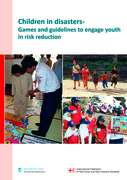
This guideline consists of two main parts:
i.) Guidelines for Red Cross and Red Crescent national societies on how to start up and engage with other stakeholders in country in rolling out disaster risk reduction (DRR) education and awareness activities for children - not only in school, but also...
i.) Guidelines for Red Cross and Red Crescent national societies on how to start up and engage with other stakeholders in country in rolling out disaster risk reduction (DRR) education and awareness activities for children - not only in school, but also...

Findings on maternal and child health in Nepal, Mozambique and
Rwanda, and neglected tropical diseases in Cambodia and Sierra Leone | This report synthesises findings from five country case studies from the health dimension of this project, which focus on maternal and child health (MCH) (Mozambique...
A Community Guide to Environmental Health > Chapter 19: Health Care Waste. Please download this chapter from the website of Hesperian
The guide is designed to help disaster managers in national Governments gain basic knowledge of how to use international tools and services. It aims to support the growing disaster response and disaster response preparedness capabilities that exist at national level across Asia and the Pacific.
...
...
An Advocate’s Guide: Strategic Indicators for Universal Access to Sexual and Reproductive Health and Rights
recommended
This guide was prepared to enable advocates to use data
when advocating for universal access to SRHR at the national,
regional and global levels. It is a direct outcome of the Strategic
SRHR Indicators workshop held in Kuala Lumpur, Malaysia on
21-22 August for the project “Strengthening the N...
Needs assessment is essential for programme planning, monitoring and evaluation, and accountability, however needs assessment is still a critical weakness of humanitarian response. Organisations need to improve how they do assessments. The Assessment Capacities Project (ACAPS) and the Emergency Capa...
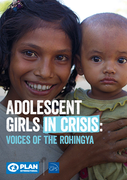
Commissioned by Plan International the report draws on data from research conducted in Bangladesh in April 2018. It explores how adolescent girls within two age brackets (10-14 and 15-19) understand the unique impact the crisis has upon them, and how they have responded to the challenges they face.<...
