
Filter
1953
Text search:
WHO
Regional
Office
for
Europe
Featured
Recommendations
183
New Publications
299
Language
Document type
No document type
850
Studies & Reports
491
Guidelines
271
Manuals
133
Strategic & Response Plan
69
Fact sheets
49
Training Material
40
Situation Updates
28
Infographics
9
Brochures
6
Resource Platforms
6
App
1
Countries / Regions
Western and Central Europe
158
Global
118
Ukraine
99
Eastern Europe
75
Russia
53
Eastern Europe and Central Asia
32
Syria
27
Germany
23
India
22
Latin America and the Carribbean
21
Sierra Leone
20
Ethiopia
19
Liberia
18
Africa
17
South Africa
14
Asia
14
Moldova
14
Nepal
13
Uganda
12
Kenya
12
Myanmar / Burma
12
Tajikistan
12
Ghana
11
Tanzania
11
South–East Asia Region
11
Nigeria
10
Zambia
10
Rwanda
10
Albania
9
Guinea
8
Congo, Democratic Republic of
8
Pakistan
8
North Macedonia
8
Middle East and North Africa
8
Venezuela
8
South Sudan
7
Bangladesh
7
East and Southern Africa
7
Kyrgyzstan
7
Georgia
7
Afghanistan
6
Lebanon
6
China
6
Malawi
6
Mozambique
6
West and Central Africa
6
Armenia
6
Romania
6
Somalia
5
Jordan
5
Turkey
5
Namibia
5
Brazil
5
Yemen
5
Poland
5
Kazakhstan
5
USA
4
Zimbabwe
4
Philippines
4
Cambodia
4
Thailand
4
Indonesia
4
Colombia
4
Western Pacific Region
4
Estonia
4
Iran
4
Belarus
4
Burkina Faso
3
Haiti
3
Iraq
3
Peru
3
Serbia
3
Hungary
3
Botswana
3
Greece
3
Sri Lanka
3
Vietnam
3
Guinea-Bissau
2
Cameroon
2
Niger
2
Sudan
2
Central African Republic
2
Eswatini/ Swaziland
2
Croatia
2
Libya
2
Mexico
2
Palestine
2
Laos
2
Bulgaria
2
Slovakia
2
Uzbekistan
2
Turkmenistan
2
United Kingdom
2
Azerbaijan
2
Bosnia and Herzegovina
2
Senegal
1
Morocco
1
Saudi Arabia
1
Chad
1
Papua New Guinea
1
Argentina
1
Burundi
1
Bolivia
1
Angola
1
Lesotho
1
Chile
1
Canada
1
Lithuania
1
Belgium
1
Mauritius
1
Tunisia
1
Portugal
1
Spain
1
Israel
1
Latvia
1
Authors & Publishers
Publication Years
Category
Countries
379
Clinical Guidelines
146
Key Resources
123
Public Health
107
Women & Child Health
105
Capacity Building
25
Pharmacy & Technologies
15
Toolboxes
HIV
236
Mental Health
222
COVID-19
216
TB
157
Planetary Health
128
Conflict
96
Refugee
92
AMR
71
Disability
70
Global Health Education
67
Caregiver
57
Rapid Response
55
Ebola & Marburg
36
Pharmacy
33
NCDs
32
2.0 Rapid Response
32
NTDs
30
Health Financing Toolbox
28
Zika
13
Specific Hazards
13
Natural Hazards
11
Polio
9
Malaria
6
Cholera
5
Social Ethics
4
Typhoon
2
his publication addresses surveillance and outbreak management of WRID associated with drinking-water supply systems, building on existing guidelines for infectious disease surveillance and outbreak response. It aims to help countries to build on an
...
Understanding and building resilience to early life trauma in Belarus and Ukraine
In 2018 and early 2019, the WHO Regional Office
...

This report reviews and analyses the Affordable Medicines Programme, which was introduced in Ukraine in April 2017 to provide patients with improved access to 23 outpatient medicines for the treatment of chronic noncommunicable diseases. The evaluat
...
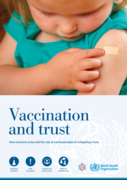
When situations occur in which unwanted events are rightly or wrongly connected with vaccination, they may erode confidence in vaccines and the authorities delivering them. This document presents the scientific evidence behind WHO’s recommendation
...
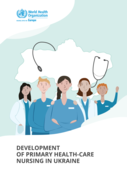
Nurses play a key role in the provision of primary health care (PHC) and the coordination and organization of medical care overall. Nurses are often the first point of contact with the health system and have an important role to play in leaving no one behind.
Large-scale reform of PHC in Uk
...
ummer is here and there are a lot of great opportunities for people to gather and enjoy themselves. Public health authorities are working together with event organisers and civil society organisations to reach out to people attending events, includi
...
Supply of essential medicines and health technologies (6 April 2020)
This paper is one of a set of technical guidance papers developed by the WHO Regional
...

An interregional meeting on leishmaniasis among neighbouring endemic
countries in the Eastern Mediterranean, African and European regions was organized by the World Health Organization (WHO) Regional
...

This publication provides an overview of the rehabilitation landscape in Armenia as of 1 November 2022. It summarizes notable accomplishments, identifies requirements and highlights opportunities for improvement within the rehabilitation sector in A
...
Since the beginning of the Ukraine crisis on 24 February 2022, WHO has supported Government-led efforts and initiatives alongside key partners on the ground. Building on efforts to date, and working alongside Bulgaria’s health authorities to bring
...

The active participation and engagement of health and care workers (HCWs) in health emergency preparedness, readiness and response is crucial to support risk communication, community engagement and infodemic management (RCCE-IM) interventions during emergencies. HCWs hold unique position
...
The WHO Regional Office for Europe has establ
...
The WHO Regional Office for Europe has establ
...
The framework sets out a response to current mental health challenges arising from the negative impact that the COVID-19 pandemic has had on population mental health and well-being. The EFAMH provides a coherent basis for intensified efforts to main
...
A workshop of “first mover” countries to exchange experience and identify wider policy implications for the WHO European Region
The World Health Organization (
...
This publication represents a key step forward in translating Control of the leishmaniases (WHO Technical Report Series, No. 949) into a more practical tool for health personnel directly involved in
...
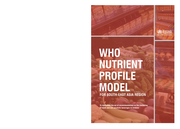
To implement the set of recommendations on the marketing of foods and non-alcoholic beverages to children
With the growing obesity crisis among children, WHO and other public health advocates and consumer groups have called ...
With the growing obesity crisis among children, WHO and other public health advocates and consumer groups have called ...
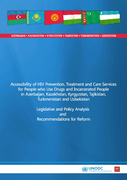
Legislative and Policy analysis and recommendations for reform
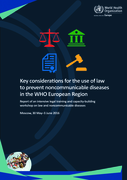
Key considerations for the use of law to prevent noncommunicable diseases in the WHO European Region
Report of an intensive legal training and capacity-building workshop on law and noncommunicable diseases (Moscow, 30 May–3 June 2016)
The report summarizes important issues, themes and topics discussed during the meeting in Moscow, ranging from the design and implementation of legislation, reconc
...
