
Filter
1022
Text search:
UNICEF
Uganda
Featured
Recommendations
100
New Publications
274
Language
Document type
No document type
611
Studies & Reports
188
Guidelines
102
Strategic & Response Plan
42
Manuals
35
Situation Updates
15
Fact sheets
13
Training Material
8
Brochures
2
Resource Platforms
2
Infographics
2
Videos
2
Countries / Regions
Uganda
106
Global
56
Kenya
37
Africa
37
Congo, Democratic Republic of
32
South Sudan
30
Sierra Leone
27
Rwanda
27
Ethiopia
25
Liberia
22
Nigeria
19
Zambia
19
Mozambique
16
Tanzania
15
Malawi
14
Zimbabwe
12
East and Southern Africa
11
Ghana
9
Syria
9
Guinea
8
South Africa
8
West and Central Africa
8
Senegal
7
Somalia
7
Germany
7
Cameroon
6
India
6
Bangladesh
6
Namibia
6
Burkina Faso
5
Mali
5
Haiti
5
Nepal
5
Sudan
5
Central African Republic
5
Burundi
5
Côte d’Ivoire / Ivory Coast
4
Togo
4
Brazil
4
Colombia
4
Pakistan
3
Jordan
3
Afghanistan
3
Lebanon
3
Indonesia
3
Eswatini/ Swaziland
3
Lesotho
3
Yemen
3
Middle East and North Africa
3
Latin America and the Carribbean
3
Western and Central Europe
3
Guinea-Bissau
2
Niger
2
Philippines
2
Iraq
2
Chad
2
Thailand
2
Argentina
2
Peru
2
Ukraine
2
Bolivia
2
Madagascar
2
Venezuela
2
Eastern Europe
2
Morocco
1
Egypt
1
Cambodia
1
Gambia
1
Papua New Guinea
1
Benin
1
Vanuatu
1
Honduras
1
Botswana
1
El Salvador
1
Angola
1
Guatemala
1
Mexico
1
Nicaragua
1
Chile
1
South–East Asia Region
1
Eastern Europe and Central Asia
1
Solomon Islands
1
North Korea
1
Djibouti
1
Southern Africa
1
Laos
1
Iran
1
Vietnam
1
Gabon
1
Uruguay
1
France
1
Maldives
1
Tunisia
1
Spain
1
Authors & Publishers
Publication Years
Category
Countries
301
Women & Child Health
126
Clinical Guidelines
70
Key Resources
62
Public Health
56
Capacity Building
15
Pharmacy & Technologies
5
Toolboxes
HIV
150
COVID-19
82
Disability
73
Mental Health
56
Ebola & Marburg
52
Conflict
47
Refugee
33
Caregiver
25
Planetary Health
24
Global Health Education
22
Rapid Response
16
Malaria
16
Health Financing Toolbox
15
AMR
13
TB
12
Natural Hazards
11
Zika
10
NTDs
10
Cholera
6
Pharmacy
6
2.0 Rapid Response
6
Specific Hazards
5
NCDs
5
Polio
3
Social Ethics
2
South Sudan
1
UNICEF analysis indicates that:
- Investments that increase access to high-impact health and nutrition interventions by poor groups have saved almost twice as many lives as equivalent investments in non-poor groups.
- Access to high-impact ...
- Investments that increase access to high-impact health and nutrition interventions by poor groups have saved almost twice as many lives as equivalent investments in non-poor groups.
- Access to high-impact ...
Pneumonia kills more children than any other illness – more than AIDS, malaria and measles combined. Over 2 million children die from pneumonia each year, accounting for almost 1 in 5 under five deaths worldwide. Yet, little attention is paid to this disease. This joint
...
Society first acknowledges a child’s existence and identity
through birth registration. The right to be recognized as
a person before the law is a critical step in ensuring
lifelong protection and is a prerequisite for exercising all
other rights. A birth certificate is proof of that legal ide
...
The report provides lessons and recommendations for other organizations and the wider humanitarian community on engaging persons with disabilities at all levels of humanitarian work. It draws on consultations with over 700 displaced persons—including persons with disabilities, their families, and
...
India has the largest number of
child brides in the world — one
third of the global total.1
Yet, recent data indicates that
in the last decade there has
been a significant decline in the
prevalence of child marriage
from 47 per cent to 27 per cent
of the proportion of women aged
20-24 yea
...

The objectives of this guidance document are to:
1. Strengthen the capacity of country teams to effectively scale up and manage programmes to address severe acute malnutrition
2. Extend the geographic reach of quality treatment for SAM to all vulnerable communities in need
3. Maximize ...
1. Strengthen the capacity of country teams to effectively scale up and manage programmes to address severe acute malnutrition
2. Extend the geographic reach of quality treatment for SAM to all vulnerable communities in need
3. Maximize ...
This document is written for local and international staff running nutrition programmes in emergencies, and for local, regional and national authorities and donors involved in such programmes.
The note explains why nutrition programmes need to include early childhood development (ECD) activities t
...
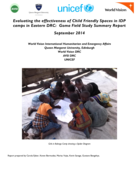
Child Friendly Spaces (CFSs) are used by humanitarian agencies as a means to promote protection and psychosocial wellbeing for children in emergency settings. World Vision International together with Columbia University is conducting a series of studies to investigate the effectiveness of CFSs in va
...

Immunization is among the most successful and cost effective public health interventions in preventing a child from dying before celebrating his or her first birthday. It is a priority intervention within Uganda’s minimum health care package which
...
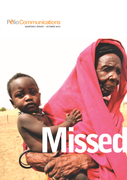
With a focus on Pakistan and Nigeria’s most vulnerable communities, this report provides insight about the role that community push-back is playing in the transmission of the polio virus and how the Global Polio Eradication Initiative (GPEI) can mitigate these social risks to reach every missed ch
...
As this report shows,
reports of child abuse and of children
witnessing violence between their
parents and caregivers have increased.
Ending violence against children is
increasingly within our reach. D
This report is a comprehensive statistical overview of female genital mutilation/cutting (FGM/C) in the 29 countries where the practice is concentrated. Analysis of the data reflects current perspectives on FGM/C, informed by the latest policy, programmatic and theoretical evidence.
The creaNon of ‘friendly spaces’ for women and girls has been a key
strategy in the protecNon and empowerment of women 1 and girls in South
Sudan since conflict re-erupted in the country in December 2013. This
document provides guidance on the aims of these spaces, and how they
can best be e
...
Using data from two surveys and 164 countries, this research brief describes the educational strategies countries are putting into place, or plan to, in order to mitigate learning impacts of extended school closures, particularly for the most vulnerable children. In addition, it highlights emerging
...
