
Filter
2153
Text search:
property
rights
Featured
280
492
Language
Document type
756
479
409
248
137
65
38
15
4
1
1
Countries
175
48
41
36
32
31
31
31
28
28
28
24
21
21
19
19
18
18
15
15
14
14
14
14
14
13
12
12
12
12
11
11
10
10
10
10
10
9
7
7
6
6
6
6
6
6
6
6
5
5
5
5
5
5
4
4
4
4
4
4
4
4
3
3
3
3
3
3
3
3
3
2
2
2
2
2
2
2
2
2
2
2
2
2
2
1
1
1
1
1
1
1
1
1
1
1
1
1
1
1
1
1
1
1
1
1
1
1
1
1
1
1
1
1
1
Authors & Publishers
Publication Years
Category
521
215
200
181
145
59
47
Toolboxes
189
162
121
98
96
94
92
88
87
86
62
61
56
51
49
44
42
41
37
32
19
14
8
8
4
3
2

20 April 2022. The response to the COVID-19 pandemic continues to adversely affect essential TB services in many countries. A first report of case studies was published in 2021 comprising 23 examples of innovative interventions implemented by countries to effectively respond to disruptions of TB ser
...

This guideline aims to improve the quality of essential, routine postnatal care for women and newborns with the ultimate goal of improving maternal and newborn health and well-being. It recognizes a “positive postnatal experience” as a significant end point for all women giving birth and their n
...

In 2009, WHO’s Second International Conference on Buruli Ulcer Control and Research resolved to strengthen the capacity of national laboratories to confirm cases of the disease, but advised that “efforts are still needed to develop simple diagnostic tools usable in the field as well as disabilit
...


The leishmaniases are a group of diseases caused by Leishmania spp., which occur in cutaneous, mucocutaneous and visceral forms. They are neglected tropical diseases (NTDs), which disproportionately affect marginalized populations who have limited access to health care. HIV co-infected patients with
...
Assessment Report
The African Region has been experiencing unprecedented health challenges due to the Coronavirus disease 2019 (COVID-19) pandemic, which have compounded the already difficult task the Region was facing in moving towards universal health coverage (UHC) attainment.
Infectious disease outbreaks and epidemics are increasing in frequency, scale and impact. Health care facilities can amplify the transmission of emerging infectious diseases or multidrug-resistant organisms (MDRO) within their settings and communities. Therefore, evidence-based infection prevention
...
Implementation guide for national, district and facility levels.
This implementation guide contains practical guidance for policy-makers,
programme managers, health practitioners and other actors working to
establish and implement quality of care (QoC) programmes for maternal,
newborn and child
...

This document sets out, therefore, to explain the socioeconomic value of investing in the fight against NTDs and highlights priorities for global investment attention. Our work was guided by the need not only for
additional funding and funders but also for the need to understand the current funding
...
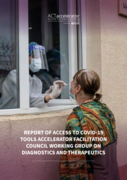
This report’s central premise is that diagnostics and therapeutics, and associated test to treat strategies, are fundamental components of the pandemic response, both for COVID-19 and for future health threats. Two years into the COVID-19 pandemic, this report reflects on the main challenges and k
...
This policy brief aims to provide a review of the current progress on implementing the Malawi national action plan on AMR, identifies critical gaps, and highlights findings to accelerate further progress in the human health sector. The target audience includes all those concerned with implementing a
...
Research to develop point-of-care tests is in progress. Treatment of Buruli ulcer comprises 8 weeks of combined antibiotics (rifampicin and clarithromycin). Complementary therapies such as wound care, skin graft and prevention of disability are needed in some cases to ensure full recovery.
The targ
...
Patient safety assessment manual
recommended
3rd edition. Patient safety standards are critical for the establishment and assessment of patient safety programmes within hospitals. This third edition of the Patient safety assessment manual provides an updated set of standards and assessment criteria that reflect current best practice and WHO gu
...
This policy brief aims to provide a review of the current progress on implementing the Kenya national action plan on AMR, identifies critical gaps, and highlights findings to accelerate further progress in the human health sector. The target audience includes all those concerned with implementing ac
...

What are the FP and CAC competencies?
Through the clear articulation of the family planning and comprehensive abortion care (FP and CAC) competencies for the primary health care workforce, the aim is to advance improvements in FP and CAC service delivery by aligning health worker education approach
...

This document, Programme and curriculum development guide, presents a systematic approach to developing programmes and curricula for implementation of the family planning (FP) and comprehensive abortion care (CAC) competencies,and the theory behind the approach. Specifically, the aim is for effectiv
...
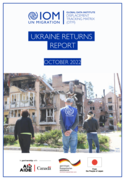
Starting on 24 February 2022, a large-scale armed conflict in Ukraine triggered an unprecedented humanitarian crisis across the country, characterised, among other elements, by the displacement of a significant proportion of the Ukrainian population.
As early as April 2022, the International Organi
...
The COVID-19 pandemic has raised profound ethical challenges on an unprecedented global scale. These challenges include how to allocate scarce resources (especially vaccines and therapeutics), both within and between countries, whether and when to mandate vaccines and/or masks, whether and how to co
...
Since 1996, trachoma has been targeted for elimination as a public health problem worldwide. The active trachoma criterion for national elimination as a public health problem is a TF1–9 < 5%, sustained for at least two years in the absence of antibiotic mass drug administration (MDA), in each formerly endemic EU. Usi
...
