Filter
1189
Text search:
gender
inequality
Featured
79
320
Language
Document type
620
331
91
64
39
16
13
6
3
2
1
Countries
80
53
36
34
34
29
26
25
25
23
22
19
19
17
17
15
15
15
15
14
13
13
12
12
10
10
9
9
9
9
9
8
8
8
8
8
7
7
6
6
6
6
6
5
5
5
5
4
4
4
4
4
4
4
4
3
3
3
3
3
3
3
3
3
3
2
2
2
2
2
2
2
2
2
2
2
1
1
1
1
1
1
1
1
1
1
1
1
1
1
1
1
1
1
1
Authors & Publishers
Publication Years
Category
487
125
77
65
32
18
1
Toolboxes
95
94
87
71
64
56
38
36
33
23
20
17
14
12
10
7
6
6
5
3
1
1
1
As a lower-middle-income country (LMIC), South Africa (SA) bears
the burden of maternal and neonatal mortality similar to other sub-
Saharan African countries. According to the Saving Mothers Report
2017/19, there has been a progressive and sustained reduction
in institutional maternal mortality
...
This publication presents the Agenda for the Americas on Health, Environment, and Climate Change 2021–2030 (the Agenda). The Agenda is a call to action to the health sector to lead the charge to address environmental determinants of health in the Americas. The Pan American Health Organization (PAH
...
Data Collection: Recommended Surgical and Anaesthesia Care Indicators
The policy of repression in Venezuela has been based on the coordination of attacks and stigmatizing messages broadcast by media with links to Nicolás Maduro’s government and politically motivated arbitrary arrests by the security forces under his command, with a marked pattern of political discr
...
his Framework begins with a desired future scenario and considers actions and interventions necessary to get there. It advocates for holistic view to address tuberculosis. The Framework revisits challenges and actions in four layers: TB specific; challenges in health systems that influence TB care;
...
Stats SA has released an in-depth report on persons with disabilities. The report, written using Census 2011 data, is the first in a series of in-depth analyses of various Census 2011 variables, such as ageing and education.
The report provides statistical evidence relating to the prevalence of dis
...
A implementation Matrix approved by the Cabinet of the Government of South Africa

The Lancet Volume 397, ISSUE 10269, P129-170, January 09, 2021
Research Report
The emergence and transmission of zoonotic diseases are driven by complex interactions
between health, environmental, and socio-political systems. Human movement is considered
a significant and increasing factor in these processes, yet forced migration remains an
understudied area of zoonotic res
...

The Lancet. 13 March 2022. doi: 10.1016/S0140-6736(21)02868-3. Previous Global Burden of Diseases, Injuries, and Risk Factors Study (GBD) studies have reported
national health estimates for Ethiopia. Substantial regional variations in socioeconomic status, population, demography, and access to hea
...
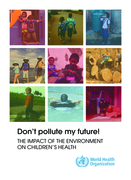
In 2015, 5.9 million children under age five died (1). The major causes of child deaths globally are pneumonia, prematurity, intrapartum-related complications, neonatal sepsis, congenital anomalies, diarrhoea, injuries and malaria (2). Most of these diseases and conditions are at least partially cau
...
Religion and Development 01/2019. Discussion Paper Series of the Research Programme on Religious Communities and Sustainable Development
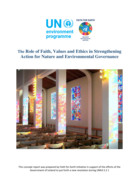
The Role of Faith, Values and Ethics in Strengthening Action for Nature and Environmental Governance
This concept report was prepared by Faith for Earth Initiative in support of the efforts of the Government of Iceland to put forth a new resolution during UNEA 5.2 1
The “Wuppertal Call” – Contributions and Recommendations from an
International Conference on Eco-Theology and Ethics of Sustainability
Wuppertal, Germany, 16 – 19 June 2019

The guide is suitable and can be used for the following audiences:
1. nurses and other trained healthcare workers who can use this manual as a self-study tool and then incorporate its guidance into their practice;
2. governmental and non-governmental employers of lay and professional TB treatment
...

Current evidence that the climate is changing is overwhelming. Impacts of climate change and variability are being observed: more intense heat-waves, fires and floods; and increased prevalence of food- water- and vector-borne diseases. Climate change will put pressure on environmental and health det
...