
Filter
1234
Text search:
HIV
expenditure
Featured
Recommendations
74
New Publications
452
Language
Document type
No document type
877
Studies & Reports
182
Guidelines
60
Strategic & Response Plan
57
Manuals
28
Situation Updates
10
Fact sheets
6
Training Material
5
Infographics
4
Resource Platforms
3
Brochures
1
Dashboards/Maps
1
Countries / Regions
India
76
Kenya
74
Global
49
Liberia
42
South Africa
41
Nigeria
38
Uganda
37
Zambia
37
Namibia
37
Sierra Leone
35
Ethiopia
35
Nepal
35
Tanzania
32
Rwanda
32
Malawi
32
Myanmar / Burma
28
Africa
26
Lesotho
24
Bangladesh
22
Western and Central Europe
20
Ghana
18
Cambodia
16
Indonesia
16
Asia
16
Mozambique
13
Botswana
13
Latin America and the Carribbean
13
Zimbabwe
12
Senegal
10
Congo, Democratic Republic of
10
Philippines
9
Eastern Europe
9
Guinea
8
Ukraine
8
South–East Asia Region
7
Haiti
6
Eswatini/ Swaziland
6
Syria
5
East and Southern Africa
5
West and Central Africa
5
Georgia
5
Burkina Faso
4
Cameroon
4
Pakistan
4
Papua New Guinea
4
Benin
4
Middle East and North Africa
4
Russia
4
Moldova
4
Germany
3
Sudan
3
Albania
3
Vietnam
3
Mali
2
South Sudan
2
Jordan
2
Afghanistan
2
China
2
North Macedonia
2
Madagascar
2
Yemen
2
Eastern Europe and Central Asia
2
Armenia
2
Tajikistan
2
Iran
2
Jamaica
2
Japan
2
Saudi Arabia
1
Somalia
1
Iraq
1
Lebanon
1
Egypt
1
Chad
1
Thailand
1
Central African Republic
1
Brazil
1
Serbia
1
Croatia
1
Burundi
1
El Salvador
1
Libya
1
Western Pacific Region
1
Other region
1
Paraguay
1
Venezuela
1
Poland
1
Palestine
1
Djibouti
1
Southern Africa
1
Laos
1
Timor Leste/ East Timor
1
Qatar
1
Kyrgyzstan
1
Kazakhstan
1
North America
1
Turkmenistan
1
Mauritius
1
Portugal
1
Spain
1
Azerbaijan
1
Bosnia and Herzegovina
1
Authors & Publishers
Publication Years
Category
Countries
741
Public Health
60
Clinical Guidelines
33
Key Resources
27
Women & Child Health
23
Capacity Building
3
Pharmacy & Technologies
3
Toolboxes
HIV
117
TB
81
Health Financing Toolbox
53
Mental Health
33
COVID-19
31
AMR
30
Global Health Education
29
Disability
26
NCDs
21
Caregiver
19
Ebola & Marburg
16
Pharmacy
14
Conflict
11
Rapid Response
9
NTDs
9
Planetary Health
7
Refugee
5
Natural Hazards
3
Cholera
2
Polio
2
Specific Hazards
2
Social Ethics
2
Malaria
2
2.0 Rapid Response
2
Zika
1

The social protection landscape for people affected by TB in the WHO South-East Asia Region
Operational Guidelines
Overview
Learning objectives
• Understand the mental health treatment gap in low-, middle- and high-income countries.
• Understand the principles and aims of the Mental Health Gap Action Programme.
• Acquire an introduction to mhGAP Intervention Guide (mhGAP-IG).
• Learn about mhGAP ToH
...
This is a report from a National, representative household survey carried out in Swaziland in 2009 – 2010. A large amount of effort has been put into this two‐year exercise until finally we can present the results of the combined efforts. First of all, this is a credit to the Federation of Disab
...
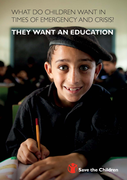
Listening to what children in crisis have to say is not only a moral and ethical responsibility for donor and humanitarian actors, it is also a humanitarian obligation. Children’s right to participation is recognised in the United Nations Convention on the Rights of the
Child (UNCRC), which provi
...

WHO’s Country Cooperation Strategy (CCS) defines the Organization’s medium-term vision for working in and with a particular country. The CCS, developed in the context of global and national health priorities, examines the overall health situation in a country, including the state of the health s
...
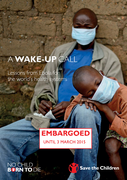
Almost 30 countries vulnerable to a new Ebola-style Epidemic, jeopardising the future of millions of Children. The report ranks the world’s poorest countries on the state of their public health systems, finding that 28 have weaker defences in place than Liberia where, alongside Sierra Leone and Gu
...

Bonchial asthma is the most common chronic respiratory disease in the world. In Kenya, it has been estimated that about 7.5% of the Kenyan population, nearly 4 million people, are currently living with asthma. Many cases tend to be underdiagnosed and undertreated which leads to high levels of morbid
...
Fever Diagnostic Technology Landscape
recommended
1st edition.
Unitaid’s report describes a slate of new devices that can more efficiently identify dangerously ill children so that they can be treated immediately. These tools make it easier to recognize danger signs, and support integrated approaches to reducing childhood deaths from the three
...

Antibiotics and other antimicrobial agents are invaluable life savers, particularly in resource-limited countries where infectious diseases are abundant. Both uncomplicated and severe infections are potentially curable as long as the aetiological agents are susceptible to the
...

The WHO standard: Universal access to rapid tuberculosis diagnostics sets benchmarks to achieve universal access to WHO-recommended rapid diagnostics (WRDs), increase bacteriologically confirmed tuberculosis and drug resistance detection, and reduce the time to diagnosis. WHO-recommended rapid diagn
...

The Global Strategy for Tuberculosis Research and Innovation will support the efforts of governments and other stakeholders to accelerate TB research and innovation, and improve equitable access to the benefits of research.
Availabl in Arabic, Chinese, English, French, Spanish and Russian
This updated step by step guide aims to assist the ministries of health (MoHs) in developing the national action plans for noma prevention and control, with a view to sustainably reducing the incidence of noma as a public health problem through programmes that are fully integrated with national heal
...
The Second Economic Development and Poverty Reduction Strategy (EDPRS 2) is a launch into the home strait of our Vision 2020. We are faced with new challenges of ensuring greater self reliance and developing global competitiveness. Conscious of these challenges, we forge ahead knowing that working t
...
This revision covers the main non-communicable diseases in Mozambique as well as the National Strategic Plan's aim to create a positive environment to minimize or eliminate the exposure to risk factors and guarantee access to care.
