
Filter
1365
Text search:
advanced
HIV
Featured
177
375
Language
Document type
723
230
208
84
50
31
22
6
6
1
1
1
1
Countries
71
65
59
55
37
34
33
27
27
26
25
25
23
20
19
18
16
16
16
14
13
13
11
11
10
10
10
9
9
7
7
7
6
6
6
5
5
4
4
4
4
4
3
3
3
3
2
2
2
2
2
2
2
2
1
1
1
1
1
1
1
1
1
1
1
1
1
1
1
1
1
1
1
1
1
1
1
1
1
1
1
1
1
1
Authors & Publishers
Publication Years
Category
580
174
96
67
54
45
21
2
Toolboxes
143
120
71
60
46
39
37
32
29
29
23
21
21
20
19
19
13
12
7
5
4
4
3
2
2
The guide is designed to help disaster managers in national Governments gain basic knowledge of how to use international tools and services. It aims to support the growing disaster response and disaster response preparedness capabilities that exist at national level across Asia and the Pacific.
...
...
January - December 2017

Findings on maternal and child health in Nepal, Mozambique and
Rwanda, and neglected tropical diseases in Cambodia and Sierra Leone | This report synthesises findings from five country case studies from the health dimension of this project, which focus on maternal and child health (MCH) (Mozambique
...
Health Systems for Outcomes Publication | This report summarizes the findings of a qualitative study on health workers’ performance and career in Rwanda to identify bottlenecks, strengths and shortcomings for human resources in the health sector, as perceived by both health workers and users of he
...
In 2017, the World Bank and partners created the Global Investment Framework for Nutrition as a roadmap towards achieving the World Health Assembly (WHA) nutrition targets by 2025. The framework estimates that the world needs to mobilize an annual additional investment of $7 billion per year to scal
...

A companion to the Child Friendly Schools Manual
WASH in Schools aims to improve the health and learning performance of school-aged children – and, by extension, that of their families – by reducing the incidence of water and sanitation-related diseases. Every child friendly school r ...
WASH in Schools aims to improve the health and learning performance of school-aged children – and, by extension, that of their families – by reducing the incidence of water and sanitation-related diseases. Every child friendly school r ...

In many of Myanmar’s contested regions, healthcare services are provided through two parallel governance systems – by the government’s Ministry of Health, and by providers linked to ethnic armed organizations. Building upon efforts to build trust between these two actors following ceasefires s
...

The report is based on comprehensive information collected at representative sample health facilities all over the country by well-organized and trained teams during May and August 2015. This is a continuation of 2014 Assessment activities and findings also reflect comparison between two consecutive
...
The vision of the new Strategic Action Plan for Strengthening HIS in Myanmar 2017- 2021 is “A strong health information system for a strong health system”. The mission statement of HIS in Myanmar also developed during the strategic planning exercise is “Generating and making accessible compreh
...

Climate change is a growing concern for Bangladesh because 90 percent of the country is approximately 10 feet above sea level. An evaluation was completed which discovered that high tides in Bangladesh were increasing 10 times more rapidly than the global average. This predicted rapid increase in se
...
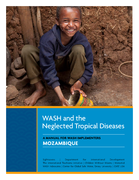
This manual is intended to enable WASH practitioners
who work in Mozambique to contribute to the
reduction of WASH-preventable NTDs.
Anaesthesia Handbook
recommended
The aim of this handbook is to provide guidance for trained anaesthetists working for the ICRC and to offer advice in areas where practice will differ from that in their home country. It is designed to supplement the practical training given in ICRC war-surgery seminars and to support the work of th
...

Inequality of access to palliative care and symptom relief is one of the greatest disparities in global health care (1). Currently, there is avoidable suffering on a massive scale due to lack of access to palliative care and symptom relief in low- and middle-income countries (LMICs) (1). Yet basic p
...

Humanitarian emergencies and crises (Humanitarian emergencies and crises) are large-scale events that may result in the breakdown of health care systems and society, forced displacement, death, and physical, psychological, social and spiritual suffering on a massive scale. Current responses to Human
...
