
Filter
516
Text search:
respiratory
communicable
diseases
control
Featured
Recommendations
57
New Publications
123
Language
Document type
No document type
236
Studies & Reports
106
Guidelines
87
Strategic & Response Plan
30
Manuals
25
Training Material
11
Situation Updates
8
Fact sheets
6
Dashboards/Maps
5
Brochures
1
Resource Platforms
1
Countries / Regions
Global
44
India
24
Kenya
22
Africa
16
South Africa
14
Rwanda
13
Ghana
12
Nigeria
11
Ethiopia
11
Liberia
10
Myanmar / Burma
10
Sierra Leone
9
Philippines
9
Zambia
9
Bangladesh
9
Namibia
9
Western and Central Europe
9
Uganda
8
Syria
8
Latin America and the Carribbean
8
Malawi
7
Nepal
6
Tanzania
5
West and Central Africa
4
Eastern Europe
4
Indonesia
3
Mozambique
3
Yemen
3
Guinea
2
Congo, Democratic Republic of
2
Zimbabwe
2
Haiti
2
Pakistan
2
Thailand
2
Sudan
2
Brazil
2
Ukraine
2
Colombia
2
Lesotho
2
East and Southern Africa
2
South–East Asia Region
2
Western Pacific Region
2
Bhutan
2
Tajikistan
2
Cameroon
1
South Sudan
1
Jordan
1
Afghanistan
1
Turkey
1
Papua New Guinea
1
Benin
1
Argentina
1
Peru
1
North Macedonia
1
Botswana
1
Sri Lanka
1
Middle East and North Africa
1
Other region
1
Asia
1
Venezuela
1
Palestine
1
Timor Leste/ East Timor
1
Iran
1
Kazakhstan
1
Maldives
1
Mauritius
1
Azerbaijan
1
Authors & Publishers
Publication Years
Category
Countries
229
Public Health
77
Clinical Guidelines
50
Key Resources
27
Women & Child Health
17
Capacity Building
7
Pharmacy & Technologies
5
Toolboxes
COVID-19
53
NCDs
53
TB
43
Planetary Health
27
AMR
21
Caregiver
17
HIV
16
Rapid Response
15
Conflict
14
Mental Health
12
Ebola & Marburg
9
Global Health Education
9
Natural Hazards
8
Refugee
7
NTDs
7
2.0 Rapid Response
7
Pharmacy
5
Polio
4
Cholera
2
Zika
2
Specific Hazards
2
Disability
1
Typhoon
1
Health Financing Toolbox
1

Rwanda’s fourth health sector strategic plan (HSSP4) is meant to provide the health sector with a Strategic Plan that will highlight its commitments and priorities for the coming 6 years. It will be fully integrated in the overall economic development plan of the Government. HSSP4 will fulfill the
...
Climate change presents significant challenges to human health and biodiversity. Increased numbers of extreme climate events, such as heat waves, droughts or flooding, threaten human health and well-being, both directly and indirectly, through impaired ecosystem functioning and reduced ecosystem ser
...
The manual is written for clinicians working at the district hospital (first-level referral care) who diagnose and manage sick adolescents and adults in resource constrained settings. It aims to support clinical reasoning, and to provide an effective clinical approach and protocols for the managemen
...

The World Heart Federation (WHF) Roadmap series covers a large range of cardiovascular conditions. These Roadmaps identify potential roadblocks and their solutions to improve the prevention, detection and management of cardiovascular diseases and pr
...

The "Stories from the field" document by the WHO Regional Office for the Eastern Mediterranean shares effective strategies from the Eastern Mediterranean Region for addressing noncommunicable diseases (NCDs) and mental health challenges, particularl
...

Mpox continues to affect people around the world. A new framework released today by WHO will guide health authorities, communities and other stakeholders in preventing and controlling mpox outbreaks, eliminating human-to-human transmission of the disease, and reducing spillover of the virus from ani
...
Long-lasting insecticidal nets (LNs) constitute a core vector control intervention against malaria. A number of new LN products are under development and will require assessment of risks to humans. This document provides an updated generic model tha
...

The ninth WHO report on the global tobacco epidemic tracks the progress made by countries in tobacco control since 2008 and, marks 15 years since the introduction of the MPOWER technical package which is designed to help countries implement the dema
...
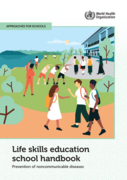
School health programmes are the most cost-effective way to influence health behaviours in young people. The purpose of this two-part handbook is to support schools as they seek to implement interventions in order to reduce the main modifiable risk behaviours for noncommunicable
...
A Manual for Medical Officer
Developed under the Government of India – WHO Collaborative Programme 2008-2009
Accessed: 11.03.2019
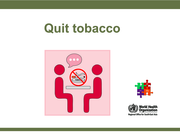
The document provides inforation on tobacco use (health effects, quitting, benefits of quitting, e-cigarettes etc.) in a descriptive way.
Asthma is one of the neglected diseases in Africa with a high prevalence. Allergic fungal diseases have been reported to complicate asthma progression and treatment outcomes. However, data about fun
...

Asthma is the commonest chronic childhood disease and encompasses a spectrum of airway diseases with similar symptoms. Inaccurate diagnosis remains common, especially in younger children, with failure to characterize the different “asthmas.” Chi
...
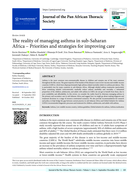
Asthma is the most common non-communicable disease in children and remains one of the most common throughout the life course. The great majority of the burden of this disease is seen in low-income and middle-income countries (LMICs), which have disp
...

Air pollution is a major environmental risk factor and contributor to chronic, noncommunicable diseases (NCDs). However, most public health approaches to NCD prevention focus on behavioural and biomedical risk factors, rather than environmental risk
...
Manual para directores de programas
Worldwide, there are about 17 million deaths due to cardiovascular disease (CVD) each year and at least two or three times as many non-fatal events. Raised cholesterol greatly increases the risks of stroke and heart disease, causing a large
health burden across the world. The World Health Organizat
...
Guide to monitoring and evaluating
GUIDELINES ON LEPROSY CONTROL IN SOUTH AFRICA | 2011
