
Filter
535
Text search:
marginalised
groups
Featured
35
162
Language
Document type
345
92
43
21
16
8
5
2
2
1
Countries
25
25
23
23
18
16
16
16
15
14
12
10
9
9
9
8
8
8
7
7
6
5
5
4
4
4
4
4
4
4
4
4
3
3
3
3
3
3
3
3
3
3
3
2
2
2
2
2
2
2
2
2
1
1
1
1
1
1
1
1
1
1
1
1
1
1
1
1
1
1
1
1
1
1
1
1
1
1
1
1
1
1
1
1
1
Authors & Publishers
Publication Years
Category
214
54
23
14
13
9
Toolboxes
97
47
43
24
22
18
17
15
15
14
12
9
7
7
6
4
3
2
2
2
2
1
1
1
1

Women have less access to the development services and support – such as adequate healthcare, education and
modern technology – that make people more resilient to climate change and other shocks and stressors.2
Women’s unequal access to resources, their disproportionate responsibility for ca
...
This publication articulates the WHO Botswana Country Office’s focus and investment needs for the biennium 2022–2023, building on achievements, networks, and partnerships fostered in 2020-2021.
As the leading health authority within the United Nations system in Botswana, the WHO Country Offi
...

The guide aims to provide health and DRM practitioners, planners and policymakers across sectors with targeted information to help them strengthen national health systems and integrate the risks of disease outbreaks in national DRR strategies
The following are some of the principles and approache
...
Social auditing in Nepal’s health sector
Workshop on PHC Revitalisation in Nepal, April 5-6, 2010
This document is for humanitarian health actors working at national and sub-national level in countries facing humanitarian emergencies. It applies to Health Cluster partners, including governmental and non-governmental health service providers.
Based on the IASC Guidelines on Mental Health and Psy
...
CAFOD Policy Briefing Paper
Lunsar, Port Loko District, Sierra Leone
Promoting People's Health to Enhance Social-economic Development


Working Paper Series: No. 26

Nepal has performed exceptionally in improving reproductive, maternal and child health outcomes over the past two decades. In this article, we discuss these achievements and outline a vision for the future of maternal, newborn and child survival in Nepal after the era of the Millennium Development G
...
Violence Against Women and HIV/AIDS Prevention and Treatment

Civil Society Organisations’ contribution towards community engagement to access and demand health services and encourage communities to practice appropriate health-seeking behaviour in Mon and Chin States
The following report is a study of 14 villages under the Collective Voices project (Nov ...
The following report is a study of 14 villages under the Collective Voices project (Nov ...
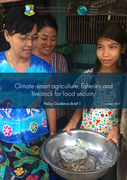
Policy Guidance Brief 1
• Climate change has already challenged the agriculture sector in Myanmar by afecting rice yields and livestock production, while disasters such as foods and cyclones have caused massive destruction in rural areas.
• Without adaptation, the long-term consequenc ...
• Climate change has already challenged the agriculture sector in Myanmar by afecting rice yields and livestock production, while disasters such as foods and cyclones have caused massive destruction in rural areas.
• Without adaptation, the long-term consequenc ...
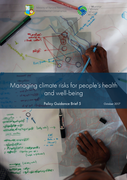
Policy Guidance Brief 2
• The potential health risks from climate change include: increase of waterborne and vector-borne diseases, heat-related illnesses, injuries and deaths, food insecurity and increased malnutrition. The poor, women, children and the elderly, as well as communities living ...
• The potential health risks from climate change include: increase of waterborne and vector-borne diseases, heat-related illnesses, injuries and deaths, food insecurity and increased malnutrition. The poor, women, children and the elderly, as well as communities living ...
