Filter
4148
Text search:
Emergency
Medical
Services
for
Children
Featured
Recommendations
435
New Publications
1226
Language
Document type
No document type
2398
Studies & Reports
614
Guidelines
505
Manuals
237
Strategic & Response Plan
195
Situation Updates
66
Training Material
62
Fact sheets
41
Brochures
11
Resource Platforms
10
Infographics
6
Online Courses
2
App
1
Countries / Regions
Global
179
India
174
Kenya
128
Sierra Leone
108
Syria
105
Liberia
104
Nigeria
96
Nepal
96
Ethiopia
92
Uganda
91
South Africa
83
Bangladesh
82
Myanmar / Burma
79
Western and Central Europe
78
Tanzania
67
Rwanda
64
Malawi
62
Ukraine
60
Zambia
59
Latin America and the Carribbean
54
Namibia
53
Ghana
52
Africa
51
South Sudan
49
Congo, Democratic Republic of
40
Philippines
35
Mozambique
35
Zimbabwe
31
Yemen
31
Guinea
30
Haiti
30
Asia
28
Venezuela
27
Lesotho
26
Indonesia
24
South–East Asia Region
22
Germany
20
Cambodia
20
Lebanon
19
Eastern Europe and Central Asia
19
Pakistan
18
Brazil
18
Eastern Europe
18
Senegal
17
West and Central Africa
17
Jordan
16
Russia
16
Afghanistan
15
Sudan
15
Eswatini/ Swaziland
15
Botswana
15
East and Southern Africa
15
Middle East and North Africa
15
Central African Republic
14
Somalia
13
Burkina Faso
12
Iraq
12
Moldova
12
Turkey
11
Colombia
11
Thailand
10
Vietnam
10
Laos
9
USA
8
Cameroon
8
Western Pacific Region
8
Mali
7
Palestine
7
Iran
7
China
6
Benin
6
Greece
6
Angola
6
Sri Lanka
6
Poland
6
Albania
6
Côte d’Ivoire / Ivory Coast
5
Papua New Guinea
5
Burundi
5
Romania
5
Singapore
4
Peru
4
Libya
4
Mexico
4
Tajikistan
4
Portugal
4
Niger
3
Egypt
3
Gambia
3
Malaysia
3
North Macedonia
3
Hungary
3
Armenia
3
Southern Africa
3
Timor Leste/ East Timor
3
Kazakhstan
3
North America
3
Saudi Arabia
2
Togo
2
Argentina
2
Croatia
2
Bolivia
2
Madagascar
2
Paraguay
2
Bhutan
2
Italy
2
Mongolia
2
Qatar
2
Bulgaria
2
Estonia
2
Slovakia
2
Uzbekistan
2
Georgia
2
Japan
2
Spain
2
Guinea-Bissau
1
Morocco
1
Chad
1
Dominican Republic
1
Switzerland
1
Serbia
1
Honduras
1
Ecuador
1
Guatemala
1
Chile
1
Fiji
1
Djibouti
1
Lithuania
1
Kyrgyzstan
1
Turkmenistan
1
France
1
Maldives
1
Mauritius
1
Tunisia
1
United Kingdom
1
South Korea
1
Belarus
1
Israel
1
Authors & Publishers
Publication Years
Category
Countries
1724
Key Resources
301
Women & Child Health
280
Clinical Guidelines
254
Public Health
196
Capacity Building
90
Pharmacy & Technologies
29
Annual Report MEDBOX
1
Toolboxes
COVID-19
394
Mental Health
311
HIV
296
Conflict
233
Disability
139
Ebola & Marburg
135
Refugee
131
TB
120
Caregiver
101
Natural Hazards
90
Planetary Health
90
Rapid Response
86
Global Health Education
64
Pharmacy
51
NCDs
51
AMR
46
Health Financing Toolbox
43
NTDs
40
2.0 Rapid Response
33
Specific Hazards
32
Cholera
31
Zika
31
Malaria
28
Polio
22
Social Ethics
7
Typhoon
5
South Sudan
2
Not all that bleeds is Ebola
recommended
How has the DRC Ebola outbreak impacted Sexual and Reproductive Health in North-Kivu?
Recommendations (more specifics found in the assessment):
1. Sexual and reproductive health needs and services are to be embedded in the EVD response from the ou
...
Interim Guidcance March 2020
People affected by humanitarian crises, particularly those displaced and/or living in camps and camp-like settings, are often faced with specific challenges and vulnerabilities that must be taken into consideration when planning
...
interim Guidance 1 December 2020. Updated version
This document provides updated guidance on mask use in health care and community settings, and during home care for COVID-19 cases. It is intended for
...
Cancer centres are a major resource in ensuring a comprehensive approach to cancer treatment and its planning. As part of a new roadmap developed by WHO and IAEA to help countries design national cancer control programmes, this publication proposes a framework to develop a cancer centre and/or to st
...
The results of the report clearly show that in 2020, a year dominated by the emergence of COVID-19 and its associated health and economic crises, governments around the world rose to the challenge. Sharp increases in government spending on health at all country income levels underpinned the rise in
...

In 2015, the United Nations set important targets to reduce premature
cardiovascular disease (CVD) deaths by 33% by 2030. Africa disproportionately
bears the brunt of CVD burden and has one of the highest risks of dying
from non-communicable diseases (NCDs) worldwide. There is currently
an epide
...
COVID-19 disproportionately affects the poor and vulnerable. Community health workers are poised to play a pivotal role in fighting the pandemic, especially in countries with less resilient health systems. Drawing from practitioner expertise across four WHO regions, this article outlines the targete
...

The Rwanda Malaria Strategic Plan 2020–2024 outlines Rwanda’s national strategy to reduce malaria morbidity and mortality by at least 50% compared to 2019 levels. The vision is a malaria-free Rwanda contributing to socioeconomic development.
The plan includes strengthening prevention through lo
...

The objectives of this guideline are the same as those of the 2011 edition, namely to provide evidence-based normative guidance on interventions to improve adolescent morbidity and mortality by reducing the chances of early pregnancy and its resulting poor health outcomes. The specific objectives of
...

This country cooperation strategy (CCS) outlines how the World Health Organization (WHO) will work with the Lao People’s Democratic Republic over the next five years (2024–2028), supporting the implementation of the five-year health sector development plans and the Health Sector Reform Strategy
...
Updated 10 August 2020
This document presents an essential medicines list (EML) to manage patients in intensive care units (ICUs) with suspected or confirmed COVID-19 diagnosis, which includes active ingredients with dosage form and concentration, and are preferably in the WHO Model Lists of Essent
...
This handbook was designed primarily as a tool for district clinical specialist teams (DCSTs), and for the provincial specialists who will guide and support their work. This handbook will also be us
...
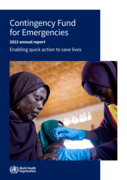
The Contingency Fund for Emergencies (CFE) provides WHO with rapid and flexible resources to respond to disease outbreaks and other health emergencies. The annual report provides an overview of the use and impact of the Fund over the previous year.