Filter
844
Text search:
stewardship
Featured
75
224
Language
Document type
281
249
138
67
34
20
15
13
11
9
3
2
1
1
Countries
53
51
37
29
22
19
18
16
16
15
13
13
12
12
11
11
11
10
10
9
7
6
6
5
4
4
4
4
3
3
3
3
3
3
3
3
3
3
3
3
3
3
2
2
2
2
2
2
2
2
2
1
1
1
1
1
1
1
1
1
1
1
1
1
1
1
1
1
1
1
1
1
1
1
1
1
1
1
1
1
1
1
1
1
1
1
1
1
1
1
1
1
1
1
1
1
1
1
1
Authors & Publishers
Publication Years
Category
351
31
30
26
16
7
5
1
Toolboxes
263
70
48
26
24
23
21
20
14
12
11
8
8
7
7
7
6
5
5
5
4
3
2
1

This tool enables a rapid, systematic review of pharmacy curricula at the national or institutional level to evaluate their robustness in delivering the expected content and competencies. It can also assist institutions in designing strategies to strengthen AMR curricular content, and to facilitate
...

A Global Access Framework for Country-Led.
ResponsesThis 2030 Prevention access framework focuses on one of those top-line targets, which covers primary prevention and requires that 90% of people in need of HIV prevention are using effective prevention options by 2030. This target is disaggregated
...
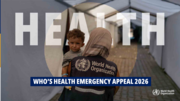
The 2026 appeal seeks nearly US$ 1 billion to respond to 36 emergencies worldwide, including 14 Grade 3 emergencies requiring the highest level of organizational response. These emergencies span sudden-onset and protracted humanitarian crises where health needs are critical.

This document suggests mechanisms that countries can use to respond to emergencies and disasters taking a whole of society and whole of government approach ensuring multisectoral engagement for health actions. It helps to run a participatory process of developing the national health response operati
...

This document provides additional guidance for the responsible and prudent use of antimicrobials in food-producing animals, and should be read in conjunction with the Recommended International Code of Practice for Control of the Use of Veterinary Drugs CAC/RCP 38-1993. Its obj
...
The Global Antimicrobial Resistance Surveillance System (GLASS) is a platform for global data sharing on antimicrobial resistance worldwide. It has been launched by WHO as part of the implementation of the Global Action Plan on Antimicrobial Resistance (AMR). The data generated will help to inform n
...
The systematic surveillance of antibiotic use and antibiotic re-sistance prevalence in humans and animals is imperative for managingbacterial infectious disease (JPIAMR, 2019;WHO, 2015). Many low-income countries currently face substantial challenges in building national surveillance systems due to
...

Please find all relevant guidelines and information on antimicrobial resistance AMR in our new AMR TOOLBOX
www.amrbox.org
March 2022. This report on good practices to combat AMR focuses on activities across human, animal, and environmental health in European countries. The report provides a description of practices, how they were implemented, achievements, and why the practice was unique.

L'objectif de cette publication est de fournir une approche pratique et progressive pour la mise en œuvre des plans d'action nationaux sur la RAM dans le secteur de la santé humaine ; et de fournir un processus et une compilation des outils existants de l'OMS pour prioriser, chiffrer, mettre en œ
...

El objetivo de esta publicación es ofrecer un enfoque práctico y gradual para la aplicación de los planes de acción nacionales sobre la RAM en el sector de la salud humana; y proporcionar un proceso y una recopilación de las herramientas existentes de la OMS para priorizar, costear, aplicar, su
...
AMR Multi-Stakeholder Partnership Platform
recommended
The AMR Multi-Stakeholder Partnership Platform aims to catalyse a global movement for action against antimicrobial resistance (AMR) by fostering cooperation between a diverse range of stakeholders at all levels across the One Health spectrum. It seeks to ensure a healthier, more sustainable and resi
...
La Plateforme de partenariat multipartite sur la résistance aux antimicrobiens a pour mission de catalyser une action mondiale de lutte contre la résistance aux antimicrobiens en favorisant la coopération, à tous les niveaux, entre des partenaires très variés qui soutiennent l’approche «Une
...
Plataforma de asociación entre múltiples partes interesadas sobre la resistencia a los antimicrobianos
recommended
La Plataforma de asociación entre múltiples partes interesadas sobre la resistencia a los antimicrobianos (RAM) tiene como objetivo catalizar un movimiento mundial de lucha contra la RAM fomentando la cooperación en todos los niveles entre una amplia gama de partes interesadas del espectro del en
...
BMJ Global Health, Vol. 4 (2019) no.2
Antibiotic resistance is threatening global health, development and food security; however, measures for assessing and communicating the threat of resistance are lacking. The Drug Resistance Index (DRI) allows for global assessment of the relative efficacy of
...

This guideline provides advice in regards to applications for Marketing Authorisations for antimicrobial veterinary medicinal products (VMPs) on the data required and the methodology to be used for performing an assessment of the risk to public health from antimicrobial resistance (AMR) due to use o
...