
Filter
1775
Text search:
water
stress
Featured
225
435
Language
1722
57
40
34
32
16
13
8
8
7
7
5
4
4
4
3
3
3
3
3
3
2
2
2
2
2
2
2
2
2
2
2
1
1
1
1
1
1
1
1
1
1
1
1
1
1
Document type
866
357
228
150
63
48
24
22
9
4
3
Countries
95
87
49
42
39
35
34
34
30
30
29
26
25
23
22
21
17
17
17
16
16
16
15
13
12
12
12
11
10
10
9
9
9
9
9
8
8
7
7
7
6
6
6
6
5
5
5
5
5
4
4
4
4
4
4
4
3
3
3
3
3
3
3
3
3
2
2
2
2
2
2
2
1
1
1
1
1
1
1
1
1
1
1
1
1
1
1
1
1
1
1
1
1
1
1
1
1
1
1
1
1
Authors & Publishers
196
61
58
45
36
33
31
23
17
15
12
12
12
11
10
10
10
10
10
10
9
9
9
9
9
9
8
8
8
7
7
7
7
7
7
7
6
6
6
6
6
6
6
6
6
6
5
5
5
5
5
5
5
5
4
4
4
4
4
4
4
4
4
4
4
4
4
4
3
3
3
3
3
3
3
3
3
3
3
3
3
3
3
3
3
3
3
3
3
3
3
3
3
3
3
3
3
3
3
3
3
3
3
3
3
3
2
2
2
2
2
2
2
2
2
2
2
2
2
2
2
2
2
2
2
2
2
2
2
2
2
2
2
2
2
2
2
2
2
2
2
2
2
2
2
2
2
2
2
2
2
2
2
2
2
2
2
2
2
2
2
2
2
2
2
2
2
2
2
2
2
2
2
2
2
2
2
2
2
2
2
2
2
2
2
2
2
2
2
2
2
2
2
2
2
2
2
2
2
2
2
2
2
2
2
2
2
2
2
2
2
2
2
2
2
2
2
2
2
2
2
2
2
2
2
2
2
2
2
2
2
2
2
2
2
2
2
2
2
2
2
2
1
1
1
1
1
1
1
1
1
1
1
1
1
1
1
1
1
1
1
1
1
1
1
1
1
1
1
1
1
1
1
1
1
1
1
1
1
1
1
1
1
1
1
1
1
1
1
1
1
1
1
1
1
1
1
1
1
1
1
1
1
1
1
1
1
1
1
1
1
1
1
1
1
1
1
1
1
1
1
1
1
1
1
1
1
1
1
1
1
1
1
1
1
1
1
1
1
1
1
1
1
1
1
1
1
1
1
1
1
1
1
1
1
1
1
1
1
1
1
1
1
1
1
1
1
1
1
1
1
1
1
1
1
1
1
1
1
1
1
1
1
1
1
1
1
1
1
1
1
1
1
1
1
1
1
1
1
1
1
1
1
1
1
1
1
1
1
1
1
1
1
1
1
1
1
1
1
1
1
1
1
1
1
1
1
1
1
1
1
1
1
1
1
1
1
1
1
1
1
1
1
1
1
1
1
1
1
1
1
1
1
1
1
1
1
1
1
1
1
1
1
1
1
1
1
1
1
1
1
1
1
1
1
1
1
1
1
1
1
1
1
1
1
1
1
1
1
1
1
1
1
1
1
1
1
1
1
1
1
1
1
1
1
1
1
1
1
1
1
1
1
1
1
1
1
1
1
1
1
1
1
1
1
1
1
1
1
1
1
1
1
1
1
1
1
1
1
1
1
1
1
1
1
1
1
1
1
1
1
1
1
1
1
1
1
1
1
1
1
1
1
1
1
1
1
1
1
1
1
1
1
1
1
1
1
1
1
1
1
1
1
1
1
1
1
1
1
1
1
1
1
1
1
1
1
1
1
1
1
1
1
1
1
1
1
1
1
1
1
1
1
1
1
1
1
1
1
1
1
1
1
1
1
1
1
1
1
1
1
1
1
1
1
1
1
1
1
1
1
1
1
1
1
1
1
1
1
1
1
1
1
1
1
1
1
1
1
1
1
1
1
1
1
1
1
1
1
1
1
1
1
1
1
1
1
1
1
1
1
1
1
1
1
1
1
1
1
1
1
1
1
1
1
1
1
1
1
1
1
1
1
1
1
1
1
1
1
1
1
1
1
1
1
1
1
1
1
1
1
1
1
1
1
1
1
1
1
1
1
1
1
1
1
1
1
1
1
1
1
1
1
1
1
1
1
1
1
1
1
1
1
1
1
1
1
1
1
1
1
1
1
1
1
1
1
1
1
1
1
1
1
1
1
1
1
1
1
1
1
1
1
1
1
1
1
1
1
1
1
1
1
1
1
1
1
1
1
1
1
1
1
1
1
1
1
1
1
1
1
1
1
1
1
1
1
1
1
1
1
1
1
1
1
1
1
1
1
1
1
1
1
1
1
1
1
1
1
1
1
1
1
1
1
1
1
1
1
1
1
1
1
1
1
1
1
1
1
1
1
1
1
1
1
1
1
1
1
1
1
1
1
1
1
1
1
1
1
1
1
1
1
1
1
1
1
1
1
1
1
1
1
1
1
1
1
1
1
1
1
1
1
1
1
1
1
1
1
1
1
1
1
1
1
1
1
1
1
1
1
1
1
1
1
1
1
1
1
1
1
1
1
1
1
1
1
1
1
1
1
1
1
1
1
1
1
1
1
1
1
1
1
1
1
1
1
1
1
1
1
1
1
1
1
1
1
1
1
1
1
1
1
1
1
1
1
1
1
1
1
1
1
1
1
1
1
1
1
1
1
1
1
1
1
1
1
1
1
1
1
1
1
1
1
1
1
1
1
1
1
1
1
1
1
1
1
1
1
1
1
1
1
1
1
1
1
1
1
1
1
1
1
1
1
1
1
1
1
1
1
1
1
1
1
1
1
1
1
1
1
1
1
1
1
1
1
1
1
1
1
1
1
1
1
1
1
1
1
1
1
1
1
1
1
1
1
1
1
1
1
1
1
1
1
1
1
1
1
1
1
1
1
1
1
1
1
1
1
1
1
1
1
1
1
1
1
1
1
1
1
1
1
1
1
1
1
1
1
1
1
1
1
1
1
1
1
1
1
1
1
1
1
1
1
1
1
1
1
1
1
1
1
1
1
1
1
1
1
1
1
1
1
1
1
1
1
1
1
1
1
1
1
1
1
1
1
1
1
1
1
1
1
1
1
1
1
1
1
1
1
1
1
1
1
1
1
1
1
1
1
1
1
1
1
1
1
1
1
1
1
1
1
1
1
1
1
1
1
1
1
1
1
1
1
1
1
1
1
1
1
1
1
1
1
1
1
1
1
1
1
1
1
1
1
1
1
1
1
1
1
1
1
1
1
1
1
1
1
1
1
1
1
1
1
1
1
1
1
1
1
1
1
1
1
1
1
1
1
1
1
1
1
1
1
1
1
1
1
1
1
1
1
1
1
1
1
1
1
1
1
1
1
1
1
1
1
1
1
1
1
1
1
1
1
1
1
1
1
1
1
1
1
1
1
1
1
1
1
1
1
1
1
1
1
1
1
1
1
1
1
1
1
1
1
1
1
1
1
1
1
1
1
1
1
1
1
1
1
1
1
1
1
1
1
1
1
1
1
1
1
1
1
1
1
1
1
1
1
1
1
1
1
1
1
1
1
1
1
1
1
1
1
1
1
1
1
1
1
1
1
1
1
1
1
1
1
1
1
1
1
1
1
1
1
1
1
1
1
1
1
1
1
1
1
1
1
1
1
1
1
1
1
1
1
1
1
1
1
1
1
1
1
1
1
1
1
1
1
1
1
1
1
1
1
1
1
1
1
1
1
1
1
1
1
1
1
1
1
1
1
1
1
1
1
1
1
1
1
1
1
1
1
1
1
1
1
1
1
1
1
1
1
1
1
1
1
1
1
1
1
1
1
1
1
1
1
1
1
1
1
1
1
1
1
1
1
1
1
1
1
1
1
1
1
1
1
1
1
1
1
1
1
1
1
1
1
1
1
1
1
1
1
1
1
1
1
1
1
1
1
1
1
1
1
1
1
1
1
1
1
1
1
1
1
1
1
1
1
1
1
1
1
1
1
1
1
1
1
1
1
1
1
1
1
1
1
1
1
1
1
1
1
1
1
1
1
1
1
1
1
1
1
1
1
1
1
1
1
1
1
1
1
1
1
1
1
1
1
1
1
1
1
1
1
1
1
1
1
1
1
1
1
1
1
1
1
Publication Years
605
964
197
8
1
Category
578
185
127
102
89
58
9
2
Toolboxes
202
188
166
112
70
67
59
55
54
53
32
31
29
24
22
20
19
14
14
13
10
10
7
6
3
2
2
White Paper from the National Child Traumatic Stress Network Refugee Trauma Task Force
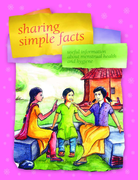
This guidance booklet on Menstrual Hygiene Management (MHM) is intended for adolescent girls and young women. Issues associated with menstruation are never discussed openly and the silence surrounding menstruation burdens young girls by keeping them ignorant of this biological function. Even after t
...
he attainment of menarche, very little information is given to young girls about the physiological processes involved and the hygienic practices to be followed.
more
These guidance notes on stress, grief and loss have been compiled by IMC’s Mental Health Advisor, Dr. Lynne Jones, for organizations working with Hurricane Katrina-affected populations. They represent lessons learned regarding mental health activi
...
ties from IMC’s international experiences in disaster response, including the recent tsunami, as well as summarize best-practices identified by international agency consensus
more
New research explores the stress children in World Vision programmes in the Middle East and Eastern Europe region are under due to COVID-19. In addition to their fear that they themselves or their loved ones will catch the disease, children worry ab
...
out economic hardships, the loss of their education, increased violence and social isolation. But in the midst of it all, a clear message comes through – young people are hopeful about the future, they want to make a contribution and they want their voices to be heard.
more
The report identifies major global gaps in WASH services: one third of health care facilities do not have what is needed to clean hands where care is provided; one in four facilities have no water services, and 10% have no sanitation services. This
...
means that 1.8 billion people use facilities that lack basic water services and 800 million use facilities with no toilets. Across the world’s 47 least-developed countries, the problem is even greater: half of health care facilities lack basic water services. Furthermore, the extent of the problem remains hidden because major gaps in data persist, especially on environmental cleaning.
This report also describes the global and national responses to the 2019 World Health Assembly resolution on WASH in health care facilities. More than 70% of countries have conducted related situation analyses, 86% have updated and are implementing standards and 60% are working to incrementally improve infrastructure and operation and maintenance of WASH services. Case studies from 30 countries demonstrate that progress is being propelled by strong national leadership and coordination, use of data to direct resources and action, and the mutual benefits of empowering health workers and communities to develop solutions together.
more
Self-help Plus (SH+)
recommended
A group-based stress managment course for adults.
Self-Help Plus (SH+) is WHO’s 5-session stress management course for large groups of up to 30 people. It is delivered by supervised, non-speciali
...
st facilitators who complete a short training course and use pre-recorded audio and an illustrated guide (Doing What Matters in Times of Stress) to teach stress management skills. The course is suitable for adults who experiences stress, wherever they live and whatever their circumstances. It has been shown to reduce psychological distress and prevent the onset of mental disorders. The format of SH+ makes it well-suited for use alongside other mental health interventions, as a first step in a stepped care programme, or as a community intervention delivered alongside broader community programming.
Download the audio files in English directly from the WHO Website https://www.who.int/publications/i/item/9789240035119
more
The Look Back Study (LBS) focuses on the water and sanitation and hygiene (WASH) component of the project but some additional information was collected along side the WASH data. This data has been compared to the baseline survey data that was report
...
ed at start of the project (see tables in annex D to this report).
more
Background: Little is known about post-traumatic stress (PTSD) prevalence rates in community samples. This is especially true for the African continent where child-soldiers, HIV/AIDS affected and orphans have been the target for PTSD prevalence stud
...
ies. Objectives: The aim of this study is to investigate the indirect and direct exposure to 20 potentially traumatic events and its relation with PTSD in a Ugandan sample of senior 3rd year students and to perform cross-cultural comparisons with previous studies examining this age group. Socio-economic status, coping styles, negative affect, and somatization are further examined.
more
Handout. Feeling under pressure is a likely experience for you and many of your colleagues. Stress and the feelings associated with it are by no means a reflection that you cannot do your job or that you are weak. Managing your mental health and ps
...
ychosocial well-being during this time is as important as managing your physical health. This is not a sprint. It is a marathon that requires ongoing self-care.
more
(You need free registration to download the book)
Disasters and public health emergencies can stress health care systems to the breaking point and disrupt delivery of vital medical services. During such crises, hospitals and long-term care faciliti
...
es may be without power; trained staff, ambulances, medical supplies and beds could be in short supply; and alternate care facilities may need to be used. Planning for these situations is necessary to provide the best possible health care during a crisis and, if needed, equitably allocate scarce resources
more

Women, girls and marginalized groups who are largely dependent on natural resources for livelihoods are among the hardest hit by extreme weather patterns. These weather patterns limit their access to food, water, shelter, education and access to ess
...
ential health services, including those that address sexual and reproductive health and rights (SRHR), gender-based violence (GBV) and preventing harmful practices such as child marriage and female genital mutilation.
more

Specific action sheets offer useful guidance on mental health and psychosocial support and cover the following areas coordination assessment monitoring and evaluation protection and human rights standards human resources community mobilisation and support health services education dissemination of i
...
nformation food security and nutrition shelter and site planning and water and sanitationthe guidelines include a matrix with guidance for emergency planning actions to be taken in the early stages of an emergency and comprehensive responses needed in the recovery and rehabilitation phases
more
Common presentations of other significant mental health complaints include: depressed mood, irritability, anxiety, stress, extreme tiredness, unexplained physical complaints. Other significant mental health complaints are frequently seen in non-spec
...
ialized health settings, but are often treated inappropriately, with excess investigations and inappropriate medications.
OTH supporting material: Role plays, LIVES intervention, Case scenarios, Alternative relaxation exercises, Multiple choice questions, Video link
more
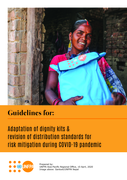
Many countries are taking strict measures to prevent the spread of COVID-19 with lockdowns, curfews, and closure of public spaces and services. As a result of stress and uncertainty caused by these strict measures, women and girls are at even greate
...
r risk of violence at a time when their access to services is further reduced. With many people’s livelihoods and incomes significantly affected, together with movement restrictions, basic hygiene and menstruation items are unlikely to be prioritised.
10 April, 2020
more
Updted Sept.2021
Hesperian stated producing COVID-19 related materials beginning with, English and Spanish versions, even as they were transitioning to remote work. They understood that accurate information from a credible source circulated as early as possible would be critical. Faster than had ev
...
er happened before, established translation partners got to work and then groups and individuals approaching us for the first time wanted to get the fact sheets out in their languages too. The original fact sheet is now available in 34 languages.
You can find information: Caring for sick persons; health protection and security: Managing stress and anger; Vaccine managment; Stay well; How to make masks, face shields,...; Vaccines
more
Biodiversity and healthy natural ecosystems, including protected areas in and around cities, provide ecosystem benefits and services that support human health, including reducing flood risk, filtering air pollutants, and providing a reliable supply of clean drinking
...
water. These services help to reduce the incidence of infectious diseases and respiratory disorders, and assist with adaptation to climate change. Access to nature offers many other direct health benefits, including opportunities for physical activity, reduction of developmental disorders and improved mental health.
more
The Lancet Planetary Health Volume 6, ISSUE 5, e388-e390, May 01, 2022. As the Stockholm Declaration on the Human Environment turns 50, the role of the health stakeholder community in forward-looking environmental agendas is more important than ever. Breathing air, drinking
...
water, and eating food is a daily requirement for healthy human bodies. These basic needs inextricably link human health to the health of our environment. Hence, core elements of the global environmental movement were built on concern for the negative impact of pollution on human and ecosystem health.
more
Food Security in a World of Natural Resource Scarcity. The Role of Agricultural Technologies
Mark W. Rosegrant | Jawoo Koo | Nicola Cenacchi; et al.
International Food Policy Research Institute
(2014)
This book is aimed at policymakers in ministries of agriculture and national agricultural research institutes, as well as multilateral development banks and the private sector and provides guidance on various technology strategies and which to pursue as competition grows for land,
...
water, and energy across productive sectors and even increasingly across borders. Climate change, population, and income growth will drive food demand in the coming decades. Food prices are also expected to significantly increase between 2005 and 2050 and the number of people at risk of hunger in the developing world would grow from 881 million in 2005 to more than a billion people by 2050. This book endeavors to respond to the challenge of growing food sustainably without degrading our natural resource bas
more

Current evidence that the climate is changing is overwhelming. Impacts of climate change and variability are being observed: more intense heat-waves, fires and floods; and increased prevalence of food- water- and vector-borne diseases. Climate chang
...
e will put pressure on environmental and health determinants, such as food safety, air pollution and water quantity and quality. A climate-resilient future depends fundamentally on reducing greenhouse gas emissions. Limiting warming to below 2 °C requires transformational technological, institutional, political and behavioural changes: the foundations for this are laid out in the Paris Agreement of December 2015. The health sector can lead by example, shifting to environmentally friendly practices and minimizing its carbon emissions. A climate-resilient future will increasingly depend on managing and reducing climate change risks to protect health. In the near term, this can be enhanced by including climate change in national health programming and creating climate-resilient health systems.
more
