
Filter
3374
Text search:
travel
Featured
323
890
Language
3224
109
87
52
46
45
45
24
10
9
7
7
6
6
5
5
5
4
4
4
4
4
3
3
3
3
3
3
3
3
3
2
2
2
2
2
2
2
2
2
2
2
2
2
2
2
1
1
1
1
1
1
1
1
1
1
1
1
1
1
1
1
1
1
1
Document type
1580
652
515
202
142
92
83
46
26
17
10
5
1
1
Countries
172
162
94
91
85
70
66
64
59
57
55
53
51
51
46
45
43
42
40
39
37
34
31
31
31
28
27
27
26
25
24
23
22
22
22
22
20
20
20
17
17
16
15
14
13
13
12
12
11
11
11
11
10
10
9
9
8
8
8
8
8
7
7
7
6
6
6
6
6
6
6
6
6
6
5
5
5
5
5
4
4
4
4
4
3
3
3
3
3
3
3
3
3
3
3
3
3
3
3
2
2
2
2
2
2
2
2
2
2
2
2
2
2
2
2
2
2
2
1
1
1
1
1
1
1
1
1
1
1
1
1
1
1
1
1
1
1
1
Authors & Publishers
473
124
97
74
62
58
57
50
33
31
28
28
25
23
22
21
19
19
18
16
16
15
14
14
14
13
13
13
13
13
13
12
12
11
11
11
10
10
10
10
9
9
9
9
9
9
9
9
8
8
8
8
8
8
8
8
8
7
7
7
7
7
7
7
7
7
7
6
6
6
6
6
6
6
6
6
6
6
6
6
6
6
6
6
5
5
5
5
5
5
5
5
5
5
5
5
5
5
5
5
5
5
5
5
5
5
4
4
4
4
4
4
4
4
4
4
4
4
4
4
4
4
4
4
4
4
4
4
4
4
4
4
4
4
4
3
3
3
3
3
3
3
3
3
3
3
3
3
3
3
3
3
3
3
3
3
3
3
3
3
3
3
3
3
3
3
3
3
3
3
3
3
3
3
3
3
3
3
3
3
3
3
3
3
3
3
3
3
3
3
3
3
3
3
3
3
3
3
2
2
2
2
2
2
2
2
2
2
2
2
2
2
2
2
2
2
2
2
2
2
2
2
2
2
2
2
2
2
2
2
2
2
2
2
2
2
2
2
2
2
2
2
2
2
2
2
2
2
2
2
2
2
2
2
2
2
2
2
2
2
2
2
2
2
2
2
2
2
2
2
2
2
2
2
2
2
2
2
2
2
2
2
2
2
2
2
2
2
2
2
2
2
2
2
2
2
2
2
2
2
2
2
2
2
2
2
2
2
2
2
2
2
2
2
2
2
2
2
2
2
2
2
2
2
2
2
2
2
2
2
2
2
2
2
2
2
2
2
2
2
2
2
2
2
2
2
2
2
2
2
2
2
2
2
2
2
2
2
2
2
2
2
2
2
2
2
2
2
2
2
2
2
2
2
2
2
2
2
2
2
2
2
2
2
2
2
2
2
2
2
2
2
2
2
2
2
2
2
2
2
2
2
2
1
1
1
1
1
1
1
1
1
1
1
1
1
1
1
1
1
1
1
1
1
1
1
1
1
1
1
1
1
1
1
1
1
1
1
1
1
1
1
1
1
1
1
1
1
1
1
1
1
1
1
1
1
1
1
1
1
1
1
1
1
1
1
1
1
1
1
1
1
1
1
1
1
1
1
1
1
1
1
1
1
1
1
1
1
1
1
1
1
1
1
1
1
1
1
1
1
1
1
1
1
1
1
1
1
1
1
1
1
1
1
1
1
1
1
1
1
1
1
1
1
1
1
1
1
1
1
1
1
1
1
1
1
1
1
1
1
1
1
1
1
1
1
1
1
1
1
1
1
1
1
1
1
1
1
1
1
1
1
1
1
1
1
1
1
1
1
1
1
1
1
1
1
1
1
1
1
1
1
1
1
1
1
1
1
1
1
1
1
1
1
1
1
1
1
1
1
1
1
1
1
1
1
1
1
1
1
1
1
1
1
1
1
1
1
1
1
1
1
1
1
1
1
1
1
1
1
1
1
1
1
1
1
1
1
1
1
1
1
1
1
1
1
1
1
1
1
1
1
1
1
1
1
1
1
1
1
1
1
1
1
1
1
1
1
1
1
1
1
1
1
1
1
1
1
1
1
1
1
1
1
1
1
1
1
1
1
1
1
1
1
1
1
1
1
1
1
1
1
1
1
1
1
1
1
1
1
1
1
1
1
1
1
1
1
1
1
1
1
1
1
1
1
1
1
1
1
1
1
1
1
1
1
1
1
1
1
1
1
1
1
1
1
1
1
1
1
1
1
1
1
1
1
1
1
1
1
1
1
1
1
1
1
1
1
1
1
1
1
1
1
1
1
1
1
1
1
1
1
1
1
1
1
1
1
1
1
1
1
1
1
1
1
1
1
1
1
1
1
1
1
1
1
1
1
1
1
1
1
1
1
1
1
1
1
1
1
1
1
1
1
1
1
1
1
1
1
1
1
1
1
1
1
1
1
1
1
1
1
1
1
1
1
1
1
1
1
1
1
1
1
1
1
1
1
1
1
1
1
1
1
1
1
1
1
1
1
1
1
1
1
1
1
1
1
1
1
1
1
1
1
1
1
1
1
1
1
1
1
1
1
1
1
1
1
1
1
1
1
1
1
1
1
1
1
1
1
1
1
1
1
1
1
1
1
1
1
1
1
1
1
1
1
1
1
1
1
1
1
1
1
1
1
1
1
1
1
1
1
1
1
1
1
1
1
1
1
1
1
1
1
1
1
1
1
1
1
1
1
1
1
1
1
1
1
1
1
1
1
1
1
1
1
1
1
1
1
1
1
1
1
1
1
1
1
1
1
1
1
1
1
1
1
1
1
1
1
1
1
1
1
1
1
1
1
1
1
1
1
1
1
1
1
1
1
1
1
1
1
1
1
1
1
1
1
1
1
1
1
1
1
1
1
1
1
1
1
1
1
1
1
1
1
1
1
1
1
1
1
1
1
1
1
1
1
1
1
1
1
1
1
1
1
1
1
1
1
1
1
1
1
1
1
1
1
1
1
1
1
1
1
1
1
1
1
1
1
1
1
1
1
1
1
1
1
1
1
1
1
1
1
1
1
1
1
1
1
1
1
1
1
1
1
1
1
1
1
1
1
1
1
1
1
1
1
1
1
1
1
1
1
1
1
1
1
1
1
1
1
1
1
1
1
1
1
1
1
1
1
1
1
1
1
1
1
1
1
1
1
1
1
1
1
1
1
1
1
1
1
1
1
1
1
1
1
1
1
1
1
1
1
1
1
1
1
1
1
1
1
1
1
1
1
1
1
1
1
1
1
1
1
1
1
1
1
1
1
1
1
1
1
1
1
1
1
1
1
1
1
1
1
1
1
1
1
1
1
1
1
1
1
1
1
1
1
1
1
1
1
1
1
1
1
1
1
1
1
1
1
1
1
1
1
1
1
1
1
1
1
1
1
1
1
1
1
1
1
1
1
1
1
1
1
1
1
1
1
1
1
1
1
1
1
1
1
1
1
1
1
1
1
1
1
1
1
1
1
1
1
1
1
1
1
1
1
1
1
1
1
1
1
1
1
1
1
1
1
1
1
1
1
1
1
1
1
1
1
1
1
1
1
1
1
1
1
1
1
1
1
1
1
1
1
1
1
1
1
1
1
1
1
1
1
1
1
1
1
1
1
1
1
1
1
1
1
1
1
1
1
1
1
1
1
1
1
1
1
1
1
1
1
1
1
1
1
1
1
1
1
1
1
1
1
1
1
1
1
1
1
1
1
1
1
1
1
1
1
1
1
1
1
1
1
1
1
1
1
1
1
1
1
1
1
1
1
1
1
1
1
1
1
1
1
1
1
1
1
1
1
1
1
1
1
1
1
1
1
1
1
1
1
1
1
1
1
1
1
1
1
1
1
1
1
1
1
1
1
1
1
1
1
1
1
1
1
1
1
1
1
1
1
1
1
1
1
1
1
1
1
1
1
1
1
1
1
1
1
1
1
1
1
1
1
1
1
1
1
1
1
1
1
1
1
1
1
1
1
1
1
1
1
1
1
1
1
1
1
1
1
1
1
1
1
1
1
1
1
1
1
1
1
1
1
1
1
1
1
1
1
1
1
1
1
1
1
1
1
1
1
1
1
1
1
1
1
1
1
1
1
1
1
1
1
1
1
1
1
1
1
1
1
1
1
1
1
1
1
1
1
1
1
1
1
1
1
1
1
1
1
1
1
1
1
1
1
1
1
1
1
1
1
1
1
1
1
1
1
1
1
1
1
1
1
1
1
1
1
1
1
1
1
1
1
1
1
1
1
1
1
1
1
1
1
1
1
1
1
1
1
1
1
1
1
1
1
1
1
1
1
1
1
1
1
1
1
1
1
1
1
1
1
1
1
1
1
1
1
1
1
1
1
1
1
1
1
1
1
1
1
1
1
1
1
1
1
1
1
1
1
1
1
1
1
1
1
1
1
1
1
1
1
1
1
1
1
1
1
1
1
1
1
1
1
1
1
1
1
1
1
1
1
1
1
1
1
1
1
1
1
1
1
1
1
1
1
1
1
1
1
1
1
1
1
1
1
1
1
1
1
1
1
1
1
1
1
1
1
1
1
1
1
1
1
1
1
1
1
1
1
1
1
1
1
1
1
1
1
1
1
1
1
1
1
1
1
1
1
1
1
1
1
1
1
1
1
1
1
1
1
1
1
1
1
1
1
1
1
1
1
1
1
1
1
1
1
1
1
1
1
1
1
1
1
1
1
1
1
1
1
1
1
1
1
1
1
1
1
1
1
1
1
1
1
1
1
1
1
1
1
1
1
1
1
1
1
1
1
1
1
1
1
1
1
1
1
1
1
1
1
1
1
1
1
1
1
1
1
1
1
1
1
1
1
1
1
1
1
1
1
1
1
1
1
1
1
1
1
1
1
1
1
1
1
1
1
1
1
1
1
1
1
1
1
1
1
1
1
1
1
1
1
1
1
1
1
1
1
1
1
1
1
1
1
1
1
1
1
1
1
1
1
1
1
1
1
1
1
1
1
1
1
1
1
1
1
1
1
1
1
1
1
1
1
1
1
1
1
1
1
1
1
1
1
1
1
1
1
1
1
1
1
1
1
1
1
1
1
1
1
1
1
1
1
1
1
1
1
1
1
1
1
1
1
1
1
1
1
1
1
1
1
1
1
1
1
1
1
1
1
1
1
1
1
1
1
1
1
1
1
1
1
1
1
1
1
1
1
1
1
1
1
1
1
1
1
1
1
1
1
1
1
1
1
1
1
1
1
1
1
1
1
1
1
1
1
1
1
1
1
1
1
1
1
1
1
1
1
1
1
1
1
1
1
1
1
1
1
1
1
1
1
1
1
1
1
1
1
1
1
1
1
1
1
1
1
1
1
1
1
1
1
1
1
1
1
1
1
1
1
1
1
1
1
1
1
1
1
1
1
1
1
1
1
1
1
1
1
1
1
1
1
1
1
1
1
1
1
1
1
1
1
1
1
1
1
1
1
1
1
1
1
1
1
1
1
1
1
1
1
1
1
1
1
1
1
1
1
1
1
1
1
1
1
1
1
1
1
1
1
1
1
1
1
1
1
1
1
1
1
1
1
1
1
1
1
1
1
1
1
1
1
1
1
1
1
1
1
1
1
1
1
1
1
1
1
1
1
1
1
1
1
1
1
1
1
1
1
1
1
1
1
1
1
1
1
1
1
1
1
1
1
1
1
1
1
1
1
1
1
1
1
1
1
1
1
1
1
1
1
1
1
1
1
1
1
1
1
1
1
1
1
1
1
1
1
1
1
1
1
1
1
1
1
1
1
1
1
1
1
1
1
1
1
1
1
1
1
1
1
1
1
1
1
1
1
1
1
1
1
1
1
1
1
1
1
1
1
1
1
1
1
1
1
1
1
1
1
1
1
1
1
1
1
1
1
1
1
1
1
1
1
1
1
1
1
1
1
1
1
1
1
1
1
1
1
1
1
1
1
1
1
1
1
1
1
1
1
1
1
1
1
1
1
1
1
1
1
1
1
1
1
1
1
1
1
1
1
1
1
1
1
1
1
1
1
1
1
1
1
1
1
1
1
1
1
1
1
1
1
1
1
1
1
1
1
1
1
1
1
1
1
1
1
1
1
1
1
1
1
1
1
1
1
1
1
1
1
1
1
1
1
1
1
1
1
1
1
1
1
1
1
1
1
1
1
1
1
1
1
1
1
1
1
1
1
1
1
1
1
1
1
1
1
1
1
1
1
1
1
1
1
1
1
1
1
1
1
1
1
1
1
1
1
1
1
1
1
1
1
1
1
1
1
1
1
1
1
1
1
1
1
1
1
1
1
1
1
1
1
1
1
1
1
1
1
1
1
1
1
1
1
1
1
1
1
1
1
1
1
1
1
1
1
1
1
1
1
1
1
1
1
1
1
1
1
1
1
1
1
1
1
1
1
1
1
1
1
1
1
1
1
1
1
1
1
1
1
1
1
1
1
1
1
1
1
1
1
1
1
1
1
1
1
1
1
1
1
1
1
1
1
1
1
1
1
1
1
1
1
1
1
1
1
1
1
1
1
1
1
1
1
1
1
1
1
1
1
1
1
1
1
1
1
1
1
1
1
1
1
1
1
1
1
1
1
1
1
1
1
1
1
1
1
1
1
1
1
1
1
1
1
1
1
1
1
1
1
1
1
1
1
1
1
1
1
1
1
1
1
1
1
1
1
1
1
1
1
1
1
1
1
Publication Years
1
1261
1826
264
18
1
2
1
Category
1231
222
192
182
132
82
28
Toolboxes
531
199
149
139
127
126
122
117
116
83
79
78
78
75
73
73
51
43
34
34
33
29
28
27
11
3
In 2022, a total of 6,131 confirmed malaria cases were reported across the EU/EEA. Of these, 5,375 had a known importation status and nearly all (99.8%) were travel-related. Only 13 infections were acquired within Europe, with seven occurring in Fra
...
nce, three in Germany, two in Spain and one in Ireland. A distinct seasonal peak was observed from July to September, reflecting travel to malaria-endemic regions. Notification rates were higher among men than women, with a male-to-female ratio of 2:1. France reported the highest number of cases, followed by Germany, Spain, Italy and Belgium. After dropping sharply in 2020 due to travel restrictions imposed during the pandemic, overall notification rates increased again in 2021 and 2022, reaching 0.8 cases per 100,000 people. These findings emphasise that malaria in Europe is predominantly an imported disease closely linked to international travel, with sporadic local transmission being rare.
more
The health of refugees and migrants is directly related to their access to quality, effective and appropriate health care along all their routes of travel. Refugees and migrants face challenges in accessing health care, including financial, legal an
...
d cultural barriers, that are well documented.
more

This report examines how clinical trials contribute to environmental impacts and outlines key considerations for integrating environmental sustainability into trial design, conduct and oversight. It explores the carbon footprint and resource use associated with clinical research activities – inclu
...
ding site operations, participant travel, supply chains, data management and waste – and highlights how these impacts intersect with climate change risks to health systems and research infrastructure.
more
With this World Health Day, WHO is drawing attention to a group of diseases that are spread by insects and other vectors, the heavy health and economic burdens they impose, and what needs to be done to reduce these burdens. Many of these diseases have been historically confined to distinct geographi
...
cal areas, but this situation has become more fluid due to a host of ills, including climate change, intensive farming, dams, irrigation, deforestation, population movements, rapid unplanned urbanization, and phenomenal increases in international travel and trade. The control of vector-borne diseases can make a major contribution to poverty reduction, as it precisely targets the poor
more
This document provides interim recommendations for the surveillance of Zika virus infection, microcephaly and Guillain-Barré syndrome, in four different contexts and describes reporting requirements to WHO. Transmission refers to vector-borne transmission, unless specified differently. Autochthonou
...
s infection is considered to be an infection acquired in-country, i.e. among patients with no history of travel during the incubation period or who have travelled exclusively to non-affected areas during the incubation period. This document does not provide guidance on laboratory investigation or vector surveillance.
more
Levels and Inequities
DHS Further Analysis Reports No. 110
This study shows large variations in maternal health indicators across high-priority counties in Kenya. Nairobi exceeds the national average on all maternal health indicators in this study, while other highpriority counties consist ... ently are disadvantaged compared with Kenya as a whole in most maternal health indicators. Kisumu exceeds the national average in use of antenatal care, delivery in a health facility, and postnatal care, but not other indicators. Nakuru has fewer women with fertility risk and fewer women who report that the distance they must travel to reach a health facility is a problem.
This study identifies a number of inequities in maternal health indicators across socio-demographic characteristics in the high-priority counties—most in the distribution of delivery care and least in antenatal care. Inequities are also observed in fertility risk and postnatal care. more
DHS Further Analysis Reports No. 110
This study shows large variations in maternal health indicators across high-priority counties in Kenya. Nairobi exceeds the national average on all maternal health indicators in this study, while other highpriority counties consist ... ently are disadvantaged compared with Kenya as a whole in most maternal health indicators. Kisumu exceeds the national average in use of antenatal care, delivery in a health facility, and postnatal care, but not other indicators. Nakuru has fewer women with fertility risk and fewer women who report that the distance they must travel to reach a health facility is a problem.
This study identifies a number of inequities in maternal health indicators across socio-demographic characteristics in the high-priority counties—most in the distribution of delivery care and least in antenatal care. Inequities are also observed in fertility risk and postnatal care. more
According to 2014 Census data, almost a third of the population in Myanmar do not have adequate identity and civil documentation. Of these, 54 percent are women.
Women who live in remote or conflict affected areas, who are displaced or belong to stateless ethnic and religious minorities face the ... consequences of an insecure legal identity. They cannot enrol their children in school, open a bank account, travel freely or register land.
The report provides an analysis of the gender aspects of citizenship legislation in Myanmar and its application in light of the standards set by the UN Convention on the Elimination of Discrimination Against Women (CEDAW). It analyses in detail women’s ability to acquire citizenship on an equal basis as men, their ability to acquire, retain or confer citizenship following marriage and their ability to confer citizenship to their children. The report highlights the normative and practical challenges faced by women and proposes ways forward. more
Women who live in remote or conflict affected areas, who are displaced or belong to stateless ethnic and religious minorities face the ... consequences of an insecure legal identity. They cannot enrol their children in school, open a bank account, travel freely or register land.
The report provides an analysis of the gender aspects of citizenship legislation in Myanmar and its application in light of the standards set by the UN Convention on the Elimination of Discrimination Against Women (CEDAW). It analyses in detail women’s ability to acquire citizenship on an equal basis as men, their ability to acquire, retain or confer citizenship following marriage and their ability to confer citizenship to their children. The report highlights the normative and practical challenges faced by women and proposes ways forward. more
ECDC is now offering a series of micro learning activities related to COVID-19 (the disease causing the 2019 novel coronavirus outbreak). The e-learning activities are available in the ECDC Virtual Academy (EVA). https://eva.ecdc.europa.eu/mod/scorm/view.php?id=9691
The short e-learning activitie
...
s provide guidance on the application of non-pharmaceutical countermeasures and include five sessions.
1. Introduction to COVID-19 NPC
2. Personal protection against COVID-19
3. Environmental countermeasures against COVID-19
4. Social distancing countermeasures against COVID-19
5. Travel-related countermeasures against COVID-19
more
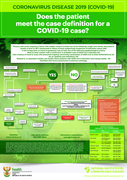
Does the patient meet the case definition for a COVID-19 case?
Nation Institute for Communicable Diseases - Division of the National Health Laboratory Service
Department: Health Republic of South Africa
(2020)
C2
Persons with acute respiratory illness with sudden onset of at least one of the following: cough, sore throat, shortness of breath or fever [≥ 38°C (measured) or history of fever (subjective)] irrespective of admission status AND In the 14 days prior to onset of symptoms, met at least one of the
...
following epidemiological criteria: Were in close contact1 with a confirmed2 or probable3 case of SARS-CoV-2 infection; OR Had a history of travel to areas with presumed ongoing community transmission of SARS-CoV-2; (Visit WWW.NICD.AC.ZA for an updated case definition). OR Worked in, or attended a health care facility where patients with SARS-CoV-2 infections were being treated. OR Admitted with severe pneumonia of unknown aetiology.
more
Coronavirus disease 2019 (COVID-19) Frequently Asked Questions
Centre for Respiratory Diesease and Meningitis, South Africa
Department: Health Republic of South Africa
(2020)
C2
1. What is COVID-19?
2. Who is at most risk for COVID-19?
3. What is the risk of COVID-19 infection in humans in South Africa?
4. How is COVID-19 transmitted?
5. What are the signs and symptoms of COVID-19 infection in humans?
6. How is COVID-19 diagnosed?
7. How is COVID-19 infection
...
treated?
8. How can COVID-19 infection in humans be prevented?
9. What measures have been put in place in South Africa to minimise the risk of transmission should cases be imported?
10. Should I travel now?
11. Who can I contact for more information?
more
March 2020
The number of African Union Member States reporting COVID-
19 cases is increasing and there is a likelihood of community transmission. The WHO recently modified the COVID-19 suspect case definition to include severe acute respiratory infection and advises testing of all severe acute res
...
piratory illness (SARI) cases.1 However, many Member States have not yet started implementing these changes, they are still focussing surveillance efforts on individuals with travel history to an area with local COVID-19 transmission. This means patients with similar symptoms, but no apparent contact, may not
be investigated.
more
March 2020
The number of African Union Member States reporting COVID-
19 cases is increasing and there is a likelihood of community transmission. The WHO recently modified the COVID-19 suspect case definition to include severe acute respiratory infection and advises testing of all severe acute r
...
espiratory illness (SARI) cases.1 However, many Member States have not yet started implementing these changes, they are still focussing surveillance efforts on individuals with travel history to an area with local COVID-19 transmission. This means patients with similar symptoms, but no apparent contact, may not
be investigated.
more
History has shown that governments tend to deprioritize environmental commitments during times of financial and public crises as they work to mitigate immediate needs—and the age of COVID-19 has been no different. Even though human interaction with wildlife is believed to be the cause of the pande
...
mic, the focus on COVID’s fallout has deprioritized the importance of reversing the damage humans have done to the planet.
COVID has had a multifaceted and detrimental effect on environmental conservation. Not only has funding been diverted to deal with the pandemic, conservation-oriented organizations are operating with minimal staff or have closed entirely. People whose daily work it is to advance environmental science and protect the land and water have become ill or have been forced to stay home because of travel restrictions. Plastic use is at an all-time high.
The good news is that there is an unprecedented opportunity for philanthropy to recharge the effort to protect the planet. This Giving Smarter Guide examines the state of environmental philanthropy, and provides an overview of potential strategic starting points for philanthropy and impact capital to play a role in saving the planet. In addition to offering recommendations specific to the COVID-19 response, the Center for Strategic Philanthropy also asks the questions that philanthropists should consider at the start of their journey into the field of conservation philanthropy.
more
Despite the human and economic impact of viral epidemics, the world is not well enough prepared for the next emerging viral outbreak. Global trends indicate that new microbial threats will continue to emerge at an accelerating rate, driven by our growing population, expanded
...
travel and trade networks, and human encroachment into wildlife habitat.
more
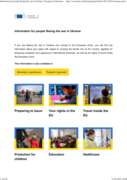
If you are fleeing the war in Ukraine and coming to the European Union, you will find key information about your rights with regard to crossing the border into an EU country, eligibility for temporary protection and applying for international protection, as well as the rights of
...
travel inside the European Union.
Available in English, Russian and Ukrainian
more
Environmental Research Volume 151, November 2016, Pages 115-123
Dengue is the world’s most important arboviral disease in terms of number of people affected. Over the past 50 years, incidence increased 30-fold: there were approximately 390 million infections in 2010. Globalization, trade,
...
travel, demographic trends, and warming temperatures are associated with the recent spread of the primary vectors Aedes aegypti and Aedes albopictus and of dengue. Overall, models project that new geographic areas along the fringe of current geographic ranges for Aedes will become environmentally suitable for the mosquito’s lifecycle, and for dengue transmission. Many endemic countries where dengue is likely to spread further have underdeveloped health systems, increasing the substantial challenges of disease prevention and control. Control focuses on management of Aedes, although these efforts have typically had limited effectiveness in preventing outbreaks. New prevention and control efforts are needed to counter the potential consequences of climate change on the geographic range and incidence of dengue, including novel methods of vector control and dengue vaccines.
more

Over the ages, human societies have altered local ecosystems and modified regional climates. Today the human influence has attained a global scale. This reflects the recent rapid increase in population size, energy consumption, intensity of land use, international trade and
...
travel, and other human activities. These global changes have heightened awareness that the long-term good health of populations depends on the continued stability of biosphere's ecological, physical and socioeconomic systems.
The world's climate system is an integral part of the complex of life-supporting processes. Like other large systems, the global climate system is coming under pressure from human activities.
This book seeks to describe the context and process of global climate change, its actual or likely impacts on health, and how human societies and their governments should respond with particular focus on the health sector.
more
1.0 PURPOSE
To define the procedure for the conduct of in-person meetings in both healthcare and community settings in response to COVID-19 and with respect to Public Health and Social Measures (PHSMs) to reduce the risk of disease transmission. A general risk assessment must be conducted to inform
...
context specific recommendations.
2.0 SCOPE
The procedure in this document is applicable to all meetings that require convening people
together physically.
3.0 SAFETY AND HYGIENE PROCEDURE
Before entry into the meeting room/venue:
• Presentation of evidence for complete doses of COVID-19 vaccination (depending on COVID-19 vaccine taken) or negative COVID-19 PCR test done within the last 72 hours, or where applicable proof of daily negative RDT result. The Africa Union Trusted Travel platform, with technical support from the PanaBIOS Consortium has implemented an online system that allows Airlines and Port Health services to authenticate and verify traveler’s COVID-19 results certificates in line with international standards, across Africa and beyond.
• Hand hygiene stations should be available at the points of entry.
• All participants must wear a well fitted mask that covers the nose and mouth. Medical masks should be provided all meeting participants.
more
Tuberculosis in Brazil: the impact of the COVID-19 pandemic
Fernandes Maia, C.M.; Barbosa Martelli, D. R.; Mendes L. da Silveira, D. M.; et al.
Sociedade Brasileira de Pneumologia e Tisiologia
(2022)
CC
J Bras Pneumol. 2022;48(2):e20220082
The spread of Severe Acute Respiratory Syndrome - Coronavirus 2 (SARS-CoV-2) continues to progress, causing damage in several countries of the world due to its rapid transmissibility and significant mortality rates, despite government measures to contain its tra
...
nsmission, such as movement control, the closing of schools, bans on travel and public gatherings, the mandatory use
of masks, and hand hygiene. The coronavirus disease (COVID-19) has clinical manifestations that are similar to those found in other infections also transmitted through the airways, such as pulmonary tuberculosis (TB) Although TB is a global health problem, it is a curable disease, with affordable treatment and prevention. Nonetheless, it remains one of the leading
causes of death from a single infectious agent worldwide, a situation threatened by COVID-19.
more
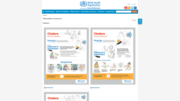
The WHO Eastern Mediterranean Regional Office's webpage on cholera information resources provides a comprehensive collection of materials to support understanding and management of cholera outbreaks. It includes posters for public education, recent publications such as Global Defence Against the Inf
...
ectious Disease Threat (with a chapter on cholera), Cholera Outbreak: Assessing the Outbreak Response and Improving Preparedness, and First Steps for Managing an Outbreak of Acute Diarrhoea. Additionally, it features policy documents like the WHO statement on international travel and trade during cholera outbreaks and the World Health Assembly resolution WHA 64.15 on cholera control and prevention. The page also links to the Global Task Force on Cholera Control and provides cholera country profiles, offering valuable insights into global and regional efforts to combat cholera.
more
