
Filter
324
Text search:
antibiotic
stewardship
Featured
34
62
Language
Document type
122
85
37
29
14
12
8
6
5
4
1
1
Countries
16
13
13
10
10
6
6
6
5
5
4
4
4
3
3
3
2
2
2
2
2
2
2
2
2
2
2
2
1
1
1
1
1
1
1
1
1
1
1
1
1
1
1
1
1
1
1
1
1
1
1
1
1
1
1
1
1
1
1
1
1
1
1
1
1
1
1
1
1
1
1
Authors & Publishers
Publication Years
Category
84
11
8
7
3
3
2
Toolboxes
234
15
13
9
6
5
4
3
3
3
3
2
1
1
1
1
1

2016-2018 Early implementation,
This report presents 2015 data on the consumption of systemic antibiotics from 65 countries and areas, contributing to our understanding of how antibiotics are used in these countries. In addition, the report documents early efforts of the World Health Organization (
...
Historically, the discovery of the sulfa drugs in the 1930s and the subsequent development of penicillin during World War II ushered in a new era in the treatment of infectious diseases. Infections that were common causes of death and disease in the pre-
...
An Action Framework and annexe to Immunization Agenda 2030 (Draft version)
27 January 2021
Antimicrobial resistance (AMR) has emerged as a major public health problem all over the world. Infections caused by resistant microbes fail to respond to treatment, resulting in prolonged illness and greater risk of death. This document focuses on the mechanism to develop a practically applicable h
...
The National Action Plan for Combating Antibiotic-Resistant Bacteria (CARB), 2020-2025, presents
coordinated, strategic actions that the United States Government will take in the next five years to improve the health and wellbeing of all Americans
...

This paper focuses on the Sustainable Development Goals related to poverty, economic growth, inequality, health, food production and the environment. It presents concrete examples of the underlying and complex aspects of antibiotic resistance and it
...

The Transatlantic Task Force on Antimicrobial Resistance (TATFAR) fosters cooperation between the European Union (EU) andthe United States (US) on the issue of antimicrobial resistance. The first TATFAR recommendation refers to appropriate use of antimicrobials in human medicine through hospital Ant
...
Lancet Planet Health 2017 Published Online November 6, 2017 http://dx.doi.org/10.1016/S2542-5196(17)30141-9
Antimicrobial resistance (AMR) is a threat to global health and development and it contributes to millions of deaths worldwide each year. Inappropriate use and overuse of antibiotics are driving an increase in AMR and have a detrimental impact on the effectiveness of these critical medicines. Throug
...

This book provides a perfect companion to BSAC’s FREE Massive Open Online Course on Antimicrobial Stewardship, which is available in English, Mandarin, Spanish, and Russian. Visit www.futurelearn.com/courses/antimicrobial-
...
Antimicrobial stewardship (AMS) describes a coherent set of actions that ensure optimal use of antimicrobials to improve patient outcomes, while limiting the risk of adverse events (including antimicrobial resistance (AMR)). Introduction of AMS prog
...

Spectrum is a mobile app that can be customized to deliver local antimicrobial stewardship resources in any hospital.
Spectrum delivers all of your clinical pathways directly to the point of care. Each guideline is presented in an algorithmic forma
...
The systematic surveillance of antibiotic use and antibiotic re-sistance prevalence in humans and animals is imperative for managingbacterial infectious disease (JPIAMR, 2019;WHO, 2015). Many low-in
...
BMJ Global Health, Vol. 4 (2019) no.2
Antibiotic resistance is threatening global health, development and food security; however, measures for assessing and communicating the threat of resistance are lacking. The Drug Resistance Index (DRI) allows
...
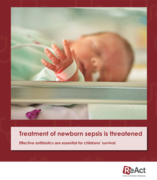
Effective antibiotics are essential for childrens’ survival
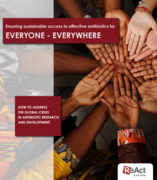
How to address the global crisis in antibiotic research and development.
The report includes a comprehensive summary and critical evaluation of recent initiatives to overcome the barriers to achieve sustainable access to antibiotics. As
...

Veterinarians are leaders and stewards in preserving the effectiveness of antibiotics for animals and people. Working with animal owners and producers, veterinarians can slow antibiotic resistance by implementing disease prevention strategies and im
...
Pakistan Global Antibiotic Resistance Partnership (GARP) was formed in the wake of international and national efforts for AMR curtailment. A group of experts from microbiology, infectious diseases and veterinary medicine
...
GARDP Antimicrobial
recommended
The Antimicrobial Resistance Benchmark has evaluated for the second time how the most important players in the antibiotic market are addressing the rise of resistance and the global need for appropriate access to antibiotics. Although we can see pro
...
