
Filter
179
Text search:
Southeast
Asia
One
Health
University
Network,
et
al.
Featured
Recommendations
6
New Publications
37
Language
Document type
No document type
108
Studies & Reports
43
Guidelines
11
Manuals
8
Strategic & Response Plan
4
Training Material
3
Situation Updates
2
Countries / Regions
Myanmar / Burma
16
Global
11
Thailand
5
Nepal
4
Bangladesh
4
South–East Asia Region
4
Asia
4
India
3
Sri Lanka
3
Africa
3
Nigeria
2
Philippines
2
Tanzania
2
Cambodia
2
Indonesia
2
Mozambique
2
Ukraine
2
Laos
2
Burkina Faso
1
Cameroon
1
Ghana
1
Uganda
1
Afghanistan
1
Germany
1
Zambia
1
Kenya
1
Central African Republic
1
Botswana
1
Chile
1
Yemen
1
Middle East and North Africa
1
Latin America and the Carribbean
1
Western and Central Europe
1
Venezuela
1
Eastern Europe
1
Tajikistan
1
Russia
1
Iran
1
Vietnam
1
Authors & Publishers
Publication Years
Category
Countries
42
Clinical Guidelines
14
Key Resources
12
Women & Child Health
9
Public Health
7
Pharmacy & Technologies
2
Toolboxes
HIV
19
Mental Health
19
Planetary Health
19
AMR
11
Global Health Education
10
NTDs
8
Disability
5
Natural Hazards
5
TB
5
Rapid Response
4
COVID-19
4
NCDs
4
Refugee
3
Malaria
3
Conflict
2
Pharmacy
2
2.0 Rapid Response
2
Cholera
1
Zika
1
Caregiver
1
Health Financing Toolbox
1
Empfehlungen zur Diagnostik und Therapie nichttuberkulöser Mykobakteriosen des Deutschen Zentralkomitees zur Bekämpfung der Tuberkulose (DZK) und der Deutschen Gesellschaft für Pneumologie und Beatmungsmedizin (DGP).
Schönfeld N et
...

Download (7.4 MB)
Overview
Epilepsy is one of the most common neurological disorders globally. The WHO epilepsy technical brief aims to strengthen action for epilepsy and complements the Intersectoral global action plan on epilepsy and other neuro
...

Anopheles stephensi is an invasive mosquito species which has been found spreading across Africa. While this species presents a new challenge for malaria control on the continent, its surveillance and management have been ongoing in Asia for many ye
...
The issue of Antimicrobial resistance has become one of the most substantial health issues, prompting the World Health Assembly (WHA) to urge Membe
...

Myanmar, as a country going through rapid socio-political transition and institutional development also suffers with a high burden of infectious disease. An ongoing challenge has been to effectively reach its 51 million population, most of whom battle tuberculosis, acute respiratory infections, diar
...
During the first year of the Covid-19 pandemic, the world’s economy slowed. Yet, the global annual average particulate pollution (PM2.5) was largely unchanged from 2019 levels. At the same time, growing evidence shows air pollution—even when experienced at very low levels—hurts human
...

The Global guidance framework for the responsible use of the life sciences: mitigating biorisks and governing dual-use research (the framework) aims to provide values and principles, tools and mechanisms to support Member States and key stakeholders to mitigate and prevent biorisks and govern dual-u
...

J Glob Health Sci. 2020 Jun;2(1):e3. A group of enzootic and zoonotic protozoan infections, the leishmaniases constitute among the most severely neglected tropical diseases (NTDs) and are found in all continents except Oceania. Representing the most
...
The animal health subsector within the agriculture sector is the gatekeeper of antimicrobial resistance (AMR) in livestock, aquaculture, animal products, and the immediate animal environment. In support of member countries taking responsibility for
...

Antimicrobials are precious agents for combating infectious diseases and had saved millions of lives throughout the world. However, the current trend of increasing antimicrobial resistance (AMR) has become a global health problem with increased mor
...
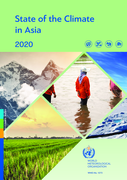
English Analysis on World and 26 other countries about Agriculture, Climate Change and Environment, Drought, Epidemic and more; published on 26 Oct 2021 by WMO
Bridging the Gap
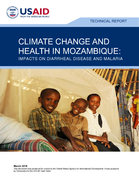
This report outlines the results of a scientific study of the impacts of weather, climate variability, and climate change on health in Mozambique, with a focus on diarrheal disease and malaria.

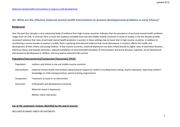
Q1: What are the effective maternal mental health interventions to prevent developmental problems in early infancy?
Policy Guidance Brief 2
• The potential health risks from climate change include: increase of waterborne and vector-borne diseases, heat-related illnesses, injuries and deaths, food insecurity and increased malnutrition. The poor, women, chil ...
• The potential health risks from climate change include: increase of waterborne and vector-borne diseases, heat-related illnesses, injuries and deaths, food insecurity and increased malnutrition. The poor, women, chil ...

Discussion Paper "Mental health, poverty and development", July 2009
