
Filter
582
Text search:
Nepal
Public
Health
Foundation
Featured
Recommendations
63
New Publications
149
Language
Document type
No document type
332
Studies & Reports
112
Guidelines
56
Manuals
40
Strategic & Response Plan
17
Situation Updates
8
Fact sheets
8
Training Material
6
Brochures
1
Resource Platforms
1
Infographics
1
Countries / Regions
Nepal
71
Global
57
Asia
19
Bangladesh
16
South–East Asia Region
16
India
15
Uganda
7
Thailand
6
Philippines
5
South Sudan
5
Tanzania
5
Indonesia
5
South Africa
5
Myanmar / Burma
5
Vietnam
5
Haiti
4
Lebanon
4
Mozambique
4
Brazil
4
Russia
4
Sierra Leone
3
Ghana
3
Pakistan
3
Zambia
3
Syria
3
Kenya
3
Cambodia
3
China
3
Africa
3
Liberia
2
Ethiopia
2
Germany
2
Rwanda
2
North Macedonia
2
Serbia
2
Colombia
2
Mexico
2
Sri Lanka
2
Yemen
2
East and Southern Africa
2
West and Central Africa
2
Middle East and North Africa
2
Latin America and the Carribbean
2
Eastern Europe
2
Kyrgyzstan
2
Georgia
2
Portugal
2
Guinea
1
Nigeria
1
Senegal
1
Congo, Democratic Republic of
1
Morocco
1
Cameroon
1
Zimbabwe
1
Somalia
1
Jordan
1
Afghanistan
1
Malawi
1
Central African Republic
1
Argentina
1
Namibia
1
Peru
1
Hungary
1
Croatia
1
Ecuador
1
Western Pacific Region
1
Eastern Europe and Central Asia
1
Western and Central Europe
1
Bhutan
1
Armenia
1
Laos
1
Romania
1
Iran
1
Turkmenistan
1
Jamaica
1
Japan
1
Belgium
1
Norway
1
Spain
1
Azerbaijan
1
Belarus
1
Bosnia and Herzegovina
1
Authors & Publishers
Publication Years
Category
Countries
127
Women & Child Health
57
Key Resources
56
Clinical Guidelines
45
Public Health
44
Capacity Building
13
Pharmacy & Technologies
3
Toolboxes
HIV
66
Disability
53
Mental Health
48
TB
28
NTDs
27
COVID-19
25
Planetary Health
22
Global Health Education
21
Health Financing Toolbox
19
Conflict
15
Natural Hazards
15
Caregiver
15
AMR
10
Malaria
8
2.0 Rapid Response
8
Rapid Response
7
NCDs
6
Refugee
5
Pharmacy
4
Polio
3
Ebola & Marburg
2
Cholera
2
Zika
2
Typhoon
1
Primary health care offers a cost–effective route to achieving universal health coverage (UHC). However, primary health-care syst
...
беларускі - Belorussian

This publication offers practical advice on implementing HIV and STI programmes for transgender people, with a focus on transgender women, aligned with the 2011 Recommendations and the 2014 Key Populations Consolidated Guidelines. It contains examples of good practice from around the world that may
...
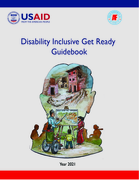
Due to Nepal’s difficult geographic structure, rapid urbanization, varied groundwater level, and increasing population the country is prone to earthquakes, floods, landslides, fires, lightning, hailstone, drought, epidemic, and other d
...
The new guidelines provide public health guidance on pharmacological agents for managing hyperglycaemia in type 1 and type 2 diabetes for use in primary h
...

The KMC implementation strategy targets a broad audience. These include policy-makers and programme managers at national, regional and local levels, government and nongovernmental organizations working in the area of maternal and newborn care, global and national professional associations,
...
Special issue: WHO South-East Asia Journal of Public Health -Vol. 5, Issue 1, April 2016.This special This issue contains a rich collection of articles, demonstrating the encouraging scientific mome
...
This paper focuses on the Sustainable Development Goals related to poverty, economic growth, inequality, health, food production and the environment. It presents concrete examples of the underlying and complex aspects of antibiotic resistance and it
...
The Guidelines for the Diagnosis, Treatment and Prevention of Leprosy provide state-of-the-art knowledge and evidence on leprosy diagnosis, treatment and prevention based on a public health approach
...
The Manual for Indoor Residual Spraying in Urban Areas for Aedes aegypti Control is intended not only for operational personnel and middle and senior management of programs responsible for the prevention and control of Aedes-borne diseases, but also for the academic community involved in Aedes resea
...

In an ambitious new era for health development under the 2030 Agenda for Sustainable Development, WHO and
its partners have a solid foundation of success on which to build.
...
The recommendations in this guideline are intended to inform development of national and subnational health policies, clinical protocols and programmatic guides. The target audience includes national and subnational
...
This guideline provides global, evidence-informed recommendations on daily iron supplementation in infants and children, as a public-health intervention for the prevention of anaemia and iron defici
...

Based on WHO South-East Asia Regional Strategy on Autism Spectrum Disorder
The collaborative framework for implementation of the “WHO South-East Asia Regional Strategy on Autism Spectrum Disorders” articulates to Member States: the nature of autism spectrum disorder and the issues faced by ...
The collaborative framework for implementation of the “WHO South-East Asia Regional Strategy on Autism Spectrum Disorders” articulates to Member States: the nature of autism spectrum disorder and the issues faced by ...

The National Strategic Plan for Malaria Elimination 2021–2025 outlines Bangladesh’s roadmap to achieve zero indigenous malaria cases by 2030, with an interim goal to reduce transmission to near-zero levels by 2025. The strategy builds upon earlier successes in malaria control and shifts focus to
...

The seventh WHO Report on the global tobacco epidemic analyses national efforts to implement the most effective measures from the WHO Framework Convention on Tobacco Control (WHO FCTC) that are proven to reduce demand for tobacco.
The report showed that while only 23 countries have implemented ce
...
Vitamin D deficiency is thought to be common among pregnant women, particularly during the winter months, and has been found to be associated with an increased risk of pre-eclampsia, gestational diabetes mellitus, preterm birth, and other tissue-specific conditions.
This guideline is intended for
...
Suicides take a high toll. Over 800 000 people die by suicide every year and it is the second leading cause of
death in 15-29-year-olds. Most suicides occur in low- and middle-income countries where resources
and services, if they do exist, are often scarce and limited for early identification, tr
...
Burns are a global public health problem, accounting for close to 200,000 deaths annually. The majority of these occur in low- and middle-income countries, where a number of constraints complicate t
...
