Filter
220
Text search:
Ministry
of
Health
Ethiopia,
WHO
Regional
Office
for
Africa
Featured
Recommendations
16
New Publications
55
Language
Document type
No document type
107
Studies & Reports
57
Guidelines
18
Manuals
15
Strategic & Response Plan
15
Training Material
3
Situation Updates
3
Resource Platforms
1
Fact sheets
1
Countries / Regions
Ethiopia
31
Kenya
14
Global
13
Africa
11
Uganda
5
Guinea
4
Sierra Leone
4
Liberia
4
South Sudan
4
East and Southern Africa
4
Western and Central Europe
4
Tanzania
3
Sudan
3
West and Central Africa
3
Somalia
2
South Africa
2
Madagascar
2
Middle East and North Africa
2
Latin America and the Carribbean
2
Nigeria
1
Senegal
1
Congo, Democratic Republic of
1
Togo
1
Zimbabwe
1
Philippines
1
Pakistan
1
Zambia
1
Chad
1
Cambodia
1
Thailand
1
China
1
Malawi
1
Namibia
1
Peru
1
Brazil
1
North Macedonia
1
Colombia
1
Botswana
1
Yemen
1
Eastern Europe
1
Gabon
1
Authors & Publishers
Publication Years
Category
Countries
68
Public Health
21
Clinical Guidelines
17
Key Resources
17
Women & Child Health
14
Pharmacy & Technologies
2
Capacity Building
1
Toolboxes
HIV
24
COVID-19
13
Mental Health
12
AMR
11
Planetary Health
11
TB
9
Disability
8
Conflict
8
Refugee
7
Caregiver
7
Pharmacy
7
2.0 Rapid Response
7
Rapid Response
6
Ebola & Marburg
5
Global Health Education
5
NTDs
5
Health Financing Toolbox
4
Natural Hazards
2
NCDs
2
Cholera
1
Polio
1
Medical devices are used for the prevention, diagnosis and treatment of illness and diseases and for rehabilitation.
...

Water, sanitation and hygiene (WASH) are critical in the prevention and care for all of the 17 neglected tropical diseases (NTDs) scheduled for int
...

To support the achievement of health equity in the Region, the regional inter-agency movement Every Woman Every Child Latin America and the Caribbe
...
The increasing global trend of Antimicrobial resistance (AMR) has gradually emerged as a major public health challenge for the entire world. AMR ha
...
Globally, approximately 56.8 million people are in need of palliative care
services; 78% of them living in low and middle-income country yet only
about 12% have their needs being met causing great
...
Every year, an estimated 15 million babies are born preterm – before 37 weeks of pregnancy. That is more than 1 in 10 live births. Approximately 1 million children die each year worldwide due to complications from their early birth. Those that sur
...
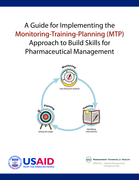
In the mid-1980s, recognizing the limitations of traditional training and that the knowledge and skills acquired are not necessarily applied back in the workplace, MSH developed the Monitoring‐Training-Planning (MTP) approach to assist the Ecuador
...
WHO mhGAP Guideline update
recommended
Update of the Mental Health Gap Action Programme
(mhGAP) Guideline for Mental, Neurological and Substance use Disorders May 2015
This document is intended to serve as a reference for national public health policy-makers. It outlines the scope of potential meningitis surveilla
...
Addressing comorbidities and risk factors for tuberculosis (TB) is a crucial component of the World Health Organization (
...
The World Health Organization’s comprehensive antenatal care (ANC) guideline WHO recommendations on antenatal care for a positive pregnancy exper
...
Working document from an informal consultation of experts. A Protocol for risk assessment at the field level. The purpose of document is to provid
...
Event-based surveillance (EBS) is defined as the organized collection, monitoring, assessment and interpretation of mainly unstructured ad hoc information regarding health events or risks, which may
...
This ten year global plan for measles and rubella outlines the strategy that needs to be fully implemented to achieve the measles and rubella goals endorsed by the World Health Assembly. The plan se
...
The Joint Monitoring Programme (JMP) report – Progress on household drinking water, sanitation and hygiene 2000 - 2020 – presents estimates on household access to safely managed drinking water, sanitation and hygiene services over the past five years, and assesses progress toward achieving the s
...
Health care-associated infections (HAIs) affect patients and health systems every day, causing immense suffering, driving higher health-care costs
...
Руководство по осуществлению mhGAP
recommended
The WHO Mental Health Gap Action Programme (mhGAP) aims at scaling up mental health services in non-specialized
...

The WHO Global Antimicrobial Resistance and Use Surveillance System (GLASS) was launched in 2015 to foster AMR surveillance and inform strategies to contain AMR. The system started with surveillance of
...
This report presents, for the first time, a global assessment of the extent to which health care facilities provide essential water, sanitation and
...