
Filter
3016
Text search:
outbreak
prevention
Featured
403
735
Language
Document type
1076
664
513
216
195
132
71
70
26
17
15
11
8
1
Countries
175
162
151
88
76
72
69
66
63
53
52
51
50
46
46
44
42
42
42
42
39
36
32
32
32
31
30
28
27
26
24
24
23
23
22
20
19
19
17
16
16
16
15
15
14
13
12
12
11
11
11
11
11
10
10
10
10
9
9
9
9
9
8
8
8
8
8
8
7
6
6
6
6
6
6
6
6
5
5
4
4
4
4
4
4
4
4
4
4
4
4
3
3
3
3
3
3
3
3
3
3
3
3
2
2
2
2
2
2
2
2
2
2
2
2
2
1
1
1
1
1
1
1
1
1
1
1
1
1
1
1
1
1
1
1
1
1
1
1
1
1
1
1
Authors & Publishers
Publication Years
Category
1008
212
197
141
80
38
32
1
Toolboxes
819
405
163
143
123
109
99
90
81
79
72
56
53
50
48
40
38
37
34
22
21
19
10
8
2
2
2
The World Health Organization (WHO) African Region website provides comprehensive information on cholera outbreaks across the continent. In 2024, 14 countries, including the Democratic Republic of the Congo, Ethiopia, and Nigeria, experienced significant outbreaks, with these three nations categoriz
...

This video is a public health awareness message about Ebola. It aims to educate the general population by explaining that Ebola is not transmitted through the air. The video addresses common misconceptions about the disease and provides accurate information about how Ebola spreads, emphasizing that
...

Ethiopia has been repeatedly affected by conflict, flooding, drought, and disease outbreaks in the past years. As of January 2024, the country is actively responding to the longest recorded cholera outbreak which started in August 2022, recurrent me
...
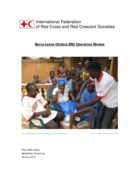
This review of the IFRC support to the Sierra Leone Red Cross Society response to the 2012 cholera outbreak provides ideas and concepts to promote a more coherent and evidence based rationale on how to make more effective use of IFRC global assets t
...

The Emergency Ministerial meeting on Ebola Virus Disease (EVD) with Health Ministers agreeing on a range of priority actions to end the Ebola outbreak in West Africa. The scale of the ongoing outbreak
...

Ebola Response Roadmap
recommended
The World Health Organization is issuing a "roadmap" to guide and coordinate the international response to the outbreak of Ebola virus disease in West Africa.
The aim is to stop ongoing Ebola transmission worldwide within 6–9 months, while rapid
...
of highly contagious viruses (of the Ebola or Marburg type) in the context of an epidemic outbreak in West Africa
Practical guidance on immunization services and the risks they present for both Ebola affected and non-affected countries. The specific purpose of this document is to assist countries to:
- Maintain immunization services and use immunization contacts and surveillance system as opportunities to
...
Malaria is a prevalent cause of febrile illnesses in areas with high transmission, and its clinical presentation overlaps with initial signs of Ebola disease. For this reason, the effectiveness of the Ebola response in Guinea, Liberia and Sierra Leone can be optimized through the deployment of targe
...
This clinical management manual for Ebola Viral Disease in Liberia was developed after several ETUs were established in the country following the outbreak early this year. As the outbreak evolved, i
...

Real Time Evaluation of the Ebola Control Programs in Guinea, Sierra Leone and Liberia. Final Report
The scope includes the assessment of activities to improve the response to affected populations, stakeholders, partners and donors, building on lessons learnt so far in this outbreak.
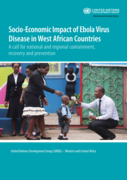
A call for national and regional containment, recovery and prevention

The document contains preliminary report on all aspects of WHO’s response in the Ebola outbreak. WHO Member States will discuss the report at the sixty-eighth World Health Assembly.
The document is a World Health Organization publication about communicable disease surveillance and response systems. It explains that communicable disease surveillance is a core public health function used to collect, analyse and interpret health data so that outbreaks and other health threats can
...

Risk Communication and Community Engagement (RCCE) is an essential part of any disease outbreak response. Risk communication in the context of an Ebola outbreak refers to real time exchange of infor
...

This brief draws out some recommendations for Ebola response actors in North Kivu. It includes lessons learned primarily from (i) historical outbreaks in Congo; (ii) outbreaks in Uganda in 2000-01 and 2012; (iii) the 2014-2016 West African epidemic; (iv) the
...

HIV infection, due to the immunosuppressant that leads, nowadays constitutes an aggravating factor of endemic tuberculosis. Tuberculosis remains a huge burden to human health, even in the early 21st century. The situation is deteriorating in many countries, particularly because of the synergy with t
...

Antimicrobial resistance represents a big threat to public health. The Centers for Disease Control and Prevention (CDC) estimate that every year two million Americans are infected with a (multi-)drug resistant bacterium, resulting in 23,000 deaths.
...

The Coronavirus is spreading globally. How can individuals, communities and humanitarian actors best respond to the COVID-19 outbreak? How can the Sphere Handbook guide our response?
These guidelines are available in different languages
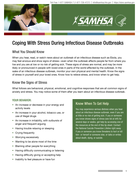
When you hear, read, or watch news about an outbreak of an infectious disease such as Ebola, you may feel anxious and show signs of stress—even when the outbreak affects people far from where you
...
